Smart Agriculture Technology: Explore AI-Driven Farming Solutions
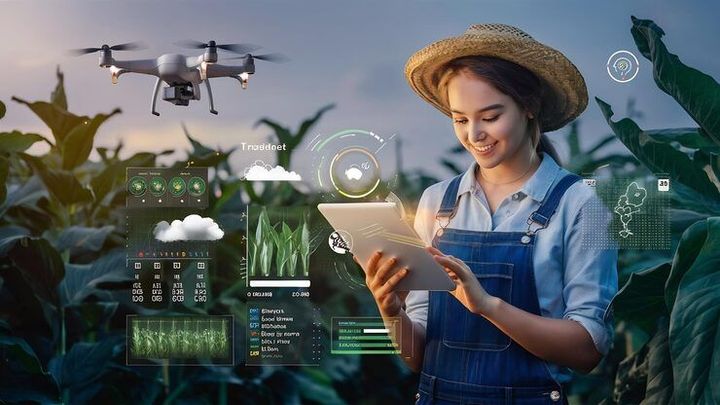
Smart agriculture technology refers to the use of digital tools and modern farming methods to collect information, analyze field conditions, and support agricultural decisions. It brings together technologies such as artificial intelligence, machine learning, Internet of Things devices, satellite imagery, drones, sensors, robotics, weather data, and mobile applications.
Traditional farming depends heavily on observations, experience, seasonal patterns, and local knowledge. These remain valuable, but agriculture is increasingly exposed to changing weather, water limitations, soil degradation, pest pressure, and the need for more accurate crop monitoring.
AI-driven farming adds another layer of information. For example, a camera can capture an image of a crop, while an AI model can examine the image for signs associated with pests or plant stress. Soil and weather sensors can provide measurements that help farmers understand field conditions.
The purpose is not to replace agricultural knowledge. Instead, smart farming technology can combine field experience with data to support more informed decisions.
In India, digital agriculture has become an important policy area. The Digital Agriculture Mission was approved on September 2, 2024, with an outlay of ₹2,817 crore. It includes digital infrastructure such as AgriStack, the Krishi Decision Support System, soil-profile mapping, and digital crop surveys.
Key Technologies Used in Smart Farming
Smart agriculture can involve several connected technologies:
- Artificial Intelligence: Helps analyze agricultural data and identify patterns.
- Machine Learning: Supports prediction and classification using historical and current information.
- IoT Sensors: Measure soil moisture, temperature, humidity, and other conditions.
- Satellite Imaging: Helps monitor crops and land across large areas.
- Drones: Capture aerial images and can support crop monitoring.
- Weather Technology: Provides information about rainfall, temperature, wind, and other conditions.
- Robotics: Can assist with selected repetitive agricultural activities.
- Mobile Applications: Make agricultural information easier to access.
Why Smart Agriculture Matters Today
Agriculture affects food production, rural communities, natural resources, and national economies. Farmers also need to make decisions under uncertain conditions.
Smart agriculture technology can help address several practical challenges.
Better Crop Monitoring
Large fields can be difficult to inspect manually every day. Satellite images, drones, and sensors can provide additional information about crop conditions.
AI systems can analyze images and identify patterns that may require closer examination. This can help farmers focus attention on specific areas instead of relying only on observations across an entire field.
More Informed Water Management
Water availability is an important agricultural concern. Soil-moisture sensors can provide measurements about the amount of moisture present in the soil.
When combined with weather information and crop requirements, these measurements can support irrigation planning. The technology does not guarantee a particular result, because soil type, crop variety, rainfall, and local conditions all affect agricultural decisions.
Pest and Disease Monitoring
Pests and crop diseases can affect agricultural production. Image-recognition systems can assist with identifying visible symptoms, while weather and field data can provide additional context.
India's National Pest Surveillance System is one example of AI use in agriculture. According to the Ministry of Agriculture and Farmers Welfare in July 2026, the system uses AI and machine learning for pest-related monitoring and was being used by more than 10,000 extension workers.
Data-Based Farm Planning
Smart agriculture creates data from multiple sources. These may include:
| Data Source | Information Provided | Possible Agricultural Use |
|---|---|---|
| Soil sensors | Moisture and soil conditions | Irrigation planning |
| Weather data | Rainfall and temperature | Field planning |
| Satellite imagery | Crop and land observations | Crop monitoring |
| Drones | High-resolution field images | Localized inspection |
| AI models | Patterns and predictions | Decision support |
| Digital crop records | Crop and field information | Planning and monitoring |
The value of this approach depends on the accuracy, quality, timeliness, and local relevance of the underlying data.
Recent Developments in AI-Driven Agriculture
Smart agriculture has continued to develop rapidly during 2025 and 2026.
Digital Agriculture Mission Expansion
India's Digital Agriculture Mission has remained a major framework for agricultural digitalization. Government information published in 2025 described AgriStack, the Krishi Decision Support System, and soil-profile mapping as key components of the digital agriculture ecosystem.
A government update published in 2026 reported that more than 7.63 crore Farmer IDs had been generated by November 27, 2025, against a target of 11 crore by 2026–27. It also reported that the Digital Crop Survey had covered 492 districts and more than 23.5 crore plots during the Rabi 2024–25 season.
These developments show a growing emphasis on structured agricultural data.
Increasing Use of Artificial Intelligence
On July 24, 2026, the Ministry of Agriculture and Farmers Welfare reported that AI-related projects were being used for areas including farmer advisories, pest control, crop identification, insurance, scheme delivery, and governance analytics. The ministry also stated that the Digital Agriculture Mission supports modern technologies including AI, machine learning, blockchain, IoT, and robotics.
Growth of Agri-Tech Innovation
A December 2025 government update highlighted continued development of technologies such as AI, precision farming, drones, and climate-smart agriculture. It also described government support for agricultural innovation and entrepreneurship through the Rashtriya Krishi Vikas Yojana framework.
Drone-Based Agricultural Applications
Drone technology is another growing area. The Namo Drone Didi initiative was approved to support the deployment of 15,000 drones through women self-help groups during the 2023–24 to 2025–26 period.
The broader trend is toward combining aerial information, field-level measurements, digital records, and AI-based analysis rather than depending on a single technology.
Laws, Policies, and Government Frameworks
Smart agriculture in India operates within several agricultural, technology, aviation, data, and government-program frameworks.
Digital Agriculture Mission
The Digital Agriculture Mission provides an important policy framework for building digital infrastructure for agriculture. Its components include AgriStack, the Krishi Decision Support System, soil-profile information, and digital crop surveys.
AgriStack includes three foundational components:
- Farmers' Registry
- Geo-referenced village maps
- Crop Sown Registry
The framework is being implemented with participation from state governments and Union Territories.
Digital Personal Data Protection Framework
Agricultural digital systems can involve personal and land-related information. Government material on AgriStack states that its federated structure considers privacy requirements under India's Digital Personal Data Protection Act, 2023.
Data governance therefore remains an important part of agricultural technology development.
Drone Regulation
Agricultural drones are also subject to India's aviation rules. Operators and organizations using drones need to follow the applicable requirements concerning aircraft categories, registration, operation, safety, and permitted areas.
Because aviation rules can change, users should check the latest applicable requirements before operating agricultural drones.
Agricultural Digital Infrastructure
The Krishi Decision Support System is designed to combine information from areas such as crops, soil, weather, water resources, and remote sensing. This creates a broader data foundation for agricultural planning and monitoring.
Tools and Resources for Smart Agriculture
Farmers, students, researchers, and agricultural professionals can use several categories of digital resources.
Useful Technology Tools
- Soil-moisture monitoring devices
- Weather monitoring platforms
- Crop-management applications
- Satellite imagery platforms
- Agricultural mapping tools
- Digital soil databases
- Farm record templates
- Crop calendars
- Irrigation planning calculators
- Pest identification tools
- Drone-based imaging systems
- AI-assisted crop analysis platforms
Useful Learning Resources
People beginning with smart agriculture can learn through:
- Agricultural university publications
- Government agriculture portals
- Digital farming guides
- Soil-health information resources
- Crop-management manuals
- Agricultural extension materials
- Remote-sensing tutorials
- AI and machine-learning learning materials
The reliability of an agricultural recommendation depends on the quality of its data and its relevance to the local crop, soil, climate, and farming system.
Frequently Asked Questions
What is smart agriculture technology?
Smart agriculture technology is the use of digital technologies such as AI, sensors, satellite imagery, drones, IoT, and data analytics to support agricultural monitoring and decision-making.
How does AI help farmers?
AI can analyze large amounts of agricultural data and identify patterns. Applications can include crop identification, pest monitoring, weather analysis, field assessment, and agricultural decision support.
AI should be treated as a decision-support tool rather than an automatic replacement for local agricultural knowledge.
What is precision agriculture?
Precision agriculture uses field-specific information to understand variations within agricultural land. Sensors, satellite imagery, GPS-based mapping, and data analysis can help identify differences in soil, crop conditions, moisture, and other factors.
Are agricultural drones part of smart farming?
Yes. Drones can collect aerial images and other field information. Depending on the equipment and applicable regulations, they may also support certain agricultural applications. Their usefulness depends on factors such as field size, crop type, weather, equipment, operator capability, and regulatory requirements.
Is smart agriculture suitable for small farms?
Smart agriculture can be adapted to different farm sizes. A small farm may begin with relatively simple tools such as weather information, digital crop records, soil-moisture measurements, or mobile-based agricultural information. More advanced systems can be added when they are appropriate for the farm's needs and conditions.
Conclusion
Smart agriculture technology is changing how agricultural information is collected, analyzed, and used. AI, IoT sensors, satellite imagery, drones, weather data, and digital crop records can provide additional information for crop monitoring and farm planning.