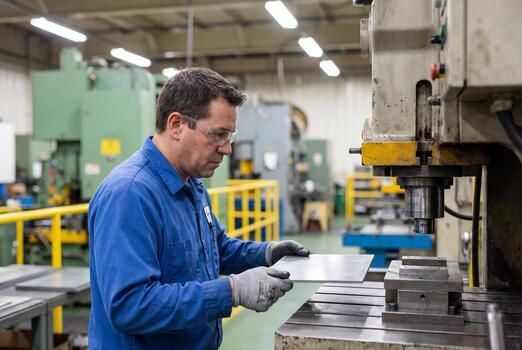
In practical terms, a hydraulic press uses a fluid-powered system consisting of cylinders, pistons, and hydraulic oil. When pressure is applied to the hydraulic fluid, the piston moves and transfers force to a workpiece placed in the press. This process makes it possible to perform tasks such as metal forming, molding, compression, stamping, and material testing.
Hydraulic press technology has become a central component of modern manufacturing. Industries such as automotive production, aerospace engineering, heavy machinery manufacturing, and metal fabrication rely on these machines for precise and consistent shaping of materials. Because they can apply uniform pressure across a surface, hydraulic presses are particularly useful for operations that require high accuracy and controlled force.
Hydraulic presses come in many configurations, including H-frame presses, C-frame presses, four-column presses, and servo-hydraulic presses. Each design supports different manufacturing processes depending on the force required and the material being processed.
Why Hydraulic Press Technology Matters in Today’s Industrial Environment
Industrial production increasingly depends on machinery capable of handling high loads with precision. Hydraulic press machines provide the ability to control pressure, speed, and stroke length, which helps manufacturers maintain consistent product quality.
One of the main reasons these machines remain relevant is their ability to handle large amounts of force efficiently. In metal forming processes, for example, hydraulic presses can shape thick materials that would be difficult to manipulate using purely mechanical methods.
Key advantages of hydraulic press systems include:
-
High force output with controlled pressure
-
Consistent forming and shaping of materials
-
Adaptability across multiple industrial processes
-
Precision control for complex components
-
Reduced mechanical stress compared with some mechanical presses
Hydraulic presses also play a role in testing and quality assurance. Material testing laboratories use these machines to evaluate tensile strength, compression resistance, and structural durability. This testing helps engineers determine whether materials meet safety and engineering standards.
The technology also supports modern manufacturing methods such as precision forging, powder compaction, and composite molding. As industries adopt advanced materials and lightweight alloys, hydraulic press machines provide the controlled force needed to shape these materials without causing structural damage.Recent Developments and Technology Trends in Hydraulic Press Systems
Over the past year, industrial automation and digital monitoring have influenced the evolution of hydraulic press machines. Manufacturers are integrating sensors, data monitoring systems, and programmable controllers to improve operational efficiency and machine reliability.
Several trends have emerged recently:
-
Servo-hydraulic systems that combine hydraulic power with digital control technology
-
Energy-efficient hydraulic pumps designed to reduce power consumption during idle periods
-
Predictive maintenance systems that monitor machine health using sensors and analytics
-
Smart control interfaces allowing operators to adjust pressure and cycle parameters digitally
In 2025, many manufacturing facilities began integrating Industrial Internet of Things (IIoT) monitoring into hydraulic press systems. These digital tools collect data about pressure levels, cycle time, and machine performance. Engineers can analyze this data to improve efficiency and prevent unexpected equipment failures.
Automation has also expanded the role of hydraulic presses in robotic production lines. Robots can load and unload materials while the press performs forming or compression tasks. This integration supports faster production cycles while maintaining consistent quality.
Another noticeable development is the use of environmentally responsible hydraulic fluids and improved sealing systems. These innovations help reduce leaks and extend equipment lifespan, which contributes to more sustainable manufacturing practices.
Regulations, Safety Standards, and Compliance Requirements
Hydraulic press machines operate under strict industrial safety regulations because they generate extremely high force levels. Regulatory bodies and engineering organizations establish guidelines to ensure that these machines operate safely in industrial environments.
Important safety and compliance areas include:
Industrial safety standards often require hydraulic presses to include physical barriers or light-curtain sensors that prevent operation if a person enters the working area. These safety systems reduce the risk of accidental injury.
Many countries follow international standards such as those developed by the International Organization for Standardization (ISO) and the International Electrotechnical Commission (IEC). These standards define requirements for machine design, hydraulic system performance, and electrical safety.
Environmental regulations may also influence hydraulic press operation. Some policies address the safe storage and disposal of hydraulic fluids, as well as energy efficiency standards for industrial equipment.
Workplace safety authorities typically recommend routine inspection schedules for hydraulic presses. Maintenance procedures may include checking hydraulic fluid levels, inspecting seals and hoses, and verifying the correct operation of pressure relief valves.
These compliance practices help maintain safe working environments while ensuring machines operate reliably over long periods.
Tools, Resources, and Helpful Industrial References
Engineers, technicians, and manufacturing professionals often rely on digital tools and technical resources when working with hydraulic press systems. These resources help users calculate pressure requirements, analyze machine performance, and plan maintenance schedules.
Useful tools and resources include:
Hydraulic Pressure Calculators
These engineering calculators help determine required pressure levels based on piston size, material thickness, and desired force output. They are commonly used during machine setup or process planning.
Industrial Simulation Software
Simulation platforms allow engineers to model hydraulic press operations digitally. These tools help test forming processes before running actual production cycles.
Maintenance Tracking Systems
Digital maintenance platforms record service intervals, inspection logs, and machine performance data. This information helps technicians schedule preventive maintenance tasks.
Technical Standards Libraries
Engineering standards databases provide documentation related to hydraulic systems, safety regulations, and mechanical design guidelines.
Equipment Monitoring Platforms
Industrial monitoring software collects data from sensors installed in hydraulic presses. This data can include pressure readings, temperature levels, and cycle times.
Below is a simplified comparison of typical hydraulic press types and their industrial applications:
| Hydraulic Press Type | Typical Force Range | Common Industrial Applications |
|---|
| H-Frame Press | Medium to High | Metal forming, assembly work |
| C-Frame Press | Low to Medium | Small component pressing |
| Four-Column Press | High | Heavy forging, deep drawing |
| Servo-Hydraulic Press | Variable | Precision manufacturing |
Another useful reference involves typical pressure ranges used in hydraulic press operations.
| Application | Typical Pressure Range |
|---|
| Metal Forming | 1,000–5,000 PSI |
| Powder Compaction | 2,000–10,000 PSI |
| Plastic Molding | 1,500–7,000 PSI |
| Material Testing | Variable based on specimen |
These values can vary depending on machine size, material properties, and industrial processes.
Frequently Asked Questions About Hydraulic Press Machines
What is the main principle behind a hydraulic press machine?
Hydraulic presses operate based on Pascal’s Law, which states that pressure applied to a confined fluid is transmitted evenly throughout the fluid. This principle allows small input forces to produce much larger output forces.
What industries commonly use hydraulic presses?
Hydraulic presses are widely used in manufacturing sectors such as automotive engineering, aerospace production, metal fabrication, material testing laboratories, and heavy machinery production.
How does a hydraulic press differ from a mechanical press?
A hydraulic press uses fluid pressure to generate force, while a mechanical press uses mechanical components such as flywheels and gears. Hydraulic systems provide more precise pressure control and flexibility in many industrial processes.
Why are safety systems important in hydraulic press machines?
Hydraulic presses generate extremely high force levels, which can create serious safety risks if not properly controlled. Safety systems such as guards, sensors, and emergency stops help protect operators and prevent accidents.
How is hydraulic press performance monitored in modern factories?
Modern presses often include digital sensors and monitoring software. These systems track parameters such as pressure, temperature, and cycle time, allowing technicians to detect performance changes and schedule maintenance when necessary.
Conclusion
Hydraulic press machines remain an essential part of modern industrial production because they provide controlled force for shaping, compressing, and forming materials. Their operation is based on fundamental fluid mechanics principles, yet modern versions integrate advanced digital monitoring and automation systems.
As manufacturing technology evolves, hydraulic press systems continue to adapt through innovations such as energy-efficient pumps, predictive maintenance tools, and intelligent control interfaces. These developments help improve productivity while maintaining high safety standards.
Understanding how hydraulic presses function, how they are regulated, and how they are integrated into industrial processes provides valuable knowledge for engineers, technicians, and anyone interested in industrial machinery technology. By combining mechanical design with hydraulic power, these machines continue to support the precision and efficiency required in modern manufacturing environments.