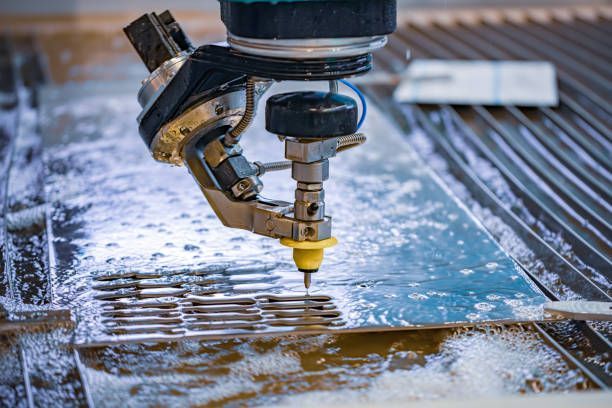
Unlike traditional cutting techniques that rely on heat or mechanical blades, water jet cutting uses pressurized water streams that can reach extremely high speeds. The pressure generated by specialized pumps forces water through a small nozzle, creating a narrow jet capable of cutting materials such as metal, stone, glass, ceramics, rubber, and composites.
The concept behind this technology originated from the idea that water moving at extremely high pressure can erode surfaces. Over time, engineers refined the technique to achieve precise cutting results. Today, computer numerical control (CNC) systems guide the cutting process, enabling complex shapes and intricate designs to be produced with high accuracy.
Several key components make up a typical water jet cutting system:
-
High-pressure pump: Generates pressure levels that allow the water stream to cut through materials.
-
Cutting head and nozzle: Focuses the water stream into a narrow jet for precision cutting.
-
Abrasive delivery system: Adds abrasive particles when cutting harder materials.
-
CNC control system: Guides the machine based on digital designs.
-
Catching tank: Collects water and material residue after cutting.
This technology is often categorized into two main types. Pure water jet cutting uses only water and is typically used for softer materials such as foam, paper, or rubber. Abrasive water jet cutting combines water with abrasive materials, making it suitable for harder materials like metals and stone.
Why Water Jet Cutting Technology Matters Today
Modern industries rely on cutting technologies that maintain accuracy while minimizing material damage. Water jet cutting machines have become important in sectors that require clean edges, detailed shapes, and minimal thermal impact.
One of the primary advantages of this technology is the absence of heat-affected zones. Traditional thermal cutting processes can cause warping or structural changes in materials due to high temperatures. Water jet cutting avoids this issue because the process relies on mechanical erosion rather than heat.
Industries where water jet cutting is widely used include:
-
Aerospace component manufacturing
-
Automotive parts fabrication
-
Architectural stone and tile shaping
-
Glass and ceramic design
-
Electronics and precision engineering
The technology also supports advanced manufacturing methods where digital designs are translated directly into machine instructions. This compatibility with computer-aided design (CAD) systems allows engineers to produce complex geometries that might be difficult to achieve with traditional cutting tools.
Water jet cutting machines also contribute to efficient material usage. The narrow cutting path, often called the kerf width, helps reduce material waste. As industries increasingly focus on efficient production methods, technologies that minimize waste and maintain precision become more valuable.
From a sustainability perspective, water jet cutting systems often recycle water through filtration systems. Some setups also reuse abrasive materials after processing. These practices help reduce environmental impact and support responsible manufacturing operations.
Recent Developments and Industry Trends
Industrial cutting technologies continue to evolve as manufacturing becomes more automated and digitally integrated. Over the past year, several developments have influenced how water jet cutting machines are used in production environments.
In 2025, many manufacturing facilities began integrating water jet systems with advanced automation platforms. These systems combine robotic arms, CNC programming, and digital monitoring tools to improve production efficiency. Automation helps maintain consistent cutting quality while reducing manual intervention.
Another notable trend in 2025 involved improvements in pump technology. Manufacturers introduced ultra-high-pressure pumps capable of producing pressures exceeding 90,000 pounds per square inch (PSI). Higher pressure levels allow the cutting stream to maintain accuracy even when processing dense materials.
Industrial software integration has also expanded. Modern systems now support cloud-based monitoring platforms that allow engineers to track machine performance, maintenance schedules, and cutting parameters remotely.
Environmental monitoring has become another focus. During 2025, several manufacturing guidelines emphasized improved abrasive recycling systems and enhanced water filtration units. These upgrades help facilities manage waste particles and maintain water quality during continuous operation.
Digital twin modeling is another emerging concept. This approach creates a virtual representation of the cutting system, enabling engineers to simulate cutting operations before actual production begins. Simulation helps optimize cutting paths and reduce trial-and-error adjustments.
Regulatory and Safety Considerations
Industrial cutting systems operate under safety standards and regulatory guidelines designed to protect workers and maintain environmental compliance. These guidelines often apply to machinery operation, workplace safety, water usage, and waste management.
Manufacturing facilities using water jet cutting machines generally follow industrial safety frameworks that regulate machine guarding, noise levels, and operator training. These standards aim to reduce workplace risks associated with high-pressure equipment.
Environmental policies also influence how water jet systems are managed. Because abrasive cutting produces fine particles and slurry residue, many facilities implement filtration systems and waste handling procedures. These processes help ensure that discharged water meets environmental standards.
Occupational safety regulations often require the following practices:
-
Protective barriers around cutting areas
-
Training programs for machine operators
-
Routine equipment inspections
-
Emergency shutdown systems
In many regions, workplace safety organizations establish general industrial equipment guidelines. These frameworks help ensure that high-pressure systems operate within safe limits and include appropriate maintenance procedures.
Regulations related to wastewater discharge can also affect water jet cutting operations. Facilities may need sediment filtration systems to capture abrasive materials before water is reused or discharged.
While specific requirements vary between jurisdictions, the goal of these policies is consistent: maintaining safe working environments while minimizing environmental impact.
Helpful Tools and Learning Resources
Understanding water jet cutting technology can be easier with the help of specialized tools and educational resources. Engineers, students, and industry professionals often rely on digital platforms and software to learn about cutting parameters, material behavior, and machine configuration.
Common resources used in industrial cutting research include:
-
CNC simulation software: Helps visualize cutting paths and machine movements before production.
-
CAD design platforms: Used for creating digital models that guide CNC cutting machines.
-
Material property databases: Provide information about hardness, density, and machinability.
-
Pressure and flow calculators: Estimate cutting force based on nozzle size and pressure levels.
-
Industrial engineering forums and knowledge libraries: Share technical insights and troubleshooting information.
Below is a simplified table showing key machine parameters commonly referenced in water jet cutting operations.
| Parameter | Description | Typical Range |
|---|
| Water Pressure | Pressure used to generate cutting stream | 40,000–90,000 PSI |
| Nozzle Diameter | Size of the cutting nozzle opening | 0.1–0.4 mm |
| Abrasive Flow Rate | Amount of abrasive material used | 0.2–0.6 kg/min |
| Cutting Speed | Speed of cutting movement | Varies by material |
Engineers also analyze performance using data visualizations. The simplified chart below illustrates how cutting capability increases with pressure levels.
| Pressure Level | Relative Cutting Capability |
|---|
| 40,000 PSI | Moderate cutting strength |
| 60,000 PSI | High cutting performance |
| 90,000 PSI | Very high precision capability |
Educational resources such as technical manuals, industrial engineering courses, and digital learning platforms provide further insights into machine setup, maintenance practices, and advanced cutting strategies.
Frequently Asked Questions
What materials can water jet cutting machines process?
Water jet cutting systems can process a wide range of materials. These include metals, stone, ceramics, glass, composites, plastics, rubber, and foam. The addition of abrasive particles allows the machine to cut harder materials effectively.
Does water jet cutting produce heat damage?
Water jet cutting is considered a cold cutting process. Because it does not rely on heat, it avoids the formation of heat-affected zones that can alter the structural properties of certain materials.
How accurate are water jet cutting systems?
Modern water jet cutting machines guided by CNC systems can achieve very high precision. The narrow cutting stream allows detailed shapes and complex designs to be produced with minimal material distortion.
Why are abrasives used in some water jet systems?
Abrasive particles are added when cutting dense or hard materials. These particles increase the cutting capability of the water stream by enhancing its erosion power.
Are water jet machines compatible with digital design systems?
Yes. Most modern water jet cutting machines integrate with computer-aided design and computer-aided manufacturing software. This integration allows digital designs to be translated into automated cutting instructions.
Conclusion
Water jet cutting machines represent an important technology within modern manufacturing systems. By using high-pressure water streams, these machines can cut a wide range of materials while avoiding thermal damage and maintaining precise edges.
The technology has evolved from basic erosion concepts into advanced CNC-controlled systems capable of producing complex shapes with high accuracy. Continuous improvements in pump technology, automation integration, and environmental management have further enhanced their role in industrial production.
Understanding how water jet cutting works, the tools used in the process, and the regulations that guide safe operation provides valuable knowledge for engineers, students, and manufacturing professionals. As industries continue to adopt advanced manufacturing techniques, water jet cutting technology remains a key component in precision fabrication and material processing.