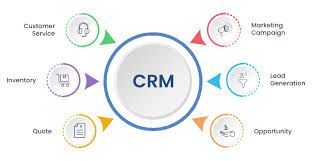
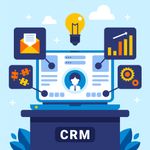
CRM platforms evolved from early database tools into integrated systems that connect marketing, sales, and support functions. They exist to reduce fragmented data and to create a consistent view of each customer or stakeholder. With a unified record, teams can understand preferences, prior interactions, and lifecycle stages.
Common components in a CRM platform include:
-
Contact and account records
-
Activity timelines and communication logs
-
Lead management and qualification rules
-
Sales pipeline visualization
-
Marketing automation and segmentation
-
Reporting, dashboards, and data analytics
A simplified data flow is illustrated below.
| Data Source | CRM Process | Outcome |
|---|
| Web forms, emails, calls | Capture and normalize data | Centralized contact profile |
| Campaign interactions | Segment and score leads | Prioritized engagement |
| Transactions and support cases | Update timelines | Lifecycle visibility |
| Usage and feedback | Analyze patterns | Insights for strategy |
A typical sales pipeline view tracks stages from initial interest to post-engagement follow-up. This visual structure helps teams coordinate actions and forecast outcomes based on historical conversion rates.
Importance — Why CRM Matters Today
CRM platforms matter because customer expectations have shifted toward timely, personalized communication across channels. Organizations that rely on scattered spreadsheets or disconnected tools often face duplicated records, missed follow-ups, and limited visibility into performance. A structured CRM system addresses these challenges.
Who it affects and what problems it solves:
-
Small and medium organizations: Provides a scalable way to manage contacts, track interactions, and maintain continuity as teams grow.
-
Enterprise teams: Supports governance, role-based access, and standardized processes across departments and regions.
-
Marketing teams: Enables segmentation, campaign tracking, and marketing automation aligned with measurable goals.
-
Sales teams: Improves lead management, opportunity tracking, and forecasting accuracy.
-
Support teams: Consolidates case histories to improve response consistency.
Key benefits often associated with cloud CRM software and data analytics include:
-
Improved data quality through standardized fields and validation rules
-
Faster response times due to centralized communication history
-
Better forecasting using historical pipeline data
-
Cross-team alignment via shared dashboards
-
Measurable outcomes for campaigns and lifecycle programs
A conceptual performance graph shows how structured data and coordinated workflows can influence outcomes over time.
The graph represents a general pattern where adoption and process refinement gradually improve consistency and visibility.
Recent Updates — Trends and Changes in the Past Year
From 2025 to early 2026, several developments shaped CRM platforms:
-
AI-assisted workflows (2025–2026): Vendors expanded predictive lead scoring, automated note generation, and conversational interfaces that summarize activity and suggest next steps. These features focus on augmenting decision-making rather than replacing human judgment.
-
Data unification and composable architectures (2025): Many platforms emphasized flexible integrations and customer data platforms (CDPs) to merge data from web, mobile, and offline sources into a single profile.
-
Privacy-first design (2025): Updates highlighted consent tracking, data minimization, and audit trails to align with global privacy requirements.
-
Vertical solutions (2025–2026): Industry-specific modules for healthcare, finance, education, and manufacturing added tailored data models and reporting.
-
Low-code customization (2025): Visual builders for workflows, forms, and dashboards enabled faster configuration by non-technical users.
Widely recognized CRM ecosystems reflecting these trends include Salesforce, Microsoft Dynamics 365, HubSpot, Zoho CRM, and Pipedrive. Each platform has introduced AI-assisted insights, expanded integrations, and enhanced reporting in recent releases.
Laws or Policies — How Regulations Influence CRM Use
CRM platforms handle personal and behavioral data, so regulatory frameworks shape how data is collected, stored, and processed.
-
General Data Protection Regulation (EU): Emphasizes lawful basis for processing, data subject rights, and breach notification requirements. CRM systems often include consent records, data access controls, and export or deletion workflows to support compliance.
-
California Consumer Privacy Act (United States): Grants rights to access, delete, and limit use of personal information for residents of California. CRM configurations may include preference management and request tracking.
-
Country-specific data protection laws: Many jurisdictions have enacted or updated privacy statutes, prompting organizations to review retention policies, cross-border data transfers, and vendor agreements.
Policy-aware CRM practices typically include:
-
Data minimization and purpose limitation
-
Role-based permissions and audit logs
-
Encryption in transit and at rest
-
Documented retention schedules
-
Clear consent and preference management
Compliance is an ongoing process that combines technology, governance, and staff training.
Tools and Resources — Practical Aids for Implementation
A range of tools and references can support CRM adoption and optimization:
| Category | Resource Type | Purpose |
|---|
| CRM platforms | Cloud CRM software | Centralize contacts, pipelines, and analytics |
| Integration tools | API connectors and iPaaS | Sync data across email, web, and ERP systems |
| Data quality | Deduplication and validation tools | Improve record accuracy |
| Analytics | Dashboard builders and BI tools | Visualize trends and KPIs |
| Documentation | Implementation templates and data dictionaries | Standardize fields and processes |
| Learning | Vendor knowledge bases and community forums | Practical guidance and examples |
Common evaluation criteria for CRM software and marketing automation tools include:
-
Scalability and performance
-
Customization and workflow flexibility
-
Reporting depth and data analytics
-
Security controls and compliance features
-
Integration breadth and API support
A simple feature comparison matrix can help clarify priorities.
| Capability | Basic CRM | Advanced CRM |
|---|
| Contact management | ✔ | ✔ |
| Sales pipeline visualization | ✔ | ✔ |
| Marketing automation | Limited | Extensive |
| Predictive analytics | Limited | Extensive |
| Role-based security | Standard | Granular |
| Integration ecosystem | Moderate | Broad |
FAQs — Clear Answers to Common Questions
What is the difference between CRM and ERP?
CRM focuses on relationships and interactions with customers or stakeholders. ERP systems manage internal processes such as finance, inventory, and operations. Many organizations integrate both to align front-office and back-office data.
Is cloud CRM different from on-premise CRM?
Cloud CRM platforms are hosted by the vendor and accessed via the internet, enabling regular updates and remote access. On-premise CRM is hosted within an organization’s infrastructure and typically requires internal maintenance.
How does CRM support marketing automation?
CRM data enables segmentation based on attributes and behavior. Marketing automation workflows use these segments to trigger communications, track engagement, and measure outcomes through analytics dashboards.
What metrics are commonly tracked in a CRM system?
Typical metrics include lead-to-opportunity conversion rate, pipeline velocity, engagement rates, retention indicators, and case resolution times. These metrics support forecasting and performance analysis.
How does data privacy affect CRM configuration?
Privacy requirements influence consent tracking, data retention, access controls, and audit logs. CRM platforms often include tools to manage preferences and document processing activities.
Conclusion
CRM platforms provide a structured foundation for managing relationships, coordinating teams, and interpreting data across the customer lifecycle. By centralizing information and standardizing workflows, organizations gain clearer visibility into interactions and outcomes. Recent developments in AI-assisted insights, privacy-first design, and composable integrations continue to shape how CRM systems are configured and used. Understanding regulatory expectations and selecting appropriate tools can help organizations align technology with governance and long-term strategy.
Disclaimer: This article is for general informational purposes only and does not constitute legal, financial, or technical advice. Requirements and capabilities vary by jurisdiction and platform. Organizations should evaluate their specific needs and applicable regulations before implementing or modifying any system.