How to Reduce Electricity Consumption at Home: A Complete Energy Saving Guide
Electricity consumption refers to the amount of electrical energy used by appliances, lighting systems, heating and cooling equipment, and electronic devices within a household.
Understanding Household Electricity Consumption
Electricity consumption refers to the amount of electrical energy used by appliances, lighting systems, heating and cooling equipment, and electronic devices within a household. In modern homes, electricity powers nearly every daily activity, from lighting rooms and charging devices to operating refrigerators, televisions, and climate control systems.
The concept of reducing electricity consumption emerged from the need to manage growing energy demand while improving efficiency. As households adopt more electronic devices and appliances, the total electricity load increases. Energy management practices help households understand how electricity is used and how efficiency improvements can reduce unnecessary consumption.
Electricity usage is commonly measured in kilowatt-hours (kWh). One kilowatt-hour represents the amount of energy used when a device with a power rating of one kilowatt operates for one hour. This measurement allows energy providers and consumers to track and compare electricity usage across appliances and time periods.
In a typical household, electricity consumption is distributed across several categories:
-
Lighting systems used throughout the home
-
Kitchen appliances such as refrigerators and ovens
-
Climate control systems including air conditioners and heaters
-
Entertainment and computing devices
-
Water heating systems
Each device contributes to the total electricity load depending on its power rating and operating duration. Understanding how different appliances consume electricity is the first step toward improving energy efficiency in the home.
Household electricity management focuses on optimizing how energy is used rather than eliminating its use entirely. By adopting efficient usage patterns, households can maintain comfort and functionality while minimizing unnecessary energy consumption.
Why Energy Efficiency and Electricity Reduction Matter
Electricity consumption has become an important topic globally as energy demand continues to increase. Residential electricity use represents a significant share of total power consumption in many countries. As technology becomes more integrated into daily life, households rely on electricity for a wide range of essential activities.
Energy efficiency helps ensure that electricity is used effectively. When appliances and systems operate efficiently, they perform the same tasks while using less energy. This approach supports both household energy management and broader sustainability efforts.
Several groups benefit from understanding electricity consumption patterns:
-
Homeowners managing household energy usage
-
Tenants tracking electricity usage in rented homes
-
Property managers monitoring building energy performance
-
Researchers studying residential energy trends
Electricity reduction strategies also address common challenges such as rising energy demand, inefficient appliance usage, and limited awareness of electricity consumption patterns.
The following table illustrates typical household appliances and their general electricity usage levels.
| Appliance Type | Typical Usage Pattern | Relative Energy Consumption |
|---|---|---|
| Lighting Systems | Used throughout the day and evening | Low to moderate |
| Refrigerators | Operate continuously | Moderate |
| Air Conditioners | Seasonal operation | High during use |
| Washing Machines | Periodic operation | Moderate |
| Electronics | Intermittent daily use | Low to moderate |
Energy efficiency improvements often involve optimizing the use of high-consumption appliances, especially climate control systems and continuously running devices such as refrigerators.
Another important aspect of electricity reduction is behavioral awareness. Small changes in daily habits—such as managing appliance usage, improving lighting efficiency, and monitoring electricity consumption—can contribute to improved household energy management.
Recent Developments in Energy Efficiency and Electricity Monitoring
Energy efficiency technology has evolved significantly in recent years as governments, technology companies, and energy researchers focus on improving electricity usage monitoring and reducing energy waste.
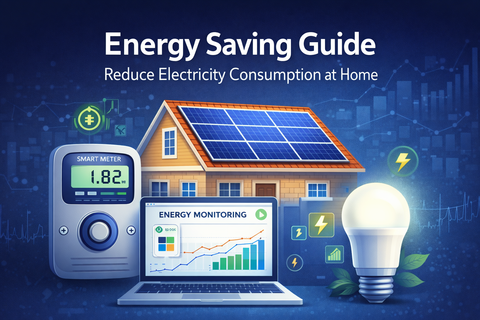
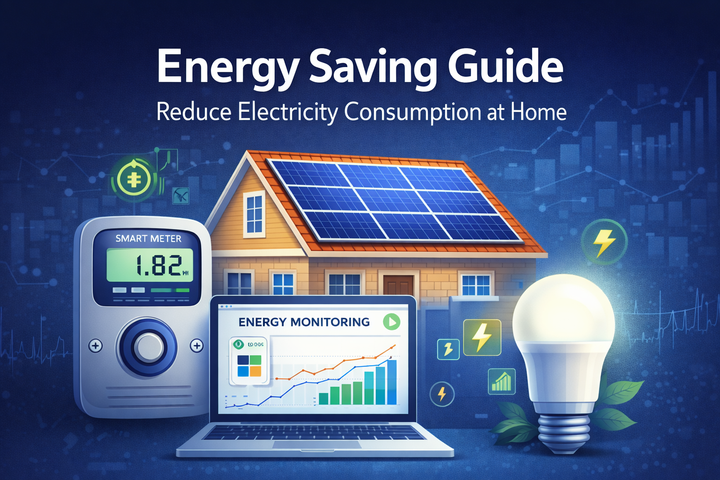
In 2024, several countries expanded the use of smart electricity meters, which allow households to monitor electricity consumption in near real time. These meters provide detailed insights into daily energy usage patterns and help households understand when electricity demand is highest.
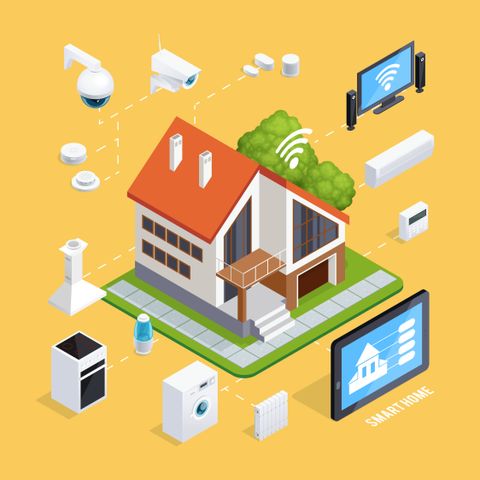
Another development involves the growing adoption of smart home energy management systems. These systems integrate connected devices such as thermostats, lighting controls, and energy monitors. By analyzing electricity usage patterns, these systems help households identify opportunities for improving efficiency.
Energy monitoring applications have also become more widely used. Many of these applications display electricity usage through dashboards and graphs that illustrate energy consumption over time.
During early 2025, energy research reports highlighted the continued growth of energy-efficient appliances. Manufacturers are increasingly designing appliances with improved energy performance standards, helping households reduce electricity consumption without compromising functionality.
Lighting technology has also evolved. LED lighting has become widely adopted in residential settings because it typically consumes less electricity compared to traditional lighting technologies while maintaining similar brightness levels.
Another emerging trend involves data-driven energy analytics, where energy monitoring systems analyze historical electricity usage patterns to provide insights into household energy behavior.
These technological developments contribute to a broader shift toward smarter electricity management and improved household energy efficiency.
Regulations and Government Programs Supporting Energy Efficiency
Energy efficiency and electricity consumption are influenced by government policies designed to encourage responsible energy use and reduce environmental impact. Many countries have introduced regulations and programs that promote efficient energy usage in residential buildings.
One common policy approach involves energy efficiency standards for appliances. These standards establish minimum performance requirements for household devices such as refrigerators, air conditioners, washing machines, and lighting systems.
Energy labeling programs are another widely used policy mechanism. These labels provide information about the energy efficiency of appliances, helping consumers understand how much electricity a device typically consumes.
Building energy codes also influence electricity usage. These codes establish guidelines for insulation, ventilation, heating systems, and lighting efficiency in residential construction. Improved building design can reduce electricity consumption associated with heating and cooling.
The table below summarizes several policy areas related to energy efficiency.
| Policy Area | Objective | Example Impact |
|---|---|---|
| Appliance Efficiency Standards | Improve energy performance of devices | Reduced electricity usage |
| Energy Labeling Programs | Provide information about appliance efficiency | Better consumer awareness |
| Building Energy Codes | Improve efficiency of residential construction | Reduced heating and cooling demand |
| Public Energy Awareness Programs | Promote efficient electricity usage | Increased understanding of energy conservation |
Many governments also support energy education programs that help households understand electricity usage and adopt efficient energy practices.
Tools and Resources for Monitoring Electricity Usage
Various digital tools and resources help households monitor electricity consumption and improve energy efficiency. These tools provide insights into how electricity is used across different appliances and time periods.
Common energy monitoring tools include:
-
Smart electricity meters that measure household electricity consumption
-
Home energy monitoring systems that analyze appliance-level usage
-
Electricity consumption calculators that estimate energy usage
-
Mobile applications for tracking household power consumption
-
Energy efficiency guides and educational resources
Energy monitoring dashboards often display electricity usage through graphs and charts that illustrate daily or monthly consumption patterns.
The following table highlights several commonly used energy monitoring tools.
| Tool Type | Purpose | Example Function |
|---|---|---|
| Smart Meter | Measures electricity usage | Real-time consumption monitoring |
| Energy Monitoring App | Displays electricity usage data | Usage dashboards |
| Appliance Energy Calculator | Estimates electricity consumption | Appliance analysis |
| Home Energy Dashboard | Visualizes energy patterns | Graph-based insights |
| Energy Efficiency Guide | Provides educational information | Electricity management knowledge |
By using these tools, households can gain better insight into how electricity is consumed and identify opportunities to improve energy efficiency.
Frequently Asked Questions
What is electricity consumption measured in?
Electricity consumption is typically measured in kilowatt-hours (kWh). This unit represents the amount of electricity used when a device with a power rating of one kilowatt operates for one hour.
Which appliances usually consume the most electricity in homes?
High-power appliances such as air conditioners, electric heaters, water heating systems, and refrigerators often account for a significant portion of household electricity consumption.
What is energy efficiency in a household context?
Energy efficiency refers to using less electricity to perform the same task. Efficient appliances, improved insulation, and optimized usage patterns help reduce electricity consumption.
How can households monitor electricity usage effectively?
Electricity usage can be monitored through smart meters, energy monitoring applications, and appliance energy calculators that estimate energy consumption patterns.
Why does electricity usage vary during the day?
Electricity usage typically increases during peak hours when lighting, cooking appliances, heating or cooling systems, and electronic devices are used simultaneously.
Conclusion
Reducing electricity consumption at home begins with understanding how energy is used across household appliances and systems. By recognizing which devices consume the most electricity and how daily usage patterns affect energy demand, households can improve energy management practices.
Technological advancements such as smart meters, energy monitoring applications, and efficient appliances provide valuable insights into electricity usage patterns. These tools allow households to monitor energy consumption and identify opportunities to improve efficiency.
Government policies and appliance efficiency standards also play an important role in promoting responsible electricity usage. These initiatives encourage manufacturers and households to adopt energy-efficient technologies and practices.
As global energy demand continues to grow, improving household energy efficiency remains an important goal. Through better awareness, efficient technologies, and responsible electricity management practices, households can contribute to more sustainable energy usage while maintaining comfort and functionality in modern homes.