Enterprise Cloud Storage Guide: Features, Benefits and Best Practices
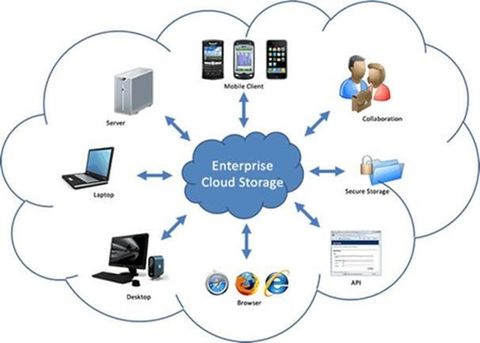
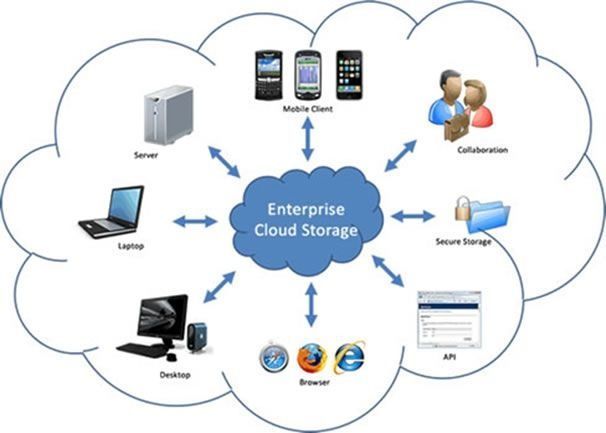
Enterprise cloud storage is a modern approach to storing, managing, and accessing digital information through cloud-based infrastructure.
Instead of relying only on physical storage devices located within an organization's facilities, cloud storage enables data to be stored across distributed systems designed for scalability, reliability, and continuous availability.
As organizations continue generating increasing amounts of digital information, effective storage management has become an essential part of daily operations. Documents, databases, multimedia files, analytics, backups, and application data all require secure and organized storage environments that can support changing operational needs.
Over the past few years, enterprise cloud storage has become an important part of digital transformation initiatives. Advances in cloud computing, cybersecurity, artificial intelligence, automation, and data lifecycle management have encouraged organizations across many industries to modernize how information is stored and managed.
For beginners, understanding enterprise cloud storage may appear complex because it combines infrastructure, networking, security, compliance, and data management principles. However, learning the fundamental concepts provides a solid foundation for understanding how modern organizations protect and organize critical information. The following sections explain its practical applications, current developments, and key considerations.
Who it affects and what problems it solves
Enterprise cloud storage influences organizations of nearly every size, from small businesses managing shared documents to multinational enterprises handling large-scale operational data. Educational institutions, healthcare providers, manufacturing companies, financial organizations, technology firms, research institutions, and government agencies all rely on structured storage environments to manage information efficiently.
IT administrators, cybersecurity specialists, cloud architects, data engineers, business analysts, compliance teams, and executive decision-makers frequently work with enterprise cloud storage platforms. Their responsibilities include organizing information, maintaining data availability, protecting sensitive records, supporting collaboration, and improving operational efficiency.
One of the most common challenges organizations face is the rapid growth of digital information. Traditional storage environments often become difficult to expand, maintain, and monitor as data volumes increase. Enterprise cloud storage provides scalable infrastructure that helps organizations adapt to changing storage requirements without major hardware limitations.
Another frequent challenge involves data protection. Organizations must safeguard business records against accidental deletion, hardware failures, cyber threats, and unexpected disruptions. Enterprise cloud storage supports redundancy, automated backup processes, disaster recovery planning, and access management to strengthen data resilience.
Many organizations also encounter difficulties integrating storage across multiple departments, applications, and geographic locations. Centralized cloud storage environments improve collaboration while simplifying file accessibility and administrative oversight.
Common mistakes include inconsistent backup policies, excessive user permissions, inadequate encryption strategies, poor lifecycle management, and limited monitoring of storage usage. Understanding these issues helps organizations establish more reliable and efficient storage practices.
Recent updates and industry trends
Over the past year, enterprise cloud storage has continued evolving alongside broader developments in cloud computing and artificial intelligence. Many organizations globally are modernizing storage infrastructure to improve operational flexibility, strengthen cybersecurity, and simplify long-term data management.
Recent industry research suggests that intelligent automation is becoming increasingly integrated into enterprise storage platforms. Automated data classification, predictive storage optimization, workload balancing, and lifecycle management help reduce administrative complexity while improving storage efficiency.
Cybersecurity has also become a stronger focus. Modern enterprise cloud storage environments increasingly include advanced encryption, identity management, zero-trust security models, ransomware detection, immutable backup capabilities, and continuous monitoring to enhance data protection.
Hybrid cloud and multi-cloud strategies continue expanding across industries. Rather than depending on a single environment, many organizations combine public cloud, private cloud, and on-premises infrastructure to improve flexibility, business continuity, and workload distribution.
Artificial intelligence is also improving storage analytics by identifying inactive information, recommending storage optimization strategies, forecasting capacity requirements, and supporting automated governance processes. These developments help organizations make better decisions regarding data placement, retention, and performance.
Growing attention is also being directed toward sustainable data center operations. Storage providers continue improving infrastructure efficiency through intelligent resource allocation, optimized hardware utilization, and energy-conscious management practices that support long-term environmental objectives.
Comparing enterprise cloud storage approaches
Organizations evaluate several characteristics before selecting an enterprise cloud storage strategy. The comparison below highlights practical differences across key operational considerations.
| Comparison Point | Enterprise Cloud Storage |
|---|---|
| Scalability | Highly scalable for changing storage requirements |
| Automation | Extensive automation for backup and lifecycle management |
| Reliability | High availability through distributed infrastructure |
| Performance | Optimized through intelligent workload balancing |
| Flexibility | Supports diverse applications and storage workloads |
| Maintenance | Reduced infrastructure maintenance responsibilities |
| Security | Advanced encryption, identity management, and monitoring |
| Integration Capability | Integrates with enterprise applications and cloud services |
| Implementation Complexity | Requires planning but simplifies long-term management |
| Disaster Recovery | Strong redundancy and recovery capabilities |
| Storage Optimization | Intelligent tiering and lifecycle management |
| Collaboration Support | Secure access across distributed teams |
Selecting an enterprise cloud storage strategy depends on operational priorities rather than a single feature. Organizations typically balance scalability, security, performance, compliance, and long-term management requirements when designing storage environments.
A well-planned storage strategy also considers future growth, application integration, governance requirements, and disaster recovery planning. Understanding these comparison factors enables organizations to build storage environments that remain adaptable as technology continues evolving.
Regulations and practical guidance
Enterprise cloud storage should be implemented using internationally recognized security and information management practices. While requirements vary depending on local regulations and industry-specific obligations, organizations generally follow established frameworks for information security, risk management, data governance, and business continuity. These frameworks help maintain consistent operational standards across different environments.
Data protection begins with clear governance policies. Organizations should define who can access specific information, how long data should be retained, and when it should be archived or securely removed. Applying the principle of least privilege ensures users only receive the permissions necessary for their responsibilities, reducing unnecessary exposure to sensitive information.
Encryption plays a vital role throughout the data lifecycle. Information should remain protected both during transmission and while stored. Multi-factor authentication, identity and access management, regular security audits, and continuous monitoring further strengthen cloud storage environments against unauthorized access and evolving cybersecurity threats.
Backup and disaster recovery planning are equally important. Multiple backup copies stored across separate locations improve resilience during hardware failures, accidental deletion, or operational disruptions. Regular recovery testing helps verify that critical information can be restored when needed.
Environmental responsibility has also become an important consideration. Many enterprise cloud platforms optimize storage utilization, automate resource allocation, and improve infrastructure efficiency to reduce unnecessary energy consumption while supporting sustainable digital operations.
Organizations should also establish routine reviews of storage capacity, performance, compliance requirements, and security configurations. Continuous assessment helps ensure storage environments remain efficient, secure, and aligned with changing business objectives and technological developments.
Which option suits different situations?
Small operations
Organizations with moderate data volumes often benefit from scalable cloud storage that can expand gradually while minimizing infrastructure management and simplifying collaboration.
Large-scale systems
Large enterprises typically use hybrid or multi-cloud environments to distribute workloads, improve resilience, and support high availability across multiple business functions.
Beginners
Organizations beginning their cloud journey should focus on straightforward storage architectures with strong security settings, automated backups, and well-defined access controls before adopting more advanced capabilities.
Experienced professionals and growing organizations
Organizations with mature IT environments often integrate enterprise cloud storage with analytics platforms, automation workflows, cybersecurity systems, and disaster recovery strategies to improve operational efficiency and long-term scalability.
Tools and resources
Several platforms and resources support enterprise cloud storage planning, administration, monitoring, and governance. Understanding their capabilities helps organizations evaluate different storage strategies.
- Microsoft Azure Storage — Provides scalable object, file, queue, and disk storage for enterprise workloads.
- Amazon Simple Storage Service (Amazon S3) — Supports highly durable object storage, backup, archiving, and analytics integration.
- Google Cloud Storage — Offers scalable storage with lifecycle management, security controls, and global availability.
- IBM Cloud Object Storage — Designed for large-scale data storage, backup, and archival management.
- Dell PowerScale — Enterprise-scale storage platform for managing large volumes of structured and unstructured data.
- NetApp ONTAP — Supports unified storage management across on-premises and cloud environments.
- Cloud capacity planning calculators — Help estimate storage growth, resource utilization, and long-term capacity requirements.
Frequently asked questions
What is enterprise cloud storage?
Enterprise cloud storage is a cloud-based system designed to store, organize, protect, and manage large amounts of business information. It supports centralized data management, secure collaboration, scalable storage capacity, and reliable access while reducing dependence on traditional physical storage infrastructure.
How is enterprise cloud storage different from traditional storage?
Traditional storage primarily relies on local hardware located within an organization's facilities, while enterprise cloud storage distributes information across cloud infrastructure. This approach improves scalability, availability, disaster recovery capabilities, and centralized management while supporting remote access and modern business operations.
Is enterprise cloud storage suitable for organizations of different sizes?
Yes. Enterprise cloud storage supports organizations ranging from small businesses to large multinational enterprises. Storage capacity, security features, and management capabilities can be adjusted according to operational requirements, making the technology adaptable for different industries and stages of organizational growth.
What security practices are important for enterprise cloud storage?
Effective security includes encryption, identity and access management, multi-factor authentication, continuous monitoring, regular security assessments, backup strategies, disaster recovery planning, and clear governance policies. Together, these practices help protect information throughout its lifecycle while supporting operational resilience.
What future developments are expected in enterprise cloud storage?
Future developments are expected to include greater use of artificial intelligence for storage optimization, expanded automation, stronger cybersecurity capabilities, improved sustainability initiatives, intelligent data lifecycle management, and deeper integration with enterprise analytics and business applications to support evolving organizational needs.
Conclusion
Enterprise cloud storage has become a foundational component of modern digital infrastructure. By combining scalable storage, centralized management, advanced security, and reliable accessibility, it enables organizations to manage growing volumes of information more efficiently. Understanding storage architecture, governance practices, automation capabilities, and security principles helps decision-makers build storage environments that remain dependable as operational requirements evolve.
Successful implementation depends on careful planning rather than technology alone. Organizations should evaluate scalability, performance, compliance expectations, integration capabilities, disaster recovery strategies, and long-term data management objectives before selecting an enterprise cloud storage approach. Regular monitoring, governance reviews, and security improvements contribute to sustainable and resilient storage operations over time.
Looking ahead, worldwide developments in artificial intelligence, intelligent automation, cybersecurity, hybrid cloud infrastructure, and sustainable data center operations are expected to continue shaping enterprise cloud storage. Organizations that stay informed about these trends and apply industry best practices will be better prepared to manage future data growth while maintaining secure, efficient, and adaptable storage environments.