Best AI Tools to Explore: Guide, Tips, Insights and Resources
Artificial Intelligence (AI) tools are software applications that use machine learning, natural language processing, and data analysis techniques to perform tasks that typically require human intelligence.
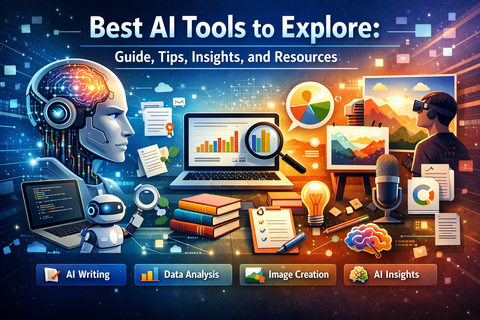
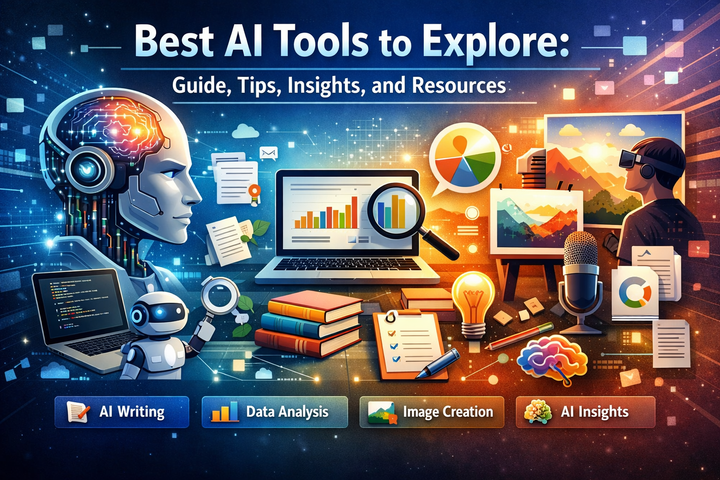
These tools are designed to assist with activities such as writing, research, image generation, coding, data processing, and automation.
The rise of AI tools is closely linked to advancements in computational power, availability of large datasets, and improvements in algorithms. Over the past decade, AI has shifted from being a niche research area to a widely adopted technology across industries. Today, AI tools are integrated into everyday workflows, from content creation to business analytics.
The primary purpose of AI tools is to enhance efficiency, reduce manual effort, and support decision-making. They are not limited to technical users; individuals with minimal technical knowledge can also use many modern AI platforms due to simplified interfaces and user-friendly designs.
Importance
AI tools are becoming increasingly relevant due to the growing demand for productivity, automation, and data-driven decision-making. They are widely used by students, professionals, businesses, and researchers.
Key reasons why AI tools matter today include:
- Improved productivity: AI tools can automate repetitive tasks such as drafting text, summarizing information, and organizing data.
- Better decision-making: Data analysis tools provide insights based on patterns and trends.
- Scalability: Businesses can handle larger volumes of work without proportional increases in resources.
- Accessibility of advanced technology: Non-technical users can now access capabilities like language generation and image processing.
AI tools address several common challenges:
- Time-consuming manual tasks
- Information overload
- Need for quick insights from large datasets
- Consistency in output quality
The impact is visible across sectors such as education, healthcare, marketing, finance, and software development. As organizations increasingly rely on automation and analytics, understanding AI tools becomes essential.
Recent Updates
The AI ecosystem has seen significant developments between 2024 and 2026, particularly in generative AI and multimodal systems.
Some notable trends and updates include:
- Expansion of multimodal AI (2025): Tools now support text, image, audio, and video inputs simultaneously, improving versatility.
- Enterprise adoption growth (2025–2026): Businesses are integrating AI tools into workflows for analytics, reporting, and documentation.
- Open-source AI models gaining traction (2024–2025): Increased availability of customizable AI models has enabled developers to build tailored solutions.
- Focus on responsible AI (2025): Organizations are emphasizing transparency, fairness, and data privacy in AI systems.
- AI integration in productivity software (2024–2026): Many platforms now include built-in AI features for writing, summarization, and automation.
The table below summarizes key developments:
| Year | Key Trend | Impact Area |
|---|---|---|
| 2024 | Generative AI expansion | Content creation |
| 2025 | Multimodal AI adoption | Media and communication |
| 2025 | Responsible AI initiatives | Policy and governance |
| 2026 | Workflow automation scaling | Business operations |
These updates indicate a shift toward more integrated, accessible, and regulated AI ecosystems.
Laws or Policies
AI tools operate within a framework of regulations that vary by country. These policies aim to ensure ethical use, data protection, and transparency.
Key regulatory aspects include:
- Data protection laws: Regulations such as India’s Digital Personal Data Protection Act (DPDP Act, 2023) govern how personal data is collected and processed.
- AI governance frameworks: Governments are developing guidelines to ensure responsible AI deployment.
- Content and misinformation policies: AI-generated content is subject to rules regarding accuracy and disclosure.
- Industry-specific compliance: Sectors like finance and healthcare have stricter requirements for data usage and decision-making systems.
In India, policy discussions around AI focus on balancing innovation with user protection. Government initiatives encourage research and adoption while emphasizing ethical standards.
Users and organizations need to be aware of:
- Data privacy requirements
- Transparency in AI-generated outputs
- Accountability in automated decision-making
Compliance with these policies ensures sustainable and responsible use of AI tools.
Tools and Resources
A wide range of AI tools is available, each designed for specific use cases. These tools can be categorized based on functionality.
Content and Writing Tools:
- Text generation and summarization platforms
- Grammar and language enhancement tools
- Research assistance tools
Data Analysis and Visualization Tools:
- AI-powered analytics platforms
- Predictive modeling tools
- Dashboard and reporting software
Image and Media Tools:
- AI image generation tools
- Video editing and enhancement tools
- Audio transcription systems
Development and Coding Tools:
- Code generation assistants
- Debugging and testing tools
- Documentation automation platforms
The table below provides a structured overview:
| Category | Example Use Case | Output Type |
|---|---|---|
| Writing Tools | Drafting articles | Text |
| Data Tools | Analyzing datasets | Charts, reports |
| Image Tools | Creating visuals | Images |
| Coding Tools | Generating code snippets | Code |
Additional helpful resources include:
- Online documentation libraries
- Educational platforms offering AI tutorials
- Community forums for troubleshooting and knowledge sharing
- Templates for workflows and automation processes
These resources help users understand and effectively apply AI tools in different contexts.
FAQs
What are AI tools used for?
AI tools are used for tasks such as writing, data analysis, image creation, automation, and decision support. They help improve efficiency and accuracy.
Are AI tools suitable for beginners?
Many AI tools are designed with simple interfaces, making them accessible to beginners without technical expertise.
Do AI tools replace human work?
AI tools are primarily designed to assist and enhance human capabilities rather than replace them entirely. They are often used to support productivity.
How accurate are AI-generated outputs?
Accuracy depends on the tool, data quality, and context. Users should review outputs for correctness and relevance.
Are there any risks in using AI tools?
Potential risks include data privacy concerns, bias in outputs, and over-reliance on automation. Responsible usage is important.
Conclusion
AI tools have evolved into essential components of modern digital ecosystems. They support a wide range of activities, from content creation to advanced analytics, making them valuable for individuals and organizations alike.
Understanding the context, importance, and recent developments in AI tools helps users make informed decisions about their usage. Awareness of policies and regulations ensures responsible adoption, while access to the right tools and resources enhances effectiveness.
As AI continues to develop, its role in everyday workflows is expected to expand further. Staying informed about trends, tools, and best practices is key to leveraging AI in a practical and sustainable manner.