Table of Contents

Payroll Software Overview: Explore Key Features and Benefits

Payroll Software Overview: Explore Key Features and Benefits

Payroll software is a digital system used to calculate employee salaries, deductions, taxes, reimbursements, attendance-linked payments, leave adjustments, and statutory records. In simple terms, it helps an organisation convert employee work data into accurate monthly payroll output.

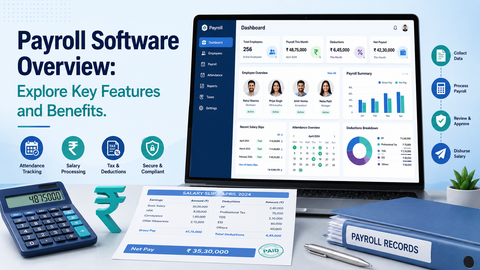
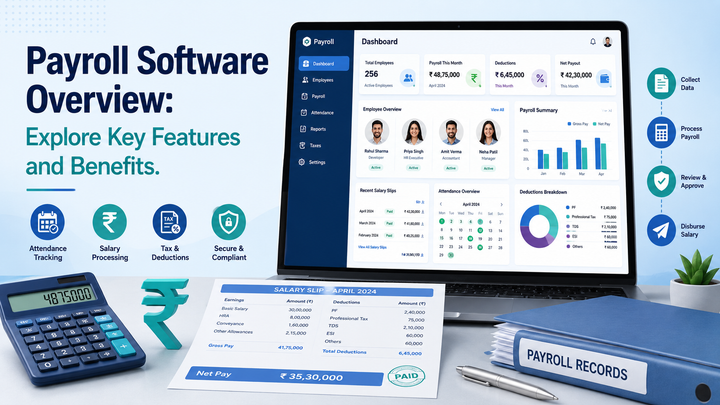
Earlier, payroll was often handled through spreadsheets, manual registers, and repeated calculations. That approach became difficult as teams grew, tax rules changed, and salary structures became more detailed. Payroll software exists because salary processing is not only about paying employees. It also includes documentation, tax deductions, provident fund records, insurance deductions, payslips, annual statements, and audit trails.

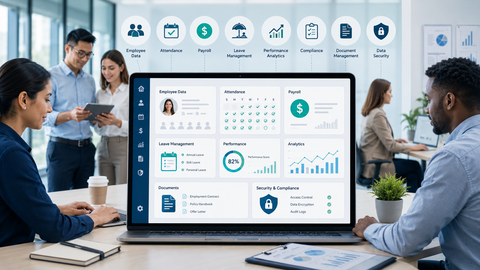
A payroll management system usually connects multiple HR data points:

  • Employee master data
  • Salary structure
  • Attendance and leave records
  • Tax declaration details
  • Reimbursement entries
  • Statutory deduction rules
  • Payslip generation
  • Monthly and annual reports

For a general audience, the basic explanation is simple: payroll software reduces repetitive calculation work and creates a structured method for handling salary-related information.

Why Payroll Software Matters Today

Payroll is important because it directly affects employees, HR teams, finance teams, founders, auditors, and compliance teams. A small error in salary calculation can create employee confusion. A delay in statutory reporting can create compliance gaps. A mismatch in tax deduction data can affect employee tax filing.

Today, payroll software matters more because workplaces have become more complex. Many organisations use hybrid work models, variable pay, incentives, reimbursements, flexible salary structures, and multiple attendance systems. Payroll software helps bring these details into one organised workflow.

Key problems it helps solve include:

  • Manual salary calculation errors
  • Unclear deduction records
  • Delayed payslip creation
  • Repeated data entry
  • Missing employee documentation
  • Difficulty tracking EPF, ESIC, professional tax, and TDS data
  • Lack of monthly payroll reports
  • Weak audit records

Payroll software also supports transparency. Employees can understand their earnings, deductions, leave balances, and tax details more clearly when information is structured and accessible.

Payroll Workflow Overview

Payroll AreaWhat It TracksWhy It Matters
Salary structureBasic pay, allowances, deductionsHelps create accurate monthly salary output
AttendancePresent days, leave, loss of payLinks work records with salary calculation
Tax deductionTDS, declarations, regime selectionSupports income tax compliance
Social securityEPF, ESIC, gratuity-related recordsHelps maintain statutory records
PayslipsEarnings and deductionsGives employees clear salary details
ReportsMonthly payroll summariesHelps HR and finance review data

Simple Graph: Manual Payroll vs Payroll Software


Manual Payroll Effort        ████████████████████ High
Spreadsheet Dependency ███████████████ Medium-High
Error Risk █████████████ Medium
Report Speed ████ Low

Payroll Software Effort ██████ Lower
Data Structure █████████████████ Strong
Compliance Tracking ████████████████ Strong
Report Speed ██████████████████ Fast


This graph is illustrative. Actual results depend on data quality, payroll rules, HR processes, and how carefully the system is configured.

Recent Updates and Trends

One major India-specific update is the implementation of the four Labour Codes from 21 November 2025. The Government of India stated that the Code on Wages, Industrial Relations Code, Code on Social Security, and Occupational Safety, Health and Working Conditions Code have been implemented, rationalising 29 existing labour laws. This affects how organisations think about wage definitions, social security, worker records, and compliance workflows.

Another important trend is the shift toward updated payroll systems that can handle income tax changes and TDS reporting changes. The Income Tax Department explains that the new tax regime is the default regime for eligible taxpayers, while taxpayers can opt out where allowed. Payroll systems need to maintain employee tax regime choices, declaration data, taxable income estimates, and TDS calculations.

For AY 2026–27, the Income Tax Department lists the new regime slabs starting with nil tax up to ₹4,00,000 and progressive slab rates above that. It also lists rebate provisions under Section 87A, including a rebate limit of ₹60,000 under the new tax regime where taxable income does not exceed ₹12,00,000. These rules make payroll tax configuration more important.

There is also a transition linked to the Income Tax Act, 2025. Official FAQs state that TDS rates and monetary thresholds remain unchanged, but systems may need updates for new section numbering, terminology, and reporting requirements. This is directly relevant to ERP payroll and HR payroll software configuration.

Laws, Rules, and Policies Affecting Payroll Software in India

Payroll software in India is strongly connected with statutory compliance. It does not replace legal review, but it can help organise calculation logic, reports, and records.

Important areas include:

  • Income Tax and TDS: Payroll systems calculate taxable salary, exemptions where applicable, deductions where allowed, employee regime selection, and monthly TDS.
  • EPF: EPF records are maintained through employee and organisation contribution data. EPFO is the central body managing provident fund accounts in India.
  • ESIC: ESIC states that the current employee contribution rate is 0.75% of wages and the organisation contribution rate is 3.25% of wages, effective from 1 July 2019.
  • Labour Codes: The four Labour Codes create a broader framework around wages, social security, industrial relations, and occupational safety. Payroll systems may need stronger wage component mapping and record discipline.
  • State-level rules: Professional tax, holiday rules, shops and establishment records, and local wage notifications may differ by state.

A well-configured payroll system should allow updates when rules change. This is important because payroll is not static. Tax slabs, contribution thresholds, forms, and reporting formats can change over time.

Tools and Resources

Helpful payroll-related tools and resources include:

  • Income Tax Department portal: Useful for tax slabs, return guidance, forms, and employee tax reference information.
  • EPFO portal: Useful for provident fund account records, UAN-related details, and member passbook access. The EPFO passbook page also lists missed call and SMS options for balance enquiry.
  • ESIC portal: Useful for contribution rules, employee insurance records, and related compliance information.
  • Payroll calculator templates: Useful for understanding gross salary, taxable salary, deductions, and net salary.
  • Attendance system: Useful when payroll depends on present days, overtime, leave, or shift rules.
  • HRMS payroll module: Useful when employee records, leave, attendance, and salary processing need to work together.
  • Payslip templates: Useful for standardising earnings, deductions, and employer details.
  • Payroll audit checklist: Useful for reviewing employee master data, salary changes, deductions, TDS, EPF, ESIC, arrears, and final settlement records.

Practical Payroll Software Feature Checklist

FeatureBasic UseWhy It Helps
Employee databaseStores employee salary and identity recordsKeeps payroll data organised
Salary structure setupDefines earnings and deductionsReduces formula confusion
Attendance integrationImports attendance and leave dataImproves salary accuracy
TDS calculationTracks tax regime and taxable salarySupports tax compliance
EPF and ESIC mappingTracks statutory deductionsHelps with monthly records
Payslip generationCreates employee salary slipsImproves transparency
Reports dashboardShows payroll summariesHelps review monthly trends
Access controlLimits sensitive data accessImproves data discipline

FAQs

What is payroll software used for?

Payroll software is used to calculate salaries, deductions, taxes, payslips, reimbursements, leave adjustments, and statutory records. It helps HR and finance teams manage salary data in a structured way.

Is payroll software useful for small teams?

Yes. Even small teams can benefit if salary structures, attendance, tax deductions, or statutory records are becoming difficult to manage manually. The main benefit is better organisation and fewer repetitive calculations.

Does payroll software calculate TDS?

Most payroll systems can calculate TDS when salary details, employee declarations, tax regime selection, and deduction rules are entered correctly. However, the system must be updated according to current income tax rules.

Can payroll software handle EPF and ESIC?

Payroll software can track EPF and ESIC deductions if the employee eligibility, wage components, contribution rules, and organisation settings are configured properly.

Is payroll software the same as HRMS?

Not always. Payroll software focuses on salary processing and statutory records. HRMS is broader and may include attendance, leave, onboarding, performance, documents, employee records, and payroll in one system.

Conclusion

Payroll software is an important part of modern HR and finance operations. It helps organisations manage salary processing, tax deductions, statutory records, employee payslips, attendance-linked salary data, and payroll reports in a structured way.

In India, payroll software has become more relevant because tax rules, labour codes, EPF, ESIC, professional tax, and employee documentation require careful tracking. Recent changes such as Labour Code implementation and income tax transition requirements show why payroll systems need regular updates.

For a clear and practical approach, organisations should focus on accurate employee data, correct salary structure mapping, updated tax settings, secure access control, and periodic payroll review. A payroll system works best when it is supported by clean data, documented policies, and regular compliance checks.

author-image

Saurabh Chawla

We are a performance-driven media buying team focused on scaling brands through smart, data-backed advertising strategies

June 24, 2026 . 8 min read