Advanced Winding Machines for Industrial Manufacturing Applications
Advanced winding machines are industrial machines designed to wind materials such as wire, cable, film, foil, paper, textile yarn, magnetic wire, and composite fibers onto a core, spool, reel, or other forming structure. Their main purpose is to create a controlled and consistent winding pattern while maintaining appropriate material tension and alignment.
Traditional winding processes often depended heavily on manual adjustment. Operators had to monitor tension, speed, material positioning, and spool changes. Modern industrial winding equipment combines mechanical systems with electronic controls, sensors, programmable logic controllers, and automated motion systems.
The basic winding process involves feeding material toward a rotating core. The machine controls the rotation of the winding shaft while another mechanism moves the material across the core. This creates an organized layer or pattern.
Important machine elements can include:
- Winding spindle or shaft
- Tension-control mechanism
- Guide rollers
- Traverse system
- Servo motor
- Sensors
- Programmable control system
- Safety guarding
- Material detection systems
- Automatic or assisted spool handling
The exact configuration depends on the material and application. A wire winding machine used for electrical components, for example, has different requirements from a textile winding system or a machine used for flexible packaging materials.
Advanced winding machines are increasingly associated with industrial automation, precision manufacturing, process monitoring, and digital production systems. These capabilities help manufacturers manage demanding winding operations where consistent tension, diameter, layering, and alignment are important.
Importance
Winding accuracy can directly affect the quality and performance of many manufactured products. Poor tension or uneven layering can create wrinkles, gaps, overlapping material, deformation, or inconsistent spool dimensions.
This makes winding technology important across several industries.
Electrical and electronics manufacturing
Winding machines are used for applications involving magnet wire, coils, transformers, inductors, and other electrical components. Precise positioning helps maintain the required geometry of a winding.
Cable and wire manufacturing
Industrial winding equipment can handle different wire and cable materials while controlling tension and reel formation. Accurate winding can make subsequent handling and processing easier.
Textile manufacturing
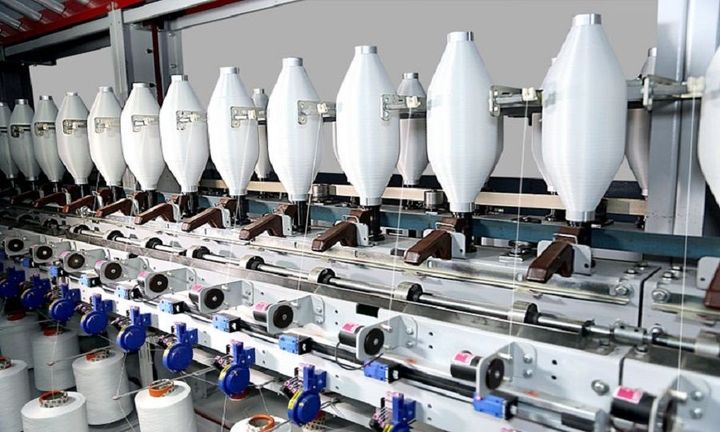
Yarn and thread winding requires careful control of tension and material placement. Automated winding systems can support consistent package formation for downstream textile processes.
Packaging and converting
Films, foils, paper, labels, and flexible materials may require controlled winding after cutting, coating, laminating, or printing. Tension management is particularly important because thin materials can stretch, wrinkle, or break.
Renewable energy and advanced materials
Composite fibers and other engineered materials can require controlled winding patterns during manufacturing. Automated motion control allows winding parameters to be adjusted for different material characteristics.
Advanced winding machines can address several common manufacturing challenges:
- Uneven material distribution
- Inconsistent tension
- Material breakage
- Excessive manual adjustment
- Incorrect winding patterns
- Variable spool dimensions
- Production interruptions
- Difficulty tracking process parameters
Automation also allows manufacturers to record process information. Data such as winding speed, tension, spindle position, and material length can be monitored through industrial control systems.
A simplified comparison illustrates how technology changes the process:
| Winding Approach | Typical Control | Monitoring | Automation Level |
|---|---|---|---|
| Manual winding | Operator controlled | Visual | Low |
| Semi-automatic winding | Mechanical/electronic | Basic sensors | Medium |
| Advanced winding | Programmable control | Real-time sensors | High |
| Smart winding | Connected control systems | Data-driven | Very high |
The most suitable technology depends on the material, production volume, winding geometry, accuracy requirements, and safety conditions.
Recent Updates
During 2025 and 2026, industrial manufacturing has continued moving toward greater automation, connected equipment, and data-based process control. For winding applications, this trend is reflected in the increasing use of servo-driven motion, electronic tension control, sensor feedback, recipe-based operation, and machine monitoring.
One important development is the growing connection between machine-level controls and broader manufacturing systems. Instead of operating as isolated equipment, modern winding machines can be designed to exchange production information with supervisory control systems and manufacturing data platforms.
Digital monitoring can help operators identify changes in tension, spindle speed, material position, or other process variables. This supports earlier detection of process deviations.
Another important trend is the integration of more flexible programming. Different winding patterns can be configured through digital recipes rather than relying entirely on mechanical adjustments. This is useful when a production environment handles multiple material types or product dimensions.
Machine safety requirements are also evolving. In the European Union, Regulation (EU) 2023/1230 has been updated, including amendments recorded in 2026. The regulation is scheduled to apply from 20 January 2027, replacing the Machinery Directive 2006/42/EC.
The regulation covers machinery and related products and establishes health and safety requirements for machinery placed on the EU market or put into service. Manufacturers and industrial organizations therefore need to consider regulatory requirements when developing or evaluating automated machinery.
Another trend is greater attention to energy efficiency and resource use. Modern drive systems can regulate motor operation more precisely, potentially reducing unnecessary movement and improving process control. Actual energy performance, however, depends on machine design, operating conditions, material characteristics, and production settings.
Artificial intelligence and machine learning are also becoming areas of interest in industrial automation. Potential applications include anomaly detection, predictive maintenance, quality monitoring, and process optimization. These technologies should be implemented carefully, particularly when automated decisions could affect machinery safety.
Laws or Policies
Winding machines are affected by machinery safety, electrical safety, workplace protection, and product conformity requirements. The exact rules depend on the country where equipment is designed, installed, operated, or placed on the market.
In the European Union, Regulation (EU) 2023/1230 establishes machinery health and safety requirements. It is scheduled to apply from 20 January 2027. The regulation also includes requirements related to conformity assessment and safety-related machinery categories.
For manufacturers using advanced automation, important considerations can include:
- Risk assessment
- Protective guarding
- Emergency stopping arrangements
- Safety-related control systems
- Technical documentation
- Instructions for safe operation
- Conformity assessment
- Appropriate product marking where required
In India, machinery safety is also connected with occupational safety legislation. The Occupational Safety, Health and Working Conditions framework includes provisions concerning machinery safeguarding and workplace safety. It addresses matters such as guarding moving machinery and reducing risks to workers.
Industrial organizations should verify the latest applicable national and regional requirements before commissioning or modifying machinery. Standards and regulatory requirements can differ according to the machine type, workplace, electrical system, industry, and intended application.
Compliance should not be treated as a single checklist. A proper assessment considers the machine's complete operating environment, including installation, maintenance, access points, material handling, control systems, and foreseeable misuse.
Tools and Resources
Several general tools can support the planning, operation, and evaluation of advanced winding systems.
Winding calculation tools
Calculators can help estimate parameters such as approximate winding length, spool dimensions, rotational speed, and material requirements. Actual calculations should use the material properties and machine specifications relevant to the application.
Tension monitoring systems
Electronic tension sensors can provide feedback during winding. Monitoring tension can help identify variations that may lead to uneven winding or material damage.
PLC programming tools
Programmable logic controller environments are commonly used to manage machine sequences, sensor inputs, motor control, alarms, and safety-related functions where appropriate.
Motion-control software
Motion-control platforms help coordinate spindle rotation and traverse movement. They can be particularly useful for applications requiring controlled winding patterns.
CAD and simulation software
Computer-aided design tools can support mechanical layout, spindle arrangements, guide mechanisms, guarding, and machine integration planning.
Production monitoring dashboards
Industrial dashboards can display machine status, production parameters, alarms, and historical data. When properly configured, they can help operators identify recurring process variations.
Maintenance templates
Digital maintenance checklists can record inspection activities for bearings, guides, motors, sensors, tension systems, electrical connections, and safety devices.
Technical standards and regulatory databases
Official government and standards databases are useful for checking current machinery safety requirements, conformity rules, and workplace regulations applicable to a particular location.
FAQs
What is an advanced winding machine?
An advanced winding machine is automated or highly controlled equipment that winds wire, cable, film, yarn, foil, paper, or other flexible materials around a core or spool. It commonly uses sensors, electronic controls, motors, and programmable systems.
What industries use winding machines?
Winding machines are used across electrical and electronics manufacturing, cable production, textiles, packaging, flexible materials, composites, and other industrial processes that require controlled material winding.
Why is tension control important?
Tension control helps maintain consistent material placement during winding. Excessive tension can stretch or damage some materials, while insufficient tension can result in loose or uneven winding.
Are winding machines part of industrial automation?
Yes. Advanced winding machines can be integrated into automated production systems using programmable controllers, servo motors, sensors, motion control, and production monitoring technologies.
What should be considered when selecting a winding system?
Important considerations include material type, material thickness, winding diameter, required pattern, tension range, spindle speed, production requirements, control features, safety provisions, maintenance needs, and applicable regulations.
Conclusion
Advanced winding machines have become important components of modern industrial manufacturing because they provide controlled material handling, repeatable winding patterns, and greater automation. Their applications range from electrical components and cables to textiles, packaging materials, and advanced composites.