Video Door Phones: Complete Guide to Features, Security, and Smart Access
Video door phones have become an important part of modern home and building security.
They allow residents to see and communicate with visitors before granting access to a property. Unlike traditional doorbells, these systems combine video monitoring, two-way communication, and access control features into a single security solution.
As concerns about residential security continue to grow, many homeowners, apartment complexes, offices, and commercial buildings are adopting video door phone systems. These devices help improve visitor verification, reduce unauthorized access, and provide greater peace of mind.
Whether installed in a house, apartment, office, or gated community, video door phones provide a practical way to manage entry points while enhancing convenience and safety.
Understanding the Concept
A video door phone is an electronic security system that enables visual and audio communication between a visitor and an occupant.
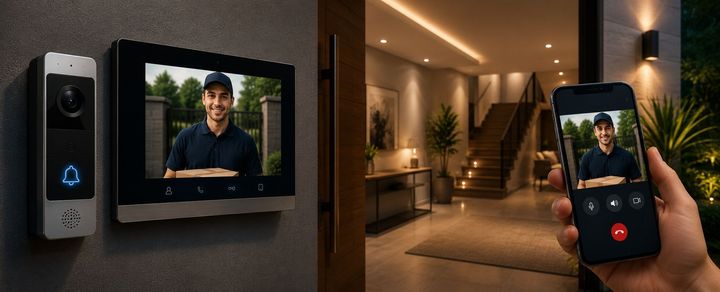
When someone presses the doorbell button, a built-in camera captures a live video feed. The resident can view the visitor through an indoor monitor or connected mobile device and communicate using two-way audio.
Many modern smart video door phone systems also integrate with home security systems, access control systems, surveillance cameras, and smart home devices.
The primary goal is simple: identify visitors before allowing entry.
For example, if a delivery person arrives while the homeowner is away, the resident can still communicate remotely and decide how to handle the situation.
Key Types or Categories
Video door phone systems are available in several configurations designed for different environments.
Wired Video Door Phones
Wired systems use physical cables to connect the outdoor unit with the indoor monitor.
Key characteristics include:
- Stable communication
- Reliable video transmission
- Minimal signal interference
- Suitable for permanent installations
These systems are commonly found in residential buildings and commercial properties.
Wireless Video Door Phones
Wireless systems use Wi-Fi or wireless communication technologies.
Benefits include:
- Easier installation
- Flexible placement
- Remote accessibility
- Integration with smart home security systems
Wireless options are increasingly popular among homeowners seeking convenient monitoring.
IP-Based Video Door Phones
Internet Protocol (IP) systems operate through network infrastructure.
Features often include:
- High-definition video
- Mobile access
- Cloud-based management
- Multi-device connectivity
IP-based access control solutions are frequently used in modern residential and commercial developments.
Multi-Unit Video Door Phones
These systems are designed for apartment buildings, condominiums, and housing societies.
They support:
- Multiple residents
- Centralized entry management
- Visitor identification
- Building-wide communication
Large residential complexes often rely on these systems for secure visitor management.
Important Subsections
High-Definition Video Monitoring
Video quality plays a major role in visitor identification.
Modern systems may include:
- HD video resolution
- Wide-angle viewing
- Zoom capabilities
- Enhanced image clarity
Clear video helps residents recognize visitors more accurately.
Two-Way Audio Communication
Two-way audio enables conversations between occupants and visitors.
Common uses include:
- Verifying visitor identity
- Communicating with delivery personnel
- Providing instructions remotely
- Managing guest arrivals
This feature reduces the need to open the door unnecessarily.
Smart Access Control
Many advanced systems integrate with electronic locks and access control technology.
Residents can:
- Unlock doors remotely
- Grant temporary access
- Manage visitor permissions
- Control entry from mobile devices
This functionality improves convenience while maintaining security.
Night Vision Technology
Visitors may arrive during low-light conditions.
Night vision capabilities help maintain visibility by using infrared technology to capture images even in darkness.
This ensures effective monitoring throughout the day and night.
Mobile Connectivity
Modern smart door phone systems often connect to smartphones and tablets.
This allows users to:
- Receive visitor notifications
- View live video feeds
- Communicate remotely
- Manage entry access
Mobile connectivity is particularly useful for people who travel frequently.
How It Works
Video door phone systems follow a straightforward process.
Step 1: Visitor Arrival
A visitor presses the doorbell button located on the outdoor unit.
This activates the camera and communication system.
Step 2: Video Capture
The built-in camera captures live footage of the visitor.
The video feed is transmitted to the indoor monitor or connected mobile device.
Step 3: Visitor Verification
The resident views the visitor and determines their identity.
Visual verification helps prevent unauthorized access.
Step 4: Two-Way Communication
The resident speaks with the visitor using the integrated microphone and speaker.
Questions can be asked before granting access.
Step 5: Access Decision
Depending on the system configuration, the resident may:
- Allow entry
- Keep the door locked
- Provide instructions
- Grant remote access
The entire process typically takes only a few seconds.
Benefits and Advantages
Video door phones provide numerous practical advantages for homes and businesses.
Improved Security
One of the biggest benefits is enhanced security.
Residents can verify visitors before opening doors, reducing security risks.
Better Visitor Management
Property owners can monitor:
- Guests
- Delivery personnel
- Maintenance workers
- Service providers
- Unexpected visitors
This creates greater control over property access.
Remote Monitoring
Smart video door phone systems enable remote monitoring from virtually anywhere.
Users can stay connected even when away from their property.
Increased Convenience
Instead of physically approaching the entrance, residents can communicate through indoor monitors or mobile devices.
This is especially helpful in larger homes or multi-story buildings.
Integration with Home Security Systems
Many systems work alongside:
- CCTV cameras
- Smart locks
- Alarm systems
- Access control systems
- Security monitoring equipment
Integrated security environments provide broader protection coverage.
Visitor Record Keeping
Certain advanced systems maintain records of:
- Visitor images
- Entry attempts
- Access events
- Communication history
These records can assist with security reviews when needed.
Real-World Examples or Applications
Video door phones are widely used across different environments.
Residential Homes
Homeowners use smart video door phone systems to manage visitors, monitor entrances, and improve family security.
For example, parents can verify who is at the door before allowing children to answer.
Apartment Buildings
Apartment complexes use multi-unit systems to control visitor access.
Residents can confirm visitor identities before granting building entry.
Office Buildings
Businesses often use video intercom systems for employee and visitor management.
Reception staff can verify visitors before allowing access to secured areas.
Gated Communities
Housing societies frequently implement centralized access control systems with video communication.
Security personnel can screen visitors efficiently before entry approval.
Educational Facilities
Schools and educational institutions use video entry systems to strengthen campus security and manage visitor access.
Important Factors to Understand
Several considerations should be evaluated before selecting a video door phone system.
Video Resolution
Higher video quality improves visitor identification.
Clear images support more effective security monitoring.
Installation Requirements
Different systems require different installation approaches.
Consider:
- Wiring availability
- Network infrastructure
- Building layout
- Expansion requirements
Proper planning helps ensure smooth implementation.
Connectivity Options
Users should evaluate whether wired, wireless, or IP-based communication best fits their environment.
Each option has unique advantages depending on property needs.
Security Features
Important security features may include:
- Motion detection
- Visitor recording
- Access control integration
- Night vision
- Mobile notifications
These features contribute to a stronger overall security strategy.
Scalability
Future expansion should also be considered.
Properties that may grow over time can benefit from systems designed to accommodate additional units and devices.
Future Trends and Industry Insights
Video door phone technology continues evolving alongside smart building innovations.
Artificial Intelligence Integration
AI-powered analytics are becoming more common.
These technologies can help identify patterns, recognize familiar visitors, and improve security monitoring efficiency.
Enhanced Mobile Access
Mobile applications continue expanding functionality.
Future systems may provide even greater control through smartphones and wearable devices.
Cloud-Based Security Management
Cloud connectivity enables centralized management of access control and visitor monitoring.
This simplifies administration for larger properties and residential communities.
Smart Home Integration
Video door phones increasingly connect with:
- Smart locks
- Voice assistants
- Security cameras
- Building automation systems
Integrated ecosystems improve convenience and operational efficiency.
Advanced Visitor Analytics
Future solutions may provide deeper insights into visitor patterns, entry activity, and security events.
These capabilities can support better decision-making for property management and security planning.
Conclusion
Video door phones have become an essential component of modern security and smart access management. They combine video monitoring, two-way communication, visitor verification, and access control into a practical security solution.
Whether used in homes, apartments, offices, schools, or gated communities, these systems help improve security while enhancing convenience and visitor management. Features such as HD video, night vision, remote monitoring, smart access control, and mobile connectivity continue to increase their value.
As smart building technology advances, video door phone systems will likely become even more intelligent, connected, and effective, making them an important part of future residential and commercial security environments.