Understanding CNC Automation Tools and Their Role in Industrial Production
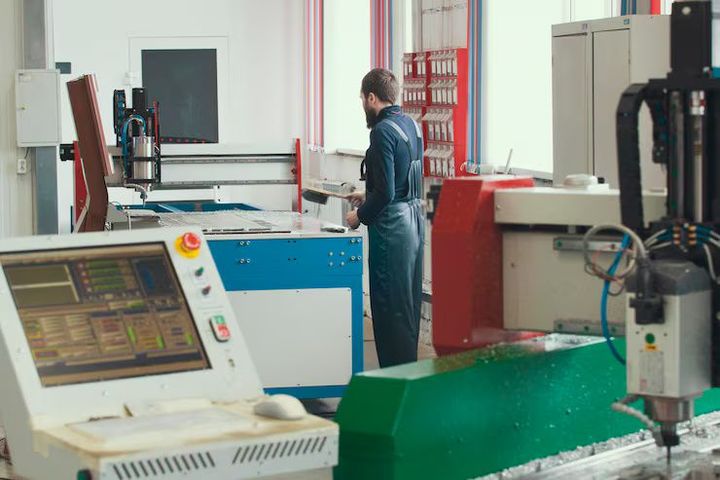
Modern manufacturing relies heavily on automation technologies to improve efficiency, precision, and production consistency. Among the most important innovations in industrial manufacturing are Computer Numerical Control (CNC) automation tools. These systems have transformed production processes by allowing machines to perform highly accurate operations with minimal manual intervention. From metal fabrication and aerospace components to automotive parts and consumer products, CNC automation tools play a central role in modern industrial production.
As global industries continue adopting advanced manufacturing practices, CNC technology remains a key driver of productivity improvements. According to global manufacturing research, automation and digital manufacturing systems are increasingly important for maintaining product quality while meeting growing production demands. CNC automation tools help manufacturers achieve these objectives by combining computer-controlled precision with repeatable production capabilities.
Understanding CNC automation tools is valuable for manufacturers, engineers, students, business owners, and anyone interested in industrial technology. By exploring how these systems operate and contribute to manufacturing efficiency, readers can gain deeper insights into one of the most significant technologies shaping modern production environments.
What Are CNC Automation Tools?
CNC automation tools are computer-controlled manufacturing systems that automate machining and production processes. The term CNC stands for Computer Numerical Control, referring to the use of programmed instructions to guide machine movements and operations.
Unlike traditional manual machining methods, CNC systems operate using digital commands generated from design and manufacturing software. These instructions direct machine tools to perform specific tasks such as cutting, drilling, milling, shaping, engraving, or finishing materials with high levels of accuracy.
CNC automation tools are used across numerous industries because they can repeatedly produce complex components while maintaining consistent quality standards. Their ability to automate manufacturing processes makes them a critical part of modern industrial production systems.
How CNC Automation Works
CNC automation begins with a digital design created using computer-aided design (CAD) software. This design is converted into machine-readable instructions through computer-aided manufacturing (CAM) software.
Once the instructions are generated, they are transferred to the CNC machine. The machine controller interprets the commands and directs motors, cutting tools, and other components to perform the required operations.
During production, CNC automation tools continuously monitor machine movements and positioning. This precise control enables the machine to manufacture components according to exact specifications.
Because the process is digitally controlled, manufacturers can produce identical parts repeatedly while minimizing variations that may occur with manual operations.
Key Components Of CNC Automation Systems
CNC Controller
The controller acts as the central processing unit of the CNC system. It interprets programmed instructions and coordinates machine movements throughout the production process.
Machine Tools
Machine tools perform the physical manufacturing operations. Examples include cutting tools, drills, mills, lathes, and grinding equipment.
Drive Systems
Drive systems control the movement of machine components. Motors and positioning mechanisms ensure accurate tool placement and operation.
Sensors And Monitoring Systems
Modern CNC automation tools often include sensors that monitor machine performance, positioning accuracy, and operational conditions.
Software Systems
CAD and CAM software support design creation and manufacturing programming, allowing engineers to develop precise production instructions.
Common Types Of CNC Automation Tools
CNC Milling Machines
CNC milling machines use rotating cutting tools to remove material and create precise shapes. They are widely used in manufacturing complex components.
CNC Lathes
CNC lathes rotate workpieces while cutting tools shape the material. These machines are commonly used for cylindrical components.
CNC Routers
CNC routers process materials such as wood, plastics, and composites. They are often used in fabrication, signage, and furniture production.
CNC Laser Cutting Systems
Laser cutting machines use concentrated light energy to cut materials with high precision and minimal material waste.
CNC Plasma Cutting Machines
Plasma cutting systems use electrically charged gas to cut conductive materials and are commonly used in metal fabrication industries.
The Role Of CNC Automation In Industrial Production
CNC automation tools support industrial production by increasing manufacturing accuracy and consistency. Precise computer control helps ensure that products meet design specifications throughout large production runs.
Automation also reduces dependence on manual machining operations. This allows manufacturers to improve efficiency while maintaining quality standards across multiple production cycles.
CNC systems contribute to faster production workflows because machines can operate continuously with minimal interruptions. This capability supports higher output levels and improved resource utilization.
In addition, CNC automation tools enable the production of complex geometries that may be difficult or impossible to achieve using traditional manufacturing methods.
Benefits Of CNC Automation Tools
One major advantage is precision. CNC automation tools can perform operations with extremely high levels of accuracy, supporting quality-sensitive manufacturing applications.
Consistency is another significant benefit. Because operations follow programmed instructions, products can be manufactured repeatedly with minimal variation.
Efficiency improvements are also common. Automated processes reduce production times and help manufacturers optimize workflow management.
CNC automation tools contribute to reduced material waste because precise cutting and machining operations improve resource utilization.
Additionally, digital manufacturing capabilities support rapid design modifications and production flexibility, allowing manufacturers to adapt more easily to changing requirements.
Industries That Use CNC Automation Tools
The automotive industry relies heavily on CNC automation tools for manufacturing engine components, transmission parts, structural assemblies, and precision-machined products.
Aerospace manufacturers use CNC systems to produce complex components that require strict quality and dimensional accuracy standards.
Medical device production frequently utilizes CNC automation because many products require detailed machining and precise manufacturing tolerances.
Electronics manufacturers employ CNC technology for component fabrication, enclosure production, and specialized manufacturing processes.
Industrial equipment manufacturers, construction material suppliers, energy companies, and consumer product producers also benefit from CNC automation technologies.
Challenges And Considerations
Despite their advantages, CNC automation tools require careful implementation and management. Initial equipment investment can be substantial depending on machine complexity and production requirements.
Operator training remains important because personnel must understand programming, machine operation, maintenance procedures, and production planning.
Regular maintenance is essential to ensure long-term performance and reliability. Preventive maintenance programs help reduce downtime and support operational efficiency.
Manufacturers must also consider software compatibility, cybersecurity, production scalability, and future technology integration when planning CNC automation strategies.
Future Trends In CNC Automation
Automation technologies continue evolving rapidly. Artificial intelligence and machine learning are increasingly being integrated into CNC manufacturing environments to support process optimization and predictive maintenance.
Industrial Internet of Things (IIoT) technologies are improving machine connectivity and enabling real-time performance monitoring across production facilities.
Digital twins and simulation tools are helping manufacturers test production processes virtually before implementation, reducing development risks and improving efficiency.
Advanced robotics integration is also expanding the capabilities of CNC automation systems by supporting material handling, inspection, and secondary manufacturing operations.
As smart manufacturing initiatives continue developing, CNC automation tools are expected to play an even larger role in future industrial production systems.
Frequently Asked Questions
What does CNC stand for?
CNC stands for Computer Numerical Control. It refers to manufacturing systems that use computer-generated instructions to control machine operations.
What are CNC automation tools used for?
CNC automation tools are used for machining, cutting, drilling, milling, engraving, shaping, and manufacturing components with high precision and consistency.
Why are CNC systems important in manufacturing?
CNC systems improve accuracy, consistency, efficiency, and production flexibility while supporting automated manufacturing processes.
Which industries use CNC automation tools?
Industries including automotive, aerospace, medical device manufacturing, electronics, industrial equipment production, and construction commonly use CNC automation technologies.
What are the benefits of CNC automation?
Key benefits include precision, repeatability, improved efficiency, reduced material waste, production scalability, and the ability to manufacture complex components.
Conclusion
CNC automation tools have become fundamental to modern industrial production. Their ability to combine computer-controlled precision with automated manufacturing processes has transformed how products are designed, produced, and delivered across numerous industries.
From improving production efficiency and reducing waste to enabling highly complex manufacturing operations, CNC systems provide significant advantages for organizations seeking competitive manufacturing capabilities. As digital technologies continue advancing, CNC automation tools remain at the center of industrial innovation.
Looking ahead, developments in artificial intelligence, machine connectivity, predictive maintenance, and smart manufacturing are expected to further enhance the capabilities of CNC automation tools. Manufacturers that understand and effectively implement these technologies will be better positioned to meet future production demands while maintaining high standards of quality and efficiency.