Heavy Equipment Parts Information With Machinery Components And Maintenance Knowledge
Heavy equipment parts are the mechanical, hydraulic, electrical, electronic, and structural components that enable large industrial machines to perform demanding tasks efficiently and reliably. These components work together to support excavation, material handling, earthmoving, mining, construction, agriculture, forestry, transportation, and industrial manufacturing operations. Modern heavy equipment contains thousands of precision-engineered parts designed to withstand high loads, continuous operation, harsh environments, and challenging working conditions. Properly designed machinery components contribute to improved productivity, operational efficiency, equipment durability, and long-term reliability across numerous industries.
As industrial machinery continues advancing globally, heavy equipment engineering has become increasingly sophisticated. According to global industry research, manufacturers continue investing in advanced materials, precision machining, intelligent electronic controls, predictive maintenance technologies, digital diagnostics, and automated manufacturing systems that improve component durability while supporting higher machine performance. Developments in metallurgy, hydraulic engineering, electronic monitoring, and manufacturing technology have significantly enhanced the reliability and efficiency of modern heavy equipment.
Understanding heavy equipment parts is valuable for mechanical engineers, maintenance professionals, equipment technicians, fleet managers, production supervisors, researchers, construction specialists, mining operators, and engineering students. Selecting or evaluating machinery components requires considering operating conditions, material properties, system compatibility, maintenance requirements, and long-term performance objectives. Learning these engineering fundamentals supports informed maintenance planning while improving equipment reliability. Before examining recent technological developments, it is helpful to understand who benefits from heavy equipment components and the operational challenges they address.
Who It Affects & Problems It Solves
Heavy equipment parts are essential for construction companies, mining operations, agricultural enterprises, forestry organizations, manufacturing facilities, logistics providers, infrastructure projects, energy industries, equipment rental fleets, and research institutions. Maintenance engineers, field technicians, mechanical designers, production managers, fleet supervisors, equipment operators, and reliability specialists all depend on durable machinery components to maintain efficient equipment operation. As industrial machinery becomes increasingly advanced, component quality and engineering precision have become more important than ever.
Without properly engineered machinery components, heavy equipment may experience reduced productivity, excessive wear, hydraulic failures, power transmission problems, structural fatigue, increased maintenance requirements, or shortened service life. Continuous operation under demanding loads places significant stress on engines, transmissions, hydraulic systems, undercarriages, bearings, gears, and structural assemblies. High-quality components help address these challenges while supporting reliable long-term machine performance.
Organizations also face challenges involving preventive maintenance, equipment availability, and operational efficiency. Modern heavy equipment increasingly incorporates intelligent sensors, digital diagnostics, advanced lubrication systems, automated monitoring, and predictive maintenance technologies that improve equipment reliability while reducing unexpected downtime. These engineering improvements continue evolving as industrial machinery becomes more technologically advanced. Recent developments have significantly expanded the capabilities of modern equipment systems.
Recent Updates
Over the past year, intelligent condition monitoring has continued transforming heavy equipment maintenance. Modern machinery increasingly utilizes sensors that continuously monitor hydraulic pressure, oil quality, vibration, engine performance, bearing condition, fuel efficiency, and operating temperatures. These digital systems improve predictive maintenance while reducing unplanned equipment downtime.
Advanced materials have also become increasingly important. Manufacturers continue incorporating high-strength steels, wear-resistant alloys, advanced composites, and improved surface treatments that extend component service life while reducing equipment weight and improving operational efficiency.
Automation continues expanding throughout heavy equipment manufacturing. Robotic machining, automated inspection systems, precision assembly technologies, and digital quality management improve manufacturing consistency while supporting higher component reliability.
Sustainability remains another important area of development. Manufacturers continue improving fuel efficiency, component recyclability, remanufacturing processes, lubrication technologies, and environmentally responsible production methods that reduce resource consumption while extending equipment lifespan. These technological improvements naturally lead to comparing major heavy equipment component systems.
Comparison Table
The following comparison outlines common heavy equipment components and their primary engineering functions.
| Component | Primary Function | Typical Material | Main Advantage |
|---|---|---|---|
| Engine | Power Generation | Cast Iron and Aluminum | Reliable Machine Operation |
| Hydraulic Pump | Fluid Power Delivery | Hardened Steel | Efficient Hydraulic Performance |
| Hydraulic Cylinder | Linear Motion | Alloy Steel | High Force Output |
| Transmission | Power Transfer | High-Strength Steel | Smooth Torque Distribution |
| Undercarriage | Machine Support | Wear-Resistant Steel | Improved Stability |
| Final Drive | Torque Multiplication | Alloy Steel | Enhanced Traction |
| Bucket or Attachment | Material Handling | High-Strength Steel | Versatile Operation |
| Bearings | Rotational Support | Precision Steel | Reduced Friction |
| Cooling System | Temperature Control | Aluminum and Polymer | Equipment Protection |
| Electronic Control Unit | Machine Management | Electronic Components | Intelligent System Control |
The comparison demonstrates that every machinery component performs a specialized engineering function while contributing to overall equipment performance. Component selection depends on machine application, operating environment, load requirements, maintenance strategy, and engineering specifications. These technical considerations are supported by internationally recognized industrial engineering and machinery maintenance practices.
Regulations & Practical Guidance
Heavy equipment maintenance generally follows internationally recognized standards relating to machinery safety, workplace protection, equipment reliability, hydraulic systems, electrical engineering, environmental management, and industrial maintenance practices. Organizations typically implement preventive maintenance schedules, equipment inspections, lubrication programs, hydraulic testing, structural assessments, digital diagnostics, operator training, and maintenance documentation to maintain reliable machine performance.
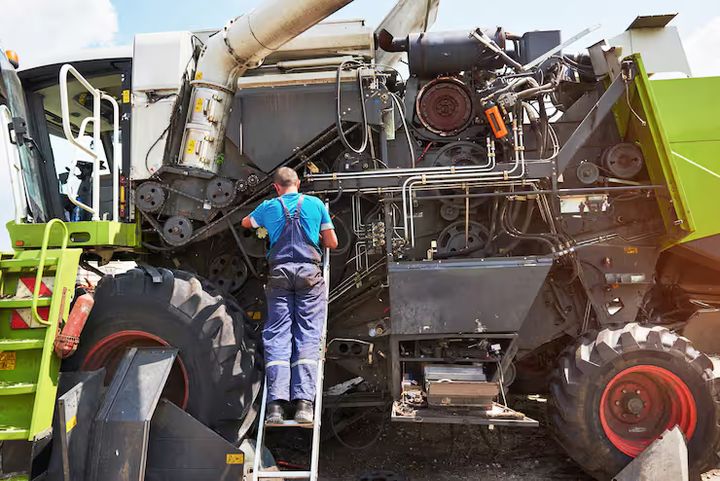
Routine maintenance contributes significantly to equipment reliability. Regular inspection of engines, hydraulic systems, transmissions, bearings, cooling equipment, lubrication systems, filters, electrical connections, structural welds, and undercarriage components helps maintain efficient operation while reducing unexpected mechanical failures. Scheduled servicing also supports long-term equipment durability and operational efficiency.
Which Option Suits Your Situation?
Construction equipment operating under demanding workloads often benefits from reinforced structural components and heavy-duty hydraulic systems designed for continuous operation.
Mining machinery frequently utilizes wear-resistant materials, heavy-duty undercarriage components, advanced filtration systems, and intelligent condition monitoring technologies to improve reliability in abrasive environments.
Agricultural equipment commonly emphasizes fuel efficiency, hydraulic versatility, and simplified maintenance to support seasonal productivity across varying field conditions.
Organizations prioritizing predictive maintenance increasingly integrate digital monitoring systems, oil analysis, vibration monitoring, and intelligent diagnostic platforms to optimize equipment availability while reducing maintenance interruptions. Understanding these machinery systems becomes easier when supported by practical engineering resources.
Tools & Resources
Several commonly available resources support professionals working with heavy equipment maintenance and machinery engineering.
Equipment Diagnostic Software — Assists in identifying machine operating conditions and system performance.
Preventive Maintenance Management Systems — Organize inspections and maintenance schedules.
Oil Analysis Programs — Evaluate lubricant condition and equipment wear characteristics.
Engineering Standards Libraries — Provide technical guidance for machinery systems and industrial maintenance.
Digital Fleet Management Platforms — Monitor equipment utilization and operational performance.
Condition Monitoring Systems — Track vibration, temperature, hydraulic performance, and component health.
Engineering Training Resources — Offer educational materials on heavy machinery, hydraulic systems, and maintenance engineering.
These resources help engineers, technicians, maintenance professionals, and fleet managers improve equipment reliability while preparing for common technical questions regarding heavy machinery components.
Frequently Asked Questions
What are heavy equipment parts?
Heavy equipment parts are the mechanical, hydraulic, structural, electrical, and electronic components that enable industrial machinery to perform excavation, construction, mining, agricultural, material handling, and manufacturing operations efficiently and reliably.
Which machinery components are suitable for different applications?
The appropriate components depend on equipment type, operating environment, load requirements, maintenance objectives, production conditions, and engineering specifications. Different machines utilize components optimized for their intended industrial applications.
Are heavy equipment maintenance practices generally regulated?
Most heavy equipment maintenance programs follow internationally recognized standards covering machinery safety, workplace protection, hydraulic engineering, environmental management, equipment reliability, and industrial maintenance. Organizations typically implement inspection procedures, preventive maintenance schedules, lubrication programs, and operator training to support dependable equipment performance.
Is stronger material always the best choice?
Higher-strength materials may improve durability, but component selection also depends on weight, wear resistance, fatigue performance, manufacturability, operating conditions, and engineering requirements. Proper material selection balances multiple design objectives rather than focusing solely on strength.
What factors influence heavy equipment reliability?
Component quality, lubrication, hydraulic system condition, operating environment, preventive maintenance, operator practices, load management, contamination control, inspection frequency, and digital monitoring all influence machinery reliability and service life. Careful engineering and scheduled maintenance contribute significantly to dependable equipment performance.
Conclusion
Heavy equipment parts remain fundamental to modern industrial machinery by supporting power generation, hydraulic operation, structural stability, material handling, and reliable machine performance across demanding industries. Through advances in material science, intelligent diagnostics, predictive maintenance, automation, and precision engineering, modern machinery components continue improving equipment productivity, durability, and operational reliability.
Rather than evaluating components based solely on individual specifications, engineers and maintenance professionals should consider system compatibility, operating conditions, maintenance requirements, environmental exposure, engineering objectives, and long-term equipment performance. Comprehensive engineering assessment supports dependable machinery operation and efficient maintenance planning.
As heavy equipment technology continues advancing globally, future machinery components are expected to incorporate greater automation, artificial intelligence, predictive diagnostics, enhanced material engineering, improved digital connectivity, and increasingly sophisticated maintenance solutions that further strengthen industrial equipment reliability and operational efficiency.