Smart Factory Technology: Future-Ready Manufacturing Explained
Smart factory technology refers to the use of advanced digital systems, connected devices, automation, and intelligent software to improve manufacturing operations. Unlike traditional factories that rely heavily on manual processes, smart factories use real-time data and machine-to-machine communication to make production faster, safer, and more efficient.
The concept is closely connected to Industry 4.0, which focuses on integrating technologies such as artificial intelligence, industrial Internet of Things (IIoT), cloud computing, robotics, and advanced analytics into manufacturing environments.
Today, manufacturers across industries are adopting smart factory solutions to improve productivity, reduce downtime, and make better business decisions based on accurate data.
How Smart Factories Work
A smart factory connects machines, sensors, software platforms, and production systems into a unified network. Every piece of equipment continuously collects and shares information.
This data is analyzed in real time, allowing manufacturers to monitor operations, identify issues, and optimize production processes.
Industrial Internet of Things (IIoT)
IIoT devices are one of the core components of smart manufacturing. Sensors attached to machinery collect information such as temperature, vibration, pressure, and energy consumption.
The collected data helps manufacturers understand machine performance and detect potential problems before failures occur.
Artificial Intelligence and Machine Learning
Artificial intelligence enables manufacturing systems to analyze large volumes of operational data. Machine learning algorithms identify patterns and generate insights that help improve efficiency.
These technologies support predictive maintenance, quality control, production planning, and process optimization.
Advanced Robotics
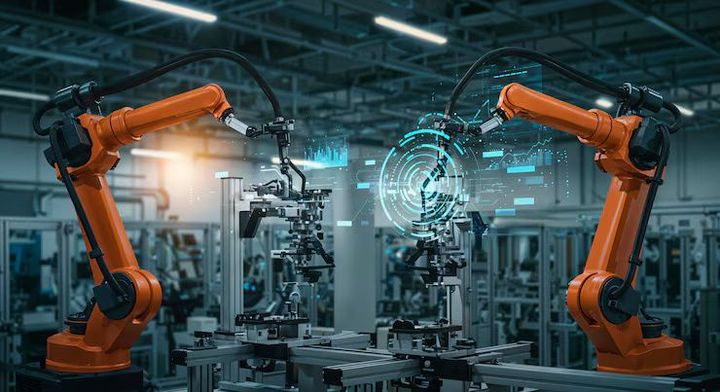
Modern manufacturing robots can perform repetitive and complex tasks with high accuracy. Collaborative robots, often called cobots, work alongside human employees to improve productivity and workplace safety.
As robotic systems become more intelligent, they can adapt to changing production requirements with minimal human intervention.
Key Benefits of Smart Factory Technology
Manufacturers are increasingly investing in smart factory transformation because of the significant advantages it provides.
Improved Operational Efficiency
Automation reduces manual tasks and minimizes human error. Real-time monitoring helps manufacturers identify bottlenecks and improve workflow efficiency.
This leads to higher output levels and more consistent production quality.
Better Quality Control
Connected systems continuously monitor production processes and product quality. Any deviations can be detected immediately, allowing corrective actions before defects become widespread.
As a result, businesses can improve product consistency and customer satisfaction.
Predictive Maintenance
Traditional maintenance often occurs after equipment failure. Smart factories use predictive maintenance solutions that analyze machine data to forecast potential issues.
This approach helps reduce unexpected downtime and extends equipment lifespan.
Enhanced Data Analytics
Manufacturing analytics platforms transform raw operational data into actionable insights. Decision-makers can track performance metrics, monitor production trends, and improve strategic planning.
Data-driven manufacturing helps organizations remain competitive in rapidly changing markets.
Energy Optimization
Energy management systems monitor power usage across manufacturing facilities. By identifying inefficiencies, companies can reduce energy consumption and support sustainability initiatives.
Energy optimization has become an important priority as manufacturers seek environmentally responsible operations.
Core Technologies Driving Smart Manufacturing
Several advanced technologies work together to create a fully connected factory environment.
Cloud Computing
Cloud-based platforms provide centralized access to manufacturing data. Teams can monitor operations, analyze performance, and manage production systems from multiple locations.
Cloud infrastructure also supports scalability and secure data storage.
Digital Twins
A digital twin is a virtual representation of a physical machine, process, or production line.
Manufacturers use digital twins to simulate operations, test improvements, and predict performance outcomes before implementing changes in real-world environments.
Edge Computing
Edge computing processes data closer to production equipment rather than sending everything to centralized servers.
This reduces latency and allows faster decision-making for time-sensitive manufacturing operations.
Cybersecurity Solutions
As manufacturing systems become more connected, cybersecurity becomes increasingly important.
Advanced security frameworks help protect operational technology networks, industrial control systems, and sensitive production data from cyber threats.
Smart Factory Trends Shaping the Future
Manufacturing technology continues to evolve rapidly. Several trends are expected to influence future factory development.
AI-Powered Automation
Artificial intelligence is becoming more capable of handling complex manufacturing decisions. Future production systems will use AI to optimize schedules, improve inventory management, and enhance supply chain visibility.
Autonomous Manufacturing Systems
Advanced automation technologies are moving toward self-managing production environments. These systems can adapt to changing conditions without constant human supervision.
Sustainable Manufacturing
Organizations are focusing on reducing waste, lowering emissions, and improving resource utilization. Smart factory technology supports sustainability through energy monitoring and process optimization.
Human-Machine Collaboration
Future factories will emphasize collaboration between skilled workers and intelligent machines. Employees will increasingly focus on strategic tasks while automated systems handle repetitive operations.
Challenges of Smart Factory Adoption
Although smart manufacturing offers many benefits, implementation can present challenges.
Initial technology integration may require significant planning. Manufacturers must ensure compatibility between legacy equipment and modern digital systems.
Workforce training is also essential. Employees need the skills to manage advanced technologies, analyze data, and operate automated systems effectively.
Cybersecurity risks remain another important consideration. Connected manufacturing environments require strong security measures to protect critical infrastructure and operational data.
Why Smart Factory Technology Matters
Global manufacturing is becoming more competitive, and businesses must continuously improve efficiency, quality, and flexibility.
Smart factory technology provides the foundation for modern manufacturing by combining automation, data intelligence, and connected systems. Organizations that embrace digital transformation can respond more quickly to market demands, improve operational performance, and support long-term growth.