Industrial Automation Software Guide for Modern Industries
Industrial automation software is a digital platform that helps manufacturing facilities and industrial operations monitor, control, and improve production processes. Instead of relying entirely on manual work, industries use software to communicate with machines, sensors, controllers, and production systems. This improves operational visibility while supporting consistent and efficient workflows.
The growth of industrial automation has been driven by the increasing complexity of manufacturing, rising quality expectations, and the need for better resource management. Modern factories often contain thousands of connected devices that generate valuable operational data. Automation software helps organize this information into meaningful insights that operators and engineers can use to make informed decisions.
Today, industrial automation software supports many industries, including automotive manufacturing, food processing, pharmaceutical production, electronics, packaging, chemical processing, textiles, energy generation, logistics, and water treatment. These industries depend on digital systems to improve production accuracy, monitor equipment health, reduce downtime, and maintain product consistency.
The software usually works alongside programmable controllers, industrial communication networks, sensors, human-machine interfaces, and data management systems. Together, these technologies create connected production environments where machines can exchange information quickly and efficiently.
As digital transformation continues across global manufacturing, industrial automation software has become an essential component of smart factories and Industry 4.0 initiatives.
Importance
Industrial automation software plays an important role in helping organizations improve productivity while maintaining consistent product quality. Modern production facilities handle complex operations that require continuous monitoring and precise control. Software-based automation simplifies these activities by providing centralized management of industrial processes.
Some major reasons why industrial automation software matters today include:
- Improves operational efficiency across production lines.
- Supports consistent manufacturing quality.
- Reduces manual process errors.
- Enables real-time equipment monitoring.
- Helps identify production bottlenecks.
- Supports predictive maintenance strategies.
- Improves data collection and reporting.
- Enhances production planning and scheduling.
- Assists with regulatory documentation.
- Encourages better resource utilization.
Many organizations also use industrial automation software to analyze production trends over time. Historical performance data helps identify recurring issues and opportunities for continuous improvement.
The growing adoption of Industrial Internet of Things (IIoT), cloud computing, artificial intelligence, machine learning, and digital twins has further increased the value of automation software. These technologies enable industries to transform raw operational data into practical business insights.
Industrial automation software also contributes to workplace safety by reducing repetitive manual intervention in hazardous environments and supporting automated monitoring of critical industrial systems.
Key Features of Industrial Automation Software
Modern industrial automation software includes a wide range of capabilities designed to support different manufacturing environments.
Real-Time Monitoring
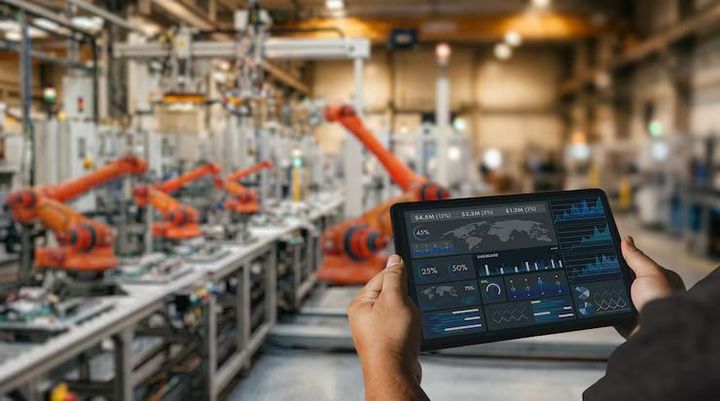
Operators can monitor production equipment continuously through dashboards that display machine status, alarms, and performance indicators.
Process Control
The software manages industrial processes by coordinating communication between machines, sensors, controllers, and production equipment.
Data Collection
Production information is automatically collected for analysis, reporting, and long-term performance evaluation.
Alarm Management
Automation systems notify operators when equipment exceeds predefined operating conditions, helping reduce unexpected interruptions.
Reporting and Analytics
Production reports provide valuable insights into equipment utilization, output quality, energy consumption, and operational efficiency.
Production Scheduling
Many automation platforms assist with planning production activities to improve workflow coordination.
Predictive Maintenance
Advanced analytics identify early signs of equipment wear, allowing maintenance activities to be planned before failures occur.
Remote Monitoring
Authorized personnel can review operational data from secure locations, improving response time and operational flexibility.
Industry Applications
Industrial automation software supports a wide range of sectors.
| Industry | Common Applications |
|---|---|
| Automotive | Assembly line monitoring, robotic coordination |
| Food Processing | Quality control, packaging automation |
| Pharmaceuticals | Batch monitoring, production tracking |
| Electronics | Precision manufacturing, inspection systems |
| Chemical Industry | Process control, safety monitoring |
| Textile Manufacturing | Machine synchronization, production planning |
| Energy | Power plant monitoring, asset management |
| Water Treatment | Pump control, process monitoring |
| Mining | Equipment monitoring, operational analytics |
| Logistics | Warehouse automation, material handling |
Each industry has unique operational requirements, but automation software provides a flexible platform capable of supporting various production environments.
Recent Updates
Industrial automation software continues to evolve rapidly as manufacturers adopt advanced digital technologies.
During 2025 and early 2026, several important trends have gained momentum across industrial sectors.
Artificial Intelligence Integration
Artificial intelligence is increasingly being incorporated into automation platforms to improve predictive maintenance, production forecasting, and anomaly detection.
Expansion of Industrial IoT
More factories are connecting machines through Industrial Internet of Things technologies, creating larger networks of smart equipment capable of sharing operational information in real time.
Digital Twin Technology
Digital twins have become more widely adopted for production planning, equipment simulation, and process optimization.
Improved Cybersecurity
Manufacturers continue strengthening cybersecurity measures as connected industrial systems become more common. Multi-layer security, continuous monitoring, and secure industrial communication remain major priorities.
Edge Computing
Edge computing is reducing response times by processing operational data closer to industrial equipment rather than relying entirely on centralized systems.
Sustainability Monitoring
Manufacturers are increasingly using automation software to monitor energy usage, emissions, water consumption, and production efficiency as sustainability reporting becomes more important worldwide.
These developments demonstrate how industrial automation software is moving beyond traditional machine control toward intelligent manufacturing systems capable of continuous learning and operational improvement.
Laws or Policies
Industrial automation software is influenced by several regulatory frameworks depending on the country and industry.
Manufacturing organizations must often comply with workplace safety regulations that require proper monitoring of industrial equipment and safe operating procedures. Automation software can support compliance by maintaining production records, monitoring operational conditions, and generating audit documentation.
Many countries have introduced cybersecurity guidelines for critical industrial infrastructure to protect connected manufacturing systems from digital threats. Organizations are encouraged to implement secure access controls, regular software updates, and continuous system monitoring.
Environmental regulations also influence industrial automation by encouraging better monitoring of energy usage, emissions, waste management, and resource consumption.
Industries such as pharmaceuticals, food manufacturing, medical devices, and chemical processing often follow additional quality management requirements that emphasize process documentation, traceability, and operational consistency.
As governments continue supporting digital manufacturing initiatives, industrial automation software is expected to remain an important component of national industrial modernization strategies.
Tools and Resources
Several categories of resources help professionals understand and manage industrial automation software effectively.
| Tool Category | Purpose |
|---|---|
| Process Simulation Tools | Test production workflows before implementation |
| Industrial Data Analytics Platforms | Analyze production performance |
| Equipment Monitoring Dashboards | Track machine health |
| Production Planning Templates | Organize manufacturing schedules |
| Maintenance Planning Checklists | Support preventive maintenance |
| Industrial Network Diagnostic Tools | Monitor communication systems |
| Energy Consumption Calculators | Evaluate operational efficiency |
| Risk Assessment Templates | Improve workplace safety planning |
| Learning Platforms | Build automation knowledge |
| Technical Documentation Libraries | Understand industrial standards |
These resources support engineers, operators, production managers, maintenance teams, quality professionals, and students learning about industrial automation technologies.
Frequently Asked Questions
What is industrial automation software?
Industrial automation software is a digital platform that monitors, controls, analyzes, and manages manufacturing and industrial production processes using connected equipment and operational data.
Which industries commonly use industrial automation software?
Automotive, pharmaceutical, food processing, chemical manufacturing, electronics, textiles, logistics, mining, energy, and water treatment industries commonly use automation software.
What are the main benefits of industrial automation software?
Major benefits include improved operational efficiency, better production quality, enhanced equipment monitoring, predictive maintenance, data analysis, improved safety, and more consistent manufacturing processes.
How does industrial automation software support Industry 4.0?
It connects machines, sensors, controllers, and data systems into intelligent production environments that enable real-time monitoring, analytics, predictive maintenance, and digital decision-making.
Is industrial automation software important for future manufacturing?
Yes. As manufacturing becomes increasingly digital, automation software plays a central role in supporting connected factories, operational efficiency, sustainability monitoring, and continuous production improvement.
Conclusion
Industrial automation software has become a fundamental technology in modern manufacturing and industrial operations. By integrating machines, sensors, controllers, and digital information into unified production environments, it helps organizations improve operational efficiency, maintain consistent quality, strengthen safety practices, and make better data-driven decisions.