PVC Pipe Manufacturing Machine Guide: Types, Process, Technology & Uses
PVC pipe manufacturing machines are industrial systems designed to transform polyvinyl chloride resin and selected additives into pipes with controlled dimensions, strength, and surface quality. These machines are widely associated with plastic extrusion technology and are used to produce pipes for water distribution, drainage, irrigation, electrical protection, and other infrastructure applications.
The basic production concept is straightforward. PVC material is prepared as a formulation, heated inside an extrusion system, shaped through a die, cooled, sized, cut, and inspected. Modern production lines can integrate several of these stages into one coordinated manufacturing system.
The growing use of PVC pipes has created demand for efficient PVC extrusion machines, automated production lines, pipe sizing equipment, and quality-control systems. Understanding how these technologies work is useful for manufacturers, engineers, students, infrastructure planners, and people researching plastic pipe manufacturing.
Why PVC Pipe Manufacturing Technology Matters
PVC pipes are used in many infrastructure systems because they can be produced in different diameters, pressure classes, and configurations. Their applications range from water distribution and agricultural irrigation to drainage, sewerage, conduit protection, and industrial fluid handling.
The manufacturing machine has a direct influence on dimensional accuracy and production consistency. Temperature, extrusion speed, cooling conditions, die design, and material preparation all need to remain within appropriate operating ranges.
This is particularly important for applications where pipe dimensions and pressure performance are specified by technical standards.
For example, India's IS 4985:2021 covers unplasticized PVC pipes for potable water supplies and classifies pipes according to working pressure and application. The standard includes requirements related to dimensions, physical characteristics, mechanical performance, and marking.
Key areas affected by PVC pipe manufacturing technology include:
- Dimensional consistency
- Wall-thickness control
- Pressure performance
- Surface finish
- Material utilization
- Production stability
- Energy management
- Quality testing
- Process automation
- Workplace safety
These factors make the selection and configuration of a PVC pipe extrusion line an important engineering decision.
Main Types of PVC Pipe Manufacturing Machines
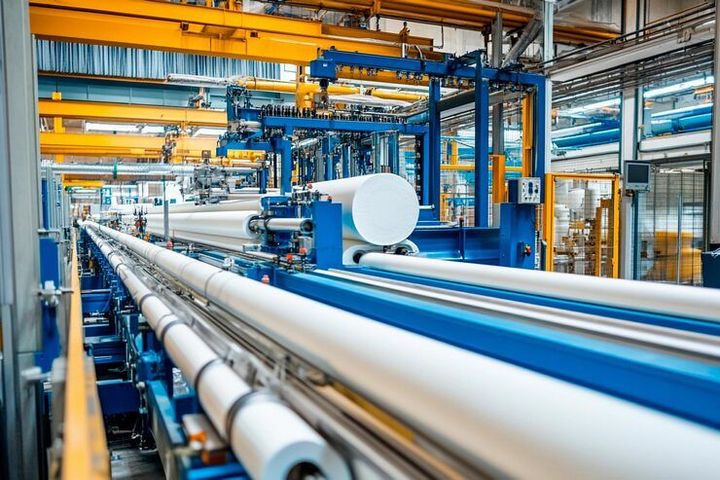
Different pipe specifications require different machine configurations. A typical production line may contain several interconnected machines rather than one standalone unit.
PVC Extrusion Machine
The extruder is the central component of most PVC pipe production lines. It contains a feeding system, screw assembly, barrel, heating zones, and drive system.
PVC material enters the extruder and moves forward through controlled heating and mechanical action. The material becomes processable and is pushed toward the extrusion die.
Twin-screw extruders are commonly associated with rigid PVC processing because they provide controlled material mixing and processing characteristics. The exact screw design depends on the formulation, pipe dimensions, and production requirements.
Conical Twin-Screw Extruder
A conical twin-screw extruder uses two screws arranged in a conical configuration. It is frequently used for rigid PVC processing.
Its design can provide controlled feeding, mixing, and extrusion while supporting stable processing of PVC formulations. The machine parameters must be selected according to material characteristics and the required pipe specification.
PVC Pipe Die Head
The die head determines the initial shape and dimensions of the extruded pipe. Different die configurations are used for different pipe diameters and product designs.
Accurate die design is important because uneven material distribution can affect wall thickness and dimensional consistency.
Vacuum Calibration Tank
After leaving the die, the hot pipe enters a calibration system. A vacuum calibration tank helps establish the required external dimensions while cooling the pipe.
Water temperature, vacuum level, pipe speed, and calibration sleeve condition can influence the final dimensions.
Cooling Tank
Cooling systems reduce the temperature of the extruded pipe and help stabilize its shape. Controlled cooling is particularly important because PVC remains sensitive to dimensional changes while it is hot.
Haul-Off Unit
The haul-off system pulls the pipe through the production line at a controlled speed. Stable pulling is essential for maintaining consistent pipe dimensions and production conditions.
Cutting Machine
A cutting unit separates continuous pipe into predetermined lengths. Depending on the production system, cutting may be synchronized with the haul-off speed.
Belling or Socketing Machine
Some PVC pipes require socketed ends for particular joining methods. A belling machine forms the required socket geometry after the pipe has been cut.
Online Printing and Marking System
Marking equipment can identify important product information such as pipe specification, dimensions, class, production details, and applicable standard markings.
How the PVC Pipe Manufacturing Process Works
The PVC pipe production process normally follows several connected stages.
Material Preparation
PVC resin is combined with suitable additives according to the required pipe formulation. Stabilizers, processing aids, pigments, and other permitted components may be used depending on the application and applicable standard.
Material preparation must be controlled carefully because formulation affects processing behavior and finished-pipe properties.
Feeding and Extrusion
The prepared material enters the extruder. The screw system transports and processes the material through controlled temperature zones.
The processed PVC then moves toward the die head.
Pipe Formation
The die shapes the material into a continuous tubular profile. At this stage, process stability is important because variations can affect wall thickness and external dimensions.
Calibration and Cooling
The newly formed pipe passes through a vacuum calibration and cooling system. The pipe is stabilized to the required dimensions as its temperature decreases.
Haul-Off and Cutting
The haul-off system continuously draws the pipe forward. A cutting machine then separates the pipe into specified lengths.
Socket Formation
Where required, a belling system forms a socket at one end of the pipe. The socket geometry must correspond with the intended joining method.
Inspection and Testing
Finished pipes undergo dimensional and performance checks. Depending on the applicable standard, testing can include measurements of diameter, wall thickness, length, pressure performance, surface characteristics, thermal behavior, and other properties.
Recent Technology Trends and Updates
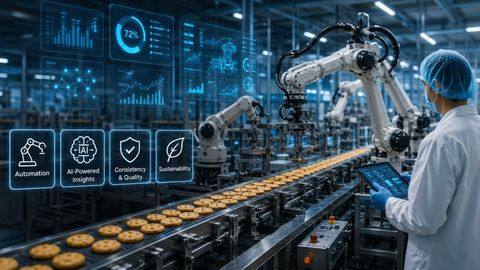
PVC pipe manufacturing technology has increasingly focused on process automation, energy management, digital monitoring, and consistent quality control.
One notable development in India is the continued implementation and testing framework surrounding IS 4985:2021. The Bureau of Indian Standards updated its dedicated PVC Pipes information page on December 31, 2025. BIS laboratory records also show expanded or updated testing scopes for PVC pipe standards during 2025, including entries effective from June, October, and November 2025.
Current technology trends include:
- Automated extrusion temperature control
- Digital monitoring of production parameters
- Servo-controlled haul-off systems
- Improved vacuum calibration
- Energy-efficient drive systems
- Automatic pipe measurement
- Computer-assisted quality monitoring
- More precise wall-thickness control
- Production data recording
- Integrated fault detection
Manufacturers are also paying greater attention to material efficiency and process stability. These developments can help reduce process variation while making production data easier to monitor.
Laws, Standards, and Policies in India
PVC pipe manufacturing in India is influenced by product standards, environmental regulations, factory requirements, and plastic-waste policies.
BIS Standards
The Bureau of Indian Standards maintains specifications for different categories of PVC pipes. IS 4985:2021 covers unplasticized PVC pipes for potable water supplies and includes different pressure classes and application categories. BIS documentation also identifies requirements concerning dimensions, pressure performance, physical characteristics, and marking.
Other standards address specific applications such as underground drainage, agricultural systems, borewell casing, and oriented PVC pipes.
Therefore, a manufacturing line should be designed around the specific product standard applicable to the intended pipe.
Plastic Waste Management Rules
India's Plastic Waste Management framework is also relevant to plastic manufacturing and waste handling. The Ministry of Environment, Forest and Climate Change issued the Plastic Waste Management (Amendment) Rules, 2024, dated March 14, 2024. The amendments include provisions concerning plastic materials, marking, recycling-related requirements, and compliance mechanisms.
The Central Pollution Control Board also maintains rules and compliance information for plastic waste management. Its rules page was updated on May 26, 2025.
Environmental permissions, waste-management requirements, pollution-control conditions, and state-level regulations can vary according to the facility and its location. Manufacturers should therefore verify current requirements with the relevant authorities before establishing or modifying a production facility.
Important Tools and Resources
Several tools can help engineers and production teams understand PVC pipe manufacturing.
Pipe Dimension Calculator
A pipe dimension calculator can help estimate relationships among outside diameter, inside diameter, and wall thickness. It is useful for preliminary engineering calculations.
Extrusion Process Monitoring Software
Digital monitoring systems can record temperature, screw speed, extrusion pressure, haul-off speed, and other process parameters.
Quality-Control Templates
Inspection templates can be used to record:
- Outside diameter
- Wall thickness
- Pipe length
- Surface condition
- Weight
- Pressure test results
- Marking information
- Batch information
Technical Standards Databases
Standards databases help manufacturers identify the relevant specifications for water supply, drainage, irrigation, electrical conduit, and other applications.
Preventive Maintenance Checklists
Maintenance checklists can track screw condition, heater performance, cooling systems, vacuum pumps, calibration sleeves, cutting blades, and drive components.
Energy Monitoring Tools
Energy meters and production monitoring software can help identify variations in electricity consumption and support process optimization.
Frequently Asked Questions
What is a PVC pipe manufacturing machine?
A PVC pipe manufacturing machine is a production system that processes PVC material through extrusion, shaping, calibration, cooling, pulling, cutting, and, where required, socket formation to produce finished pipes.
Which machine is the main part of a PVC pipe production line?
The extruder is generally the central machine because it processes and pushes the PVC material through the die. However, consistent pipe production requires supporting equipment such as calibration, cooling, haul-off, cutting, and control systems.
What factors affect PVC pipe quality?
Important factors include material formulation, processing temperature, extrusion speed, die design, calibration, cooling, haul-off speed, wall thickness, and quality-control procedures.
Are all PVC pipes manufactured to the same standard?
No. PVC pipes can be designed for different applications, dimensions, pressure classes, and joining methods. The applicable technical standard depends on the intended use and market.
What should be checked before selecting a PVC pipe manufacturing line?
Important considerations include pipe diameter range, wall thickness, pressure class, material formulation, production capacity, automation level, available floor space, cooling requirements, quality testing, and applicable regulatory standards.
Conclusion
PVC pipe manufacturing machines combine extrusion, forming, calibration, cooling, pulling, cutting, and quality-control technologies into an integrated production process. The extruder plays a central role, but every stage contributes to the dimensional accuracy and performance of the finished pipe.