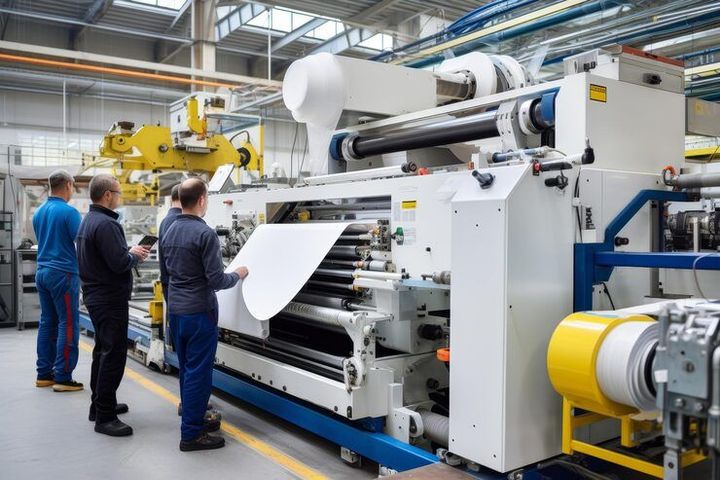
Paper Manufacturing Equipment: A Complete Guide to Machines and Processes
Paper manufacturing equipment includes the industrial machines used to transform wood fibers, recycled paper, and other suitable raw materials into paper products. These products include writing paper, packaging materials, tissue paper, paperboard, and specialty grades used in different industries.
Paper production combines mechanical processing, water management, heat, pressure, and chemical treatments. Each stage prepares the material for the next step until it becomes a finished paper sheet or roll.
Modern paper mills use interconnected equipment to maintain consistent thickness, strength, smoothness, and moisture levels. The exact machinery depends on the paper grade, raw materials, production capacity, and required product characteristics.
Main Types of Paper Manufacturing Machines
Several categories of industrial machinery work together during paper production.
Pulping equipment: Separates fibers from wood or prepares recycled paper for reuse.
Screening and cleaning systems: Remove unwanted particles, contaminants, and other impurities.
Paper-making machines: Form wet fibers into a continuous sheet.
Pressing equipment: Removes water and improves sheet structure.
Industrial drying systems: Reduce moisture using controlled heat.
Calendering machines: Use rollers to improve surface smoothness and thickness consistency.
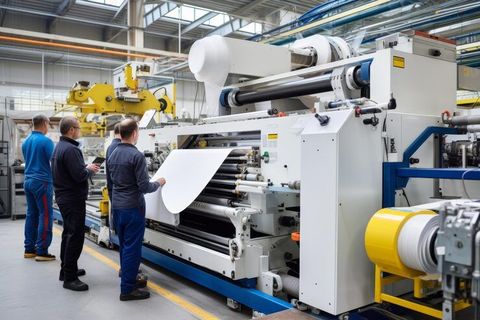
Paper converting machines: Cut, rewind, fold, or shape large paper rolls into usable formats.
Quality inspection systems: Measure properties such as thickness, moisture, weight, and surface defects.
The arrangement of these machines varies between mills. A recycled packaging paper facility, for example, may require different preparation and finishing equipment from a tissue paper plant.
Importance: Why Paper Manufacturing Technology Matters
Paper remains important in education, publishing, hygiene, transportation, food packaging, and many industrial applications. As packaging requirements and environmental expectations change, manufacturers need reliable equipment that supports consistent production and responsible resource management.
Improving Production Consistency
Paper quality depends on several connected factors, including fiber distribution, moisture, temperature, pressure, and machine speed. If one stage operates incorrectly, defects can appear throughout the finished roll.
Automated monitoring systems help operators identify variations before they create larger production problems.
Common quality measurements include:
Basis weight, which describes paper mass per unit area.
Thickness and density.
Tensile strength and tear resistance.
Moisture content.
Surface smoothness and appearance.
Brightness and color consistency where relevant.
Consistent monitoring helps production teams understand how machine settings affect the final paper.
Supporting Recycled Paper Production
Recycled paper is an important raw material for many packaging and tissue products. However, recovered paper may contain adhesives, inks, coatings, plastics, and other unwanted materials.
Recycling equipment prepares these fibers through pulping, screening, cleaning, and, where necessary, deinking. Fiber quality can decline after repeated recycling, so the appropriate blend of recovered and fresh fibers depends on the intended paper grade.
Managing Energy and Water
Paper production can require substantial quantities of water and energy, especially during pulping and drying. Efficient equipment can help reduce unnecessary water use, heat loss, and process interruptions.
Common approaches include:
Recovering heat from suitable process streams.
Reusing process water where technically appropriate.
Monitoring steam consumption.
Improving dryer operation.
Detecting leaks and equipment inefficiencies.
Using process data to identify unusual energy patterns.
These measures can support better resource management, although results depend on plant design, raw materials, operating conditions, and maintenance practices.
Recent Updates: Trends in Paper Manufacturing Equipment
During 2025 and 2026, paper manufacturing continued to be influenced by automation, digital monitoring, packaging demand, and environmental management. The pace of adoption differs between regions and individual facilities.
Artificial Intelligence and Predictive Maintenance
Artificial intelligence and machine learning can analyze information from sensors installed on pumps, motors, rollers, bearings, and drying equipment.
These systems may help identify unusual vibration, temperature changes, or operating patterns that suggest developing faults.
Predictive maintenance uses these signals to support maintenance planning before equipment failure interrupts production. However, reliable predictions require suitable sensor data, appropriate models, and regular technical validation.
Digital Monitoring and Smart Manufacturing
Industrial control systems increasingly connect production measurements with dashboards and historical data records. Operators can use these tools to examine changes in moisture, machine speed, steam consumption, and paper quality.
Digital monitoring can also help teams compare production batches and investigate recurring defects.
Not every mill requires a fully connected factory. Smaller facilities may begin with selected sensors or monitoring systems before expanding their digital infrastructure.
Progress in Sustainable Packaging
Paper-based packaging continues to attract attention as businesses and governments examine packaging waste and material recovery. However, paper is not automatically more sustainable in every application. Its environmental performance depends on fiber sourcing, manufacturing energy, water use, coatings, transportation, and end-of-life treatment.
In 2025 and 2026, manufacturers and equipment developers continued to focus on fiber recovery, water management, energy efficiency, and packaging performance. Specific technology announcements and adoption rates should be assessed using dated industry evidence rather than assumed to apply to every mill.
Comparison of Major Equipment Categories
| Equipment | Main function | Important operating measure |
|---|---|---|
| Pulping system | Prepares paper fibers | Fiber quality and consistency |
| Screening system | Removes contaminants | Separation efficiency |
| Forming section | Creates the wet paper sheet | Basis weight and formation |
| Press section | Removes water mechanically | Moisture and sheet strength |
| Dryer section | Reduces remaining moisture | Temperature and moisture profile |
| Calendering section | Improves surface properties | Smoothness and thickness |
| Rewinding system | Produces finished rolls | Roll tension and alignment |
These measurements provide a general overview. Actual operating limits depend on the paper grade and equipment design.
Laws or Policies: Regulations Affecting Paper Manufacturing
Paper mills must consider environmental, workplace safety, machinery, and waste-management requirements. Applicable rules depend on the country, production process, and type of facility.
Environmental Regulations in India
In India, paper manufacturing facilities may be subject to requirements under the Water (Prevention and Control of Pollution) Act, 1974, and the Air (Prevention and Control of Pollution) Act, 1981.
The Environment (Protection) Act, 1986, provides a broader framework for environmental protection. Relevant facilities may need approvals, pollution-control measures, monitoring, and compliance with conditions established by the competent authorities.
Requirements can differ according to the plant's processes, location, capacity, and environmental classification. Manufacturers should verify current obligations with the relevant State Pollution Control Board and other competent authorities.
Wastewater and Emissions Management
Pulping, bleaching, washing, and other operations can generate wastewater containing suspended solids, organic matter, and process chemicals. Certain processes may also produce air emissions, including particulate matter and combustion-related pollutants.
Environmental management measures may include:
Wastewater treatment and monitoring.
Control of process emissions.
Safe storage and handling of chemicals.
Responsible management of sludge and solid waste.
Water reuse where appropriate.
Records of environmental performance.
Specific discharge limits and monitoring requirements must be determined from the applicable regulations and permits.
Workplace and Machinery Safety
Industrial paper machines contain moving rollers, cutting mechanisms, high-temperature surfaces, and pressurized systems. Workers may face risks from entanglement, crushing, burns, noise, and chemical exposure.
Facilities should establish appropriate machine guarding, emergency-stop arrangements, lockout procedures, training, and personal protective equipment. Applicable Indian factory and occupational safety requirements should be checked against current legislation and implementation rules.
Internationally, some manufacturers also consult ISO standards for environmental management, quality management, and occupational health and safety. Such standards do not replace applicable legal requirements.
Tools and Resources: Planning and Monitoring Paper Production
Manufacturers and technical learners can use several categories of tools to understand paper production and evaluate equipment performance.
Production Monitoring Software
Industrial monitoring platforms collect information from sensors, controllers, and production equipment. They can help operators review machine speed, temperatures, moisture readings, downtime, and process trends.
Energy and Water Calculators
Energy calculators estimate electricity or thermal energy consumption from recorded operating data. Water-use calculations can compare water intake with production volume and identify opportunities for process improvement.
For meaningful comparisons, measurements should use consistent units and account for differences in paper grades and production conditions.
Quality Control Templates
Standardized inspection records help teams document paper properties and identify recurring problems.
Useful fields include:
Production date and batch identification.
Paper grade and raw material composition.
Basis weight and thickness measurements.
Moisture readings.
Defect observations.
Equipment settings and maintenance notes.
Corrective actions and follow-up results.
Maintenance Planning Tools
Maintenance schedules can organize inspections, lubrication, alignment checks, component replacement, and equipment servicing. Sensor-based monitoring may supplement these schedules but should not replace required safety inspections.
Process Flow Diagrams
A process flow diagram shows how raw materials move through pulping, cleaning, sheet formation, pressing, drying, finishing, and packaging. It helps students and operators understand the relationship between equipment stages.
FAQs About Paper Manufacturing Equipment
What machines are used in paper manufacturing?
Common machines include pulpers, screening systems, cleaning equipment, paper-forming machines, presses, dryers, calenders, slitters, rewinders, and inspection systems. The exact combination depends on the paper product and production process.
How does a paper-making machine work?
A paper-making machine distributes a dilute fiber suspension onto a forming surface. Water drains away as the fibers create a wet sheet. Pressing removes additional water, and heated dryers reduce moisture further. Finishing equipment then adjusts surface properties and prepares the paper for its intended use.
What raw materials are used for paper production?
Common materials include wood pulp, recovered paper, and other suitable plant-based fibers. The choice depends on the desired strength, texture, appearance, and intended application. Some specialty papers use alternative fibers or additional functional materials.
How does automation improve paper production?
Automation monitors process conditions and adjusts selected machine settings. It can help maintain consistent quality, identify unusual operating conditions, reduce avoidable interruptions, and improve production records. Results depend on system design, maintenance, and operator oversight.
What factors affect paper manufacturing equipment selection?
Important factors include paper grade, production capacity, raw material quality, energy and water requirements, available space, maintenance needs, environmental obligations, and product specifications. Equipment should be evaluated as part of the complete production process rather than as an isolated machine.
Conclusion
Paper manufacturing equipment combines fiber preparation, sheet formation, water removal, drying, finishing, and quality inspection. Each stage contributes to the strength, appearance, thickness, and performance of the final product.