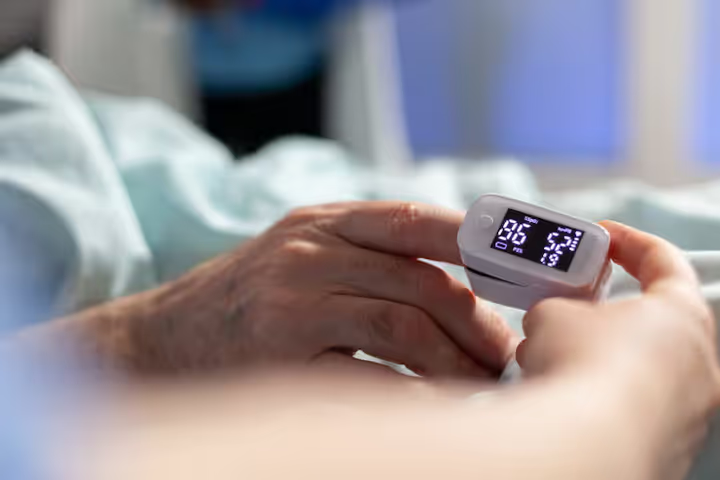
Oxygen Analyzer Guide for Industrial Monitoring and Process Control
An oxygen analyzer is an instrument designed to measure the concentration of oxygen in gases or gas mixtures. It plays a vital role in industrial operations, laboratories, healthcare environments, energy production, environmental monitoring, and manufacturing processes where accurate oxygen measurement is essential.
Maintaining the correct oxygen level helps improve operational efficiency, product quality, environmental compliance, and workplace safety. Whether monitoring combustion systems, checking air quality, or supporting industrial production, oxygen analyzers provide dependable data for informed decision-making.
As industries continue adopting automation and digital monitoring technologies, oxygen analyzers have become increasingly advanced, delivering continuous measurements with higher accuracy and improved reliability.
How an Oxygen Analyzer Works
An oxygen analyzer detects oxygen concentration using specialized sensing technologies. The sensor interacts with the gas sample and converts the measured oxygen level into an electrical signal. This information is processed and displayed as oxygen concentration, typically expressed as a percentage or parts per million (ppm).
The measurement process generally includes:
- Gas sample collection
- Sample conditioning when required
- Oxygen sensing
- Signal processing
- Digital display and communication
- Continuous monitoring and data recording
Modern analyzers often include automatic calibration support, diagnostic functions, and digital communication protocols that integrate with industrial automation systems.
Key Components
Sensor
The sensing element performs the oxygen measurement using a selected technology.
Sampling System
Directs the gas sample toward the sensing element while maintaining measurement stability.
Signal Processor
Converts sensor output into readable measurement values.
Display Interface
Shows oxygen concentration, alarms, diagnostic information, and operating status.
Calibration Module
Maintains measurement accuracy through routine calibration procedures.
Communication Interface
Supports industrial communication standards for integration with monitoring systems.
Common Types of Oxygen Analyzers
| Type | Measurement Principle | Typical Applications | Main Advantages |
|---|---|---|---|
| Zirconia Oxygen Analyzer | Measures oxygen using zirconium oxide at high temperature | Boilers, furnaces, combustion systems | Fast response and high accuracy |
| Electrochemical Oxygen Analyzer | Uses chemical reaction within sensor | Laboratories, portable instruments, safety monitoring | Compact and suitable for lower oxygen ranges |
| Paramagnetic Oxygen Analyzer | Detects oxygen's magnetic properties | Industrial gas processing, research laboratories | Highly accurate and stable |
| Optical Oxygen Analyzer | Uses optical sensing technology | Environmental monitoring, biotechnology | Low maintenance and long operational life |
| Laser-Based Oxygen Analyzer | Uses laser absorption measurement | Advanced industrial process monitoring | High precision and rapid measurement |
Importance of Oxygen Analysis
Accurate oxygen measurement supports numerous industrial objectives.
Improved Process Efficiency
Maintaining optimal oxygen levels helps industrial equipment operate more efficiently while reducing unnecessary energy consumption.
Better Product Quality
Many manufacturing processes require controlled oxygen concentrations to achieve consistent production quality.
Environmental Protection
Continuous oxygen monitoring assists organizations in reducing emissions and supporting environmental objectives.
Workplace Safety
Monitoring oxygen concentrations helps identify oxygen-deficient or oxygen-enriched environments that may create safety hazards.
Regulatory Compliance
Many industries monitor oxygen as part of environmental reporting, emissions management, and operational documentation.
Industrial Applications
Oxygen analyzers are widely used across many industries.
Power Generation
They optimize combustion efficiency in boilers, turbines, and power plants.
Oil and Gas
Used for process monitoring, gas processing, storage systems, and refining operations.
Chemical Manufacturing
Support controlled chemical reactions where oxygen concentration directly affects product consistency.
Metal Processing
Assist in furnaces, heat treatment operations, and steel production.
Pharmaceutical Manufacturing
Maintain controlled environments for sensitive manufacturing processes.
Food Processing
Support modified atmosphere packaging and storage environments.
Environmental Monitoring
Measure oxygen concentration in emission monitoring systems and research applications.
Water and Wastewater Treatment
Help monitor aeration systems that support biological treatment processes.
Problems an Oxygen Analyzer Helps Solve
Industrial facilities face several operational challenges that oxygen analyzers help address.
Prevents Inefficient Combustion
Incorrect oxygen levels may reduce equipment efficiency and increase emissions.
Supports Stable Manufacturing
Continuous monitoring minimizes unexpected process variations.
Reduces Equipment Stress
Balanced oxygen levels help improve equipment operating conditions.
Improves Monitoring Accuracy
Automated measurements reduce reliance on manual sampling.
Enhances Safety Monitoring
Continuous oxygen measurement provides early warning of abnormal conditions.
Important Features
Modern oxygen analyzers include numerous capabilities.
Measurement Accuracy
High-quality sensors provide dependable oxygen readings.
Fast Response Time
Rapid detection supports real-time process adjustments.
Wide Measurement Range
Suitable for percentage-level and trace oxygen applications.
Digital Connectivity
Supports industrial automation through Ethernet, Modbus, HART, and other communication protocols.
Alarm Functions
Configurable alarms notify operators when oxygen levels exceed defined limits.
Data Logging
Stores historical measurement information for reporting and analysis.
Remote Monitoring
Supports centralized supervision using industrial monitoring platforms.
Automatic Diagnostics
Identifies maintenance needs before measurement quality declines.
Recent Developments (2025–2026)
The oxygen analyzer market continues evolving with advances in sensing technologies and industrial digitalization.
Recent developments include:
AI-Assisted Predictive Maintenance
Many industrial monitoring platforms introduced enhanced predictive diagnostics during 2025, helping identify sensor degradation before measurement accuracy is affected.
Improved Digital Integration
Manufacturers expanded support for Industrial Internet of Things (IIoT) platforms, enabling cloud-connected monitoring and centralized asset management throughout 2025 and early 2026.
Higher Sensor Durability
New sensor materials introduced during 2025 improved resistance to high temperatures, corrosive gases, and demanding industrial environments.
Enhanced Cybersecurity
Industrial monitoring equipment released during 2025–2026 increasingly includes secure communication features aligned with modern industrial cybersecurity practices.
Lower Maintenance Designs
Several newer analyzer platforms emphasize simplified calibration procedures and longer sensor operating life.
Standards and Regulations
Organizations using oxygen analyzers often consider internationally recognized standards depending on their industry.
ISO Standards
Various ISO standards support quality management, calibration, environmental management, and industrial measurement practices.
IEC Standards
International Electrotechnical Commission standards address electrical safety and industrial equipment performance.
Environmental Regulations
Many countries require continuous emissions monitoring for specific industrial operations where oxygen measurement forms part of compliance reporting.
Workplace Safety Guidelines
Occupational safety regulations frequently recommend continuous oxygen monitoring in confined spaces and hazardous work environments.
Organizations should always follow the regulations applicable within their operating region and industry.
Useful Tools and Learning Resources
Professionals interested in oxygen analysis can expand their knowledge through various technical resources.
Learning Resources
- Industrial instrumentation textbooks
- Process control engineering references
- Gas analysis technical manuals
- Instrument calibration guides
- Industrial automation training programs
Software Platforms
- SCADA systems
- Distributed Control Systems (DCS)
- Industrial Historian software
- Industrial IoT dashboards
- Process monitoring software
Professional Organizations
- International Society of Automation (ISA)
- International Electrotechnical Commission (IEC)
- International Organization for Standardization (ISO)
- Engineering education platforms
- Industrial instrumentation associations
Selecting an Appropriate Oxygen Analyzer
Several factors influence analyzer selection.
Measurement Range
Determine whether percentage oxygen or trace oxygen measurement is required.
Operating Environment
Consider temperature, humidity, pressure, and gas composition.
Sensor Technology
Select the sensing technology that best matches the application.
Response Speed
Fast-changing processes benefit from rapid measurement capability.
Maintenance Requirements
Evaluate calibration intervals and sensor replacement schedules.
Communication Compatibility
Ensure compatibility with existing industrial automation systems.
Future Outlook
Industrial digital transformation continues increasing the demand for intelligent oxygen monitoring solutions.
Future oxygen analyzers are expected to include:
Emerging Capabilities
- Advanced artificial intelligence diagnostics
- Improved wireless connectivity
- Greater cloud integration
- Enhanced cybersecurity
- Miniaturized sensor technology
- Improved energy efficiency
- Expanded predictive analytics
- Greater automation compatibility
These developments are expected to improve operational visibility while supporting smarter industrial decision-making.
Frequently Asked Questions
What does an oxygen analyzer measure?
An oxygen analyzer measures the concentration of oxygen present in a gas sample, typically displayed as a percentage or parts per million depending on the application.
Which industries commonly use oxygen analyzers?
Power generation, chemical manufacturing, oil and gas, pharmaceutical production, food processing, environmental monitoring, laboratories, and water treatment facilities commonly use oxygen analyzers.
What is the difference between zirconia and electrochemical oxygen analyzers?
Zirconia analyzers are commonly used for continuous high-temperature industrial applications, while electrochemical analyzers are often selected for portable instruments and lower-range oxygen measurements.
Why is calibration important?
Calibration helps maintain measurement accuracy by comparing instrument readings with known reference values and correcting any deviations.
Can oxygen analyzers connect with industrial automation systems?
Yes. Modern oxygen analyzers commonly support industrial communication protocols that enable integration with SCADA, DCS, Industrial IoT platforms, and centralized monitoring systems.
Conclusion
An oxygen analyzer is an essential measurement instrument that supports accurate oxygen monitoring across numerous industrial and scientific applications. By providing continuous, dependable measurements, it contributes to operational efficiency, product consistency, workplace safety, environmental responsibility, and regulatory compliance.
Advances in digital connectivity, intelligent diagnostics, predictive maintenance, and Industrial Internet of Things technologies continue improving analyzer performance. As industries move toward increasingly automated operations, oxygen analyzers will remain a fundamental component of modern process monitoring and industrial measurement systems.
Disclaimer: The information provided in this article is for informational purposes only. We do not make any claims or guarantees regarding the accuracy, reliability, or completeness of the information presented. The content is not intended as professional advice and should not be relied upon as such. Readers are encouraged to conduct their own research and consult with appropriate professionals before making any decisions based on the information provided in this article.