LASIK Treatment: Helpful Resources for Understanding Vision Correction
LASIK treatment is a widely used laser vision correction procedure designed to reduce or eliminate dependence on glasses or contact lenses. The name LASIK stands for Laser-Assisted In Situ Keratomileusis. It reshapes the cornea so that light entering the eye focuses correctly on the retina, resulting in clearer vision.
The procedure is commonly performed to correct refractive errors such as nearsightedness (myopia), farsightedness (hyperopia), and astigmatism. Modern laser technology has made LASIK one of the most frequently performed elective eye procedures worldwide, with continuous improvements in precision, safety, and patient outcomes.
LASIK is intended for people whose vision has remained stable and whose eyes are healthy enough for laser correction. A detailed eye examination is always necessary to determine suitability.
How LASIK Treatment Works
The eye focuses light through the cornea and lens before the image reaches the retina. When the shape of the cornea causes light to focus incorrectly, vision becomes blurry.
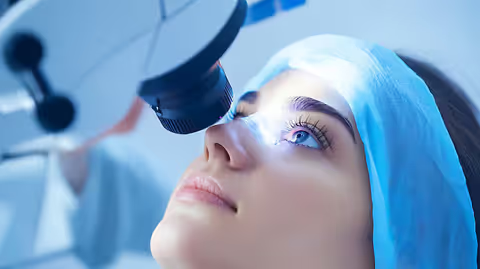
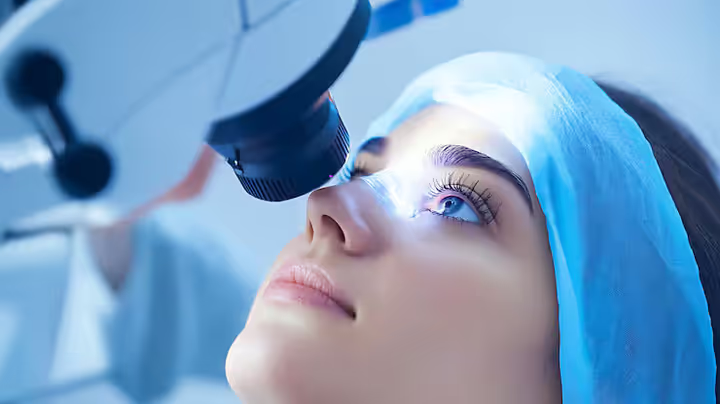
LASIK treatment changes the shape of the cornea using an advanced laser. The procedure generally follows these steps:
Pre-Procedure Steps
- Comprehensive eye examination
- Vision measurement
- Corneal thickness evaluation
- Corneal mapping
- Pupil size assessment
- Tear film analysis
- Review of medical history
Procedure Steps
- Numbing eye drops are applied.
- A thin corneal flap is created using a femtosecond laser or a microkeratome.
- The flap is gently lifted.
- An excimer laser reshapes the corneal tissue.
- The flap is repositioned without stitches.
- The eye begins healing naturally.
The entire procedure for both eyes often takes less than 30 minutes, while the laser itself operates for only a short period.
Conditions That LASIK Can Correct
| Vision Condition | Description | Typical LASIK Goal |
|---|---|---|
| Myopia | Difficulty seeing distant objects | Improve distance vision |
| Hyperopia | Difficulty focusing on nearby objects | Improve near vision |
| Astigmatism | Irregular corneal shape causing blurred vision | Improve overall visual clarity |
| Mild Mixed Refractive Errors | Combination of refractive conditions | Balanced visual correction |
Importance of LASIK Treatment
Clear vision affects nearly every aspect of daily life. LASIK treatment helps many eligible individuals perform everyday activities more comfortably.
Potential benefits include:
Everyday Advantages
- Reduced dependence on glasses
- Reduced dependence on contact lenses
- Clearer distance vision
- Greater convenience during travel
- Easier participation in sports
- Improved comfort during outdoor activities
- Reduced lens maintenance
Although many people achieve excellent vision after LASIK, individual results vary, and some individuals may still require glasses for specific situations, particularly with age-related reading vision changes.
Who May Be a Suitable Candidate
Not everyone qualifies for LASIK treatment. Eye specialists evaluate several factors before recommending the procedure.
Common Eligibility Factors
- Age generally 18 years or older
- Stable vision for at least one year
- Healthy corneas
- Adequate corneal thickness
- Healthy retina
- No active eye infection
- Realistic expectations
- Overall good eye health
Certain medical conditions, pregnancy, severe dry eyes, or advanced corneal disorders may affect eligibility.
Types of LASIK Technology
Modern refractive surgery includes several approaches depending on eye characteristics.
Common Technologies
- Standard LASIK
- Wavefront-Guided LASIK
- Wavefront-Optimized LASIK
- Topography-Guided LASIK
- Femtosecond Blade-Free LASIK
Each technology aims to improve precision while addressing individual differences in corneal shape and visual needs.
Key Features of Modern LASIK
Laser technology has evolved significantly over the years.
Important Features
- Computer-guided laser systems
- High-precision corneal mapping
- Customized treatment planning
- Eye-tracking technology
- Rapid treatment duration
- Blade-free options
- Minimal discomfort
- Fast visual recovery
These advancements help improve procedural accuracy while maintaining high safety standards when appropriate candidates are selected.
Recovery After LASIK
Recovery usually begins immediately after the procedure, although complete healing continues for several weeks or months.
Recovery Guidelines
- Rest after treatment
- Use prescribed eye drops
- Avoid rubbing the eyes
- Wear protective eye shields if advised
- Limit swimming until approved
- Avoid dusty environments during early healing
- Attend scheduled follow-up appointments
Many individuals notice improved vision within one or two days, although vision may fluctuate temporarily during healing.
Benefits and Possible Limitations
Like every medical procedure, LASIK has both advantages and limitations.
Potential Benefits
- Improved visual clarity
- Quick procedure
- Short recovery period
- Long-lasting vision correction for many patients
- High patient satisfaction
- Minimal discomfort during treatment
Possible Limitations
- Temporary dry eyes
- Night glare or halos
- Temporary visual fluctuations
- Under-correction or over-correction in some cases
- Reading glasses may still become necessary with age
- Not suitable for every patient
An ophthalmologist explains potential benefits and risks based on each individual's eye condition.
Recent Developments (2025–2026)
Laser eye surgery continues to improve through technology and research.
Recent developments include:
New Advancements
- Improved artificial intelligence-assisted corneal analysis for treatment planning.
- Enhanced eye-tracking systems capable of responding to tiny eye movements during laser treatment.
- Better personalized treatment algorithms based on detailed corneal mapping.
- Increased use of advanced femtosecond laser platforms for flap creation.
- Continued research into long-term visual quality and dry-eye management published during 2025 and early 2026.
- Greater integration of digital imaging and diagnostic technologies for patient evaluation.
These innovations aim to improve precision, consistency, and long-term visual outcomes.
Safety Standards and Regulations
LASIK treatment is performed under medical regulations established by national healthcare authorities.
Depending on the country, important regulatory organizations may include:
Regulatory Examples
- National medical licensing authorities
- Ophthalmology professional associations
- Medical device regulatory agencies
- Hospital accreditation organizations
Laser systems used for refractive surgery undergo extensive evaluation before clinical use. Eye surgeons also follow established clinical guidelines regarding patient selection, informed consent, and follow-up care.
Patients should always choose qualified ophthalmologists practicing under recognized medical standards.
Useful Learning Resources
Individuals interested in learning more about laser vision correction can explore educational materials from recognized medical organizations.
Helpful Resources
- American Academy of Ophthalmology educational materials
- American Society of Cataract and Refractive Surgery
- National Eye Institute
- Royal College of Ophthalmologists
- Peer-reviewed ophthalmology journals
- Hospital patient education centers
- Medical university publications
These resources provide evidence-based information regarding eye health and refractive surgery.
Preparing for a Consultation
Preparation helps both patients and eye specialists make informed decisions.
Before the Appointment
- Gather previous eye examination records.
- Prepare a list of current medications.
- Note any history of eye disease.
- Mention previous eye injuries.
- Inform the specialist about contact lens usage.
- Prepare questions about recovery expectations.
- Discuss lifestyle needs and occupational vision requirements.
A comprehensive consultation determines whether LASIK is appropriate or whether another vision correction option is more suitable.
Frequently Asked Questions
Is LASIK treatment permanent?
LASIK permanently reshapes the cornea. However, natural age-related vision changes, such as presbyopia, can still occur over time.
Is LASIK treatment painful?
Most individuals experience little discomfort because numbing eye drops are used. Mild irritation or dryness may occur during the initial recovery period.
How long does recovery usually take?
Many people notice significant vision improvement within one or two days. Complete stabilization may take several weeks or months depending on individual healing.
Can both eyes be treated on the same day?
Yes. LASIK is commonly performed on both eyes during the same appointment unless a medical reason suggests otherwise.
Is everyone eligible for LASIK?
No. Eligibility depends on age, eye health, stable vision, corneal thickness, and several other clinical factors determined during a comprehensive eye examination.
Conclusion
LASIK treatment has become one of the most established laser vision correction procedures for eligible individuals with refractive errors. By reshaping the cornea with advanced laser technology, it can improve visual clarity and reduce dependence on corrective eyewear for many people. Modern diagnostic tools, personalized treatment planning, and ongoing technological advancements have enhanced precision and safety while supporting consistent outcomes.
Although LASIK is highly effective for appropriately selected candidates, it is not suitable for everyone. A thorough eye examination, realistic expectations, and guidance from a qualified ophthalmologist remain essential for determining the most appropriate vision correction approach. Understanding the procedure, recovery process, benefits, limitations, and current developments enables individuals to make informed decisions about their long-term eye health.
Disclaimer: The information provided in this article is for informational purposes only. We do not make any claims or guarantees regarding the accuracy, reliability, or completeness of the information presented. The content is not intended as professional advice and should not be relied upon as such. Readers are encouraged to conduct their own research and consult with appropriate professionals before making any decisions based on the information provided in this article.