Mechanical Power Press Systems: Precision Stamping & Industrial Automation
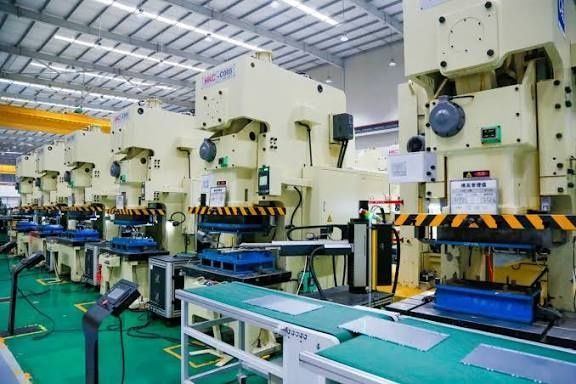
Mechanical power press systems are industrial machines designed to shape, cut, punch, bend, or form sheet metal and other suitable materials through controlled mechanical force. They are widely used in manufacturing environments where repeatable forming operations are required.
A typical power press uses a motor-driven flywheel, clutch, crankshaft, connecting mechanism, and ram to transfer mechanical energy to a die. The die determines the shape or operation performed on the material. Depending on the machine configuration, operations can include blanking, punching, bending, embossing, and forming.
The technology exists because manufacturers need controlled and repeatable methods for producing components with consistent dimensions. Manual forming methods can become difficult when production volumes increase or when components require repeated accuracy.
Mechanical power presses are available in several configurations, including eccentric presses, crank presses, gap-frame presses, straight-side presses, and specialized stamping systems. Their capacity is generally selected according to factors such as material thickness, part geometry, die requirements, stroke characteristics, and required forming force.
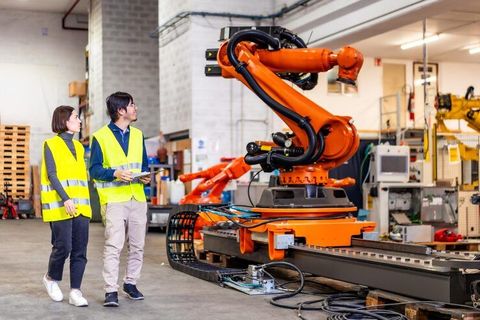
Modern systems increasingly combine traditional mechanical press technology with industrial automation, sensors, programmable controls, automatic feeding equipment, and production monitoring. This combination can improve process consistency while reducing unnecessary manual handling.
How a Mechanical Power Press Works
The basic operating sequence involves several coordinated components:
- An electric motor supplies rotational energy.
- A flywheel stores and transfers mechanical energy.
- A clutch and brake mechanism controls press movement.
- A crankshaft or eccentric mechanism converts rotation into reciprocating motion.
- The connecting mechanism moves the ram.
- The ram carries the upper die toward the workpiece.
- The lower die supports and shapes the material.
- Sensors and controls monitor selected operating conditions.
The exact mechanism varies according to the press design and application.
Importance
Mechanical power press systems remain important because metal stamping is used across many manufacturing industries. Components produced through stamping can be found in automotive assemblies, electrical equipment, appliances, hardware, industrial machinery, and consumer products.
Precision stamping is particularly important when a component must maintain consistent dimensions across a large production run. Small variations in hole position, bend angle, or overall shape can affect assembly and downstream manufacturing processes.
Supporting Production Consistency
A properly configured press can repeat the same movement and forming sequence many times. This makes mechanical presses suitable for applications where dimensional consistency is important.
Important production factors include:
- Press capacity and force requirements
- Stroke length
- Slide speed
- Die configuration
- Material thickness
- Feed accuracy
- Part geometry
- Tool alignment
- Lubrication requirements
- Machine condition
Role in Industrial Automation
Industrial automation is changing how mechanical power presses are integrated into manufacturing lines. Automatic feeders can move sheet material into the die area, while sensors can monitor material position and machine conditions.
Automated systems may also incorporate:
- Programmable controllers
- Servo-driven feeders
- Part-transfer mechanisms
- Safety light curtains
- Presence sensors
- Production counters
- Condition-monitoring sensors
- Automated inspection equipment
- Data collection systems
These technologies can help reduce unnecessary manual intervention and provide better visibility into production activities.
Why Precision Matters
Precision stamping is not determined by the press alone. The result depends on the complete production system, including the machine, die, material, feeding arrangement, alignment, maintenance, and operating parameters.
For this reason, manufacturers generally evaluate the entire process rather than focusing only on press capacity.
Recent Updates
During 2025 and 2026, industrial manufacturing has continued moving toward connected equipment, predictive maintenance, digital monitoring, and greater automation. Mechanical power presses are increasingly considered part of a broader smart manufacturing environment rather than isolated machines.
One notable trend is the growing use of sensors and digital controls. Machine data can be used to monitor operating conditions such as vibration, temperature, cycle counts, pressure, and abnormal machine behavior.
Another development is the increasing use of automation around the press. Automatic coil feeding, robotic part handling, machine vision, and automated inspection can connect stamping operations with other production stages.
Digital Monitoring Trends
Modern production environments increasingly focus on measurable machine information. Useful data can include:
| Monitoring Area | Example Information | Manufacturing Benefit |
|---|---|---|
| Production | Cycle counts | Production tracking |
| Machine condition | Vibration and temperature | Early issue detection |
| Quality | Dimensional measurements | Process consistency |
| Safety | Guard and sensor status | Risk reduction |
| Energy | Power consumption | Energy analysis |
| Maintenance | Operating hours | Maintenance planning |
Artificial intelligence and machine learning are also being explored for industrial condition monitoring and quality analysis. These technologies should be viewed as supporting tools rather than replacements for engineering judgment and established safety procedures.
Another important trend is the integration of manufacturing equipment with industrial networks. Connected machines can exchange information with production monitoring systems, allowing manufacturers to analyze operational data across multiple stages.
Laws or Policies
Mechanical power presses involve significant mechanical movement and therefore require appropriate workplace safety controls. Requirements vary by country, industry, machine configuration, and workplace conditions.
In India, industrial workplaces may be affected by occupational safety requirements under applicable national and state-level regulations. The Occupational Safety, Health and Working Conditions Code, 2020 provides a broader framework for occupational safety and working conditions, subject to its implementation and applicable rules.
Manufacturers and workplaces should also consider relevant Indian Standards and applicable machinery safety requirements when selecting, installing, operating, or modifying press equipment.
Important Safety Practices
A workplace using a mechanical power press should consider:
- Proper machine guarding
- Emergency stopping arrangements
- Two-hand controls where applicable
- Light curtains or presence-sensing devices where appropriate
- Safe die installation procedures
- Operator training
- Preventive maintenance
- Lockout and isolation procedures
- Regular inspection of safety equipment
- Clear operating instructions
Safety requirements should be assessed according to the specific machine and workplace. Modifying a safety system without competent engineering assessment can introduce additional risks.
For organizations operating outside India, local occupational safety legislation and applicable machinery standards should be reviewed before commissioning or modifying a press system.
Tools and Resources
Several general tools can help engineers, operators, and manufacturing teams understand and manage mechanical power press applications.
Press Selection Calculators
Engineering calculators can help estimate required forming force based on factors such as material properties, thickness, cutting perimeter, and operation type. Calculations should be reviewed by qualified technical personnel before equipment selection.
Die Design Software
Computer-aided design and manufacturing software can support die development, component modeling, tolerance analysis, and production planning.
Production Monitoring Platforms
Digital monitoring platforms can record machine cycles, downtime, production quantities, alarms, and selected operating parameters. These systems can help identify recurring production patterns.
Maintenance Templates
Simple maintenance templates can track:
- Lubrication activities
- Inspection dates
- Safety-device checks
- Die condition
- Machine operating hours
- Replacement history
- Unusual vibration or noise
- Corrective maintenance activities
Safety Training Resources
Training materials can help operators understand machine hazards, safe operating procedures, emergency controls, material handling, and appropriate personal protective equipment.
FAQs
What is a mechanical power press?
A mechanical power press is a machine that uses mechanically generated force to cut, punch, bend, or form material. It commonly uses a motor, flywheel, crank mechanism, ram, and die.
What is precision stamping?
Precision stamping is a metal-forming process designed to produce components with controlled dimensions and repeatable features. Process accuracy depends on the press, tooling, material, feeding system, and operating conditions.
How does automation improve press operations?
Automation can control material feeding, part transfer, inspection, and data collection. It can reduce unnecessary manual handling and help maintain consistent production sequences.
What safety equipment is used with power presses?
Depending on the machine and risk assessment, safety measures can include guards, emergency stops, two-hand controls, light curtains, presence sensors, and appropriate isolation procedures.
What factors should be considered when selecting a power press?
Important factors include required forming force, material characteristics, part dimensions, die design, stroke, operating speed, feeding method, production requirements, available space, and safety requirements.
Conclusion
Mechanical power press systems continue to play an important role in modern manufacturing because they provide controlled mechanical force for repeatable stamping and forming operations. Their applications range from simple punching and blanking to more complex automated production processes.