Marine Centrifugal Pumps: Working, Uses, and Industry Trends
Learn how marine centrifugal pumps work, their importance in ship operations, energy efficiency trends, maritime regulations, maintenance tools, and common applications.
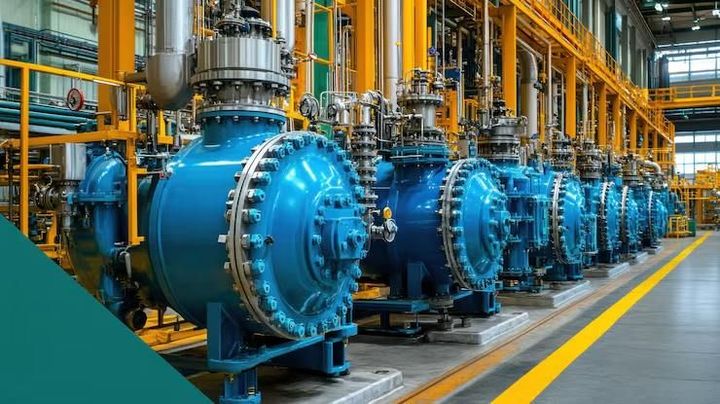
Marine centrifugal pumps are mechanical devices that move liquids through a ship or marine facility using rotational energy. They are widely used in commercial vessels, passenger ships, offshore platforms, and port infrastructure.
These pumps contain an impeller that rotates inside a casing. As the impeller spins, it transfers energy to the liquid, increasing its velocity. The pump casing then converts part of this velocity into pressure, allowing the liquid to flow through connected pipes.
Marine centrifugal pumps support several important operations, including:
Moving seawater for engine cooling.
Circulating freshwater through onboard systems.
Supporting ballast water management.
Transferring liquids between designated tanks.
Supplying water to firefighting systems.
The appropriate pump design depends on the liquid's properties, required flow rate, operating pressure, installation space, and resistance to corrosion.
Importance of Marine Centrifugal Pump Technology
Marine centrifugal pump systems play an important role in vessel reliability and operational safety. Ships operate in demanding environments where equipment faces saltwater exposure, vibration, changing temperatures, and continuous mechanical loads.
Reliable fluid movement helps maintain engine temperatures, protect machinery, and support essential onboard systems.
Key Benefits and Applications
Engine cooling: Circulates cooling water to help prevent excessive engine temperatures.
Ballast management: Supports the movement of water used to maintain vessel stability and trim.
Fire protection: Helps deliver water through approved firefighting arrangements.
Bilge operations: Supports the removal of accumulated water when the pump is appropriately designed for the application.
Offshore operations: Supports selected fluid-handling processes on offshore platforms and marine installations.
Selecting the correct pump involves evaluating flow capacity, total dynamic head, power requirements, impeller design, and material compatibility.
Pump consideration | Why it matters |
|---|---|
Flow rate | Determines the volume of liquid moved over time |
Total dynamic head | Represents the energy required to move liquid through the system |
Material selection | Helps resist corrosion and liquid-related damage |
Energy efficiency | Influences electrical or mechanical power requirements |
Maintenance access | Supports inspection and routine upkeep |
Recent Updates and Industry Trends
During 2025 and 2026, marine equipment planning has continued to emphasize energy efficiency, environmental protection, equipment monitoring, and dependable operation. The pace of adoption varies by vessel type, operator, and regulatory requirements.
Energy Efficiency and Electrification
Marine operators are examining pump performance alongside broader vessel energy management. Efficient impeller designs, correctly sized motors, and variable-speed drives can help reduce unnecessary energy consumption when operating conditions allow.
However, variable-speed control must remain compatible with the pump curve and the needs of the connected system.
Digital Monitoring and Predictive Maintenance
Sensors and digital monitoring tools can track vibration, temperature, pressure, motor current, and flow rate. Changes in these measurements may indicate bearing wear, blockage, leakage, or other developing problems.
Predictive maintenance uses operating data to help maintenance teams identify potential faults before they cause significant disruption. Accurate diagnosis still requires appropriate inspections and technical judgment.
Environmental Protection
Ballast water treatment and pollution prevention remain important areas of maritime regulation. Pump systems may form part of these arrangements, depending on the vessel's design and intended operation.
These trends represent continuing industry priorities rather than a claim that every vessel must adopt the same equipment or technology.
Laws and Policies Affecting Marine Pump Systems
Marine centrifugal pumps may be affected by international maritime conventions, classification requirements, flag-state rules, and national regulations. The applicable requirements depend on the vessel, pump function, operating region, and installation.
Important regulatory frameworks include:
International Convention for the Safety of Life at Sea (SOLAS): Establishes safety requirements for applicable ships, including relevant machinery and firefighting arrangements.
International Convention for the Prevention of Pollution from Ships (MARPOL): Addresses ship-source pollution and may affect bilge-water handling and other fluid systems.
Ballast Water Management Convention: Establishes requirements for managing ballast water and reducing the transfer of harmful aquatic organisms.
International Maritime Organization guidance: Provides technical and regulatory information relevant to maritime safety and environmental protection.
Manufacturers and vessel operators should also consider applicable classification-society rules, electrical standards, pressure-system requirements, and flag-state approvals. Not every rule applies to every pump.
Tools and Resources for Pump Selection
Several technical resources can help engineers, students, and marine equipment planners understand centrifugal pump performance.
Pump sizing calculators: Estimate flow rate, required head, and hydraulic power.
Pump performance curves: Show relationships among flow, head, efficiency, and power.
Cavitation assessment tools: Help evaluate whether inlet conditions provide sufficient pressure to avoid damaging vapor formation.
Energy monitoring spreadsheets: Compare operating hours, motor power, and estimated electricity consumption.
Vibration analysis tools: Help identify mechanical imbalance, bearing problems, and alignment issues.
Maintenance checklists: Record inspections, seal condition, bearing temperature, leakage, and unusual noise.
Technical documentation: Includes equipment manuals, piping diagrams, operating procedures, and applicable maritime standards.
A useful starting point is to document the required flow rate, total dynamic head, liquid temperature, salinity, operating schedule, and available installation space before selecting a pump.
Frequently Asked Questions
What is a marine centrifugal pump used for?
It moves liquids in marine environments, including cooling water, ballast water, and selected firefighting or bilge applications.
How does a centrifugal pump create pressure?
A rotating impeller transfers energy to the liquid. The pump casing converts part of the liquid's velocity into pressure, helping it move through the piping system.
Which materials are suitable for marine centrifugal pumps?
Material selection depends on the liquid, temperature, pressure, and corrosion conditions. Marine bronze, suitable stainless steels, and other engineered alloys may be used in appropriate applications.
What causes a marine centrifugal pump to lose performance?
Common causes include impeller wear, blocked strainers, air entering the system, incorrect rotation, leakage, cavitation, and operation outside the intended performance range.
How often should marine centrifugal pumps be inspected?
Inspection frequency depends on the manufacturer's instructions, operating conditions, vessel procedures, and applicable regulations. Routine checks should follow the approved maintenance schedule.
Conclusion
Marine centrifugal pumps are essential components of many vessel and offshore fluid-handling systems. Their performance influences cooling, ballast management, firefighting, and other important operations.
Understanding pump capacity, hydraulic performance, material compatibility, and maintenance requirements helps support reliable operation. Energy-efficient designs and digital monitoring can provide additional benefits when selected for the application. Proper installation, regular inspection, and compliance with applicable maritime rules remain fundamental to safe and effective pump operation.
Disclaimer
This article is intended for general educational purposes. It does not replace professional engineering advice, manufacturer documentation, vessel-specific procedures, or applicable maritime regulations. Pump selection, installation, and maintenance should be carried out by appropriately qualified personnel.