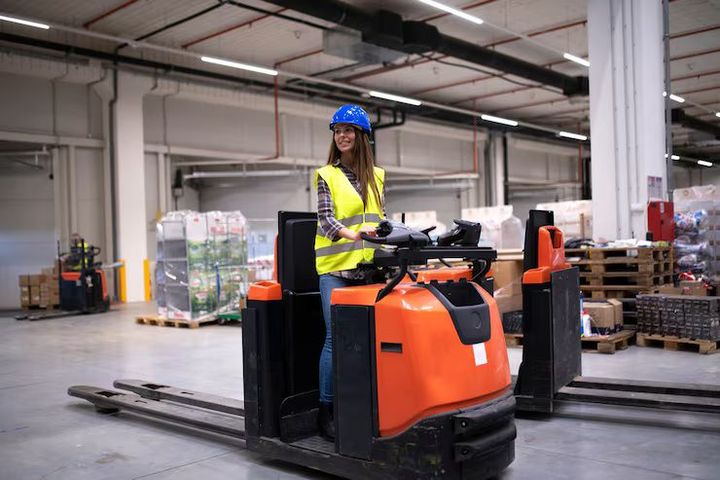
Learn About Different Types of Forklifts and Their Uses in Warehouses
Forklifts play a major role in modern warehouses, distribution centers, and industrial storage facilities. From moving heavy pallets to organizing inventory in tight spaces, these machines help businesses improve productivity, warehouse safety, and material handling efficiency.
As global supply chain operations continue to expand, the demand for advanced warehouse equipment and industrial lifting systems is growing rapidly. Warehouses today rely on several forklift types designed for specific environments, load capacities, and operational needs.
Understanding how different forklifts work can help businesses improve logistics management, reduce downtime, and support smoother warehouse operations.
What Is a Forklift?
A forklift is a powered industrial vehicle designed to lift, carry, and transport materials over short distances. Most forklifts use steel forks attached to the front of the machine to move pallets, containers, and heavy goods.
Forklifts are commonly used in:
- Warehouses
- Manufacturing facilities
- Logistics hubs
- Shipping terminals
- Cold storage units
- Construction supply yards
Modern forklifts now include advanced warehouse automation technology, energy-efficient battery systems, telematics tracking, and smart safety features.
Why Forklifts Are Important in Warehouses
Warehouse environments handle large volumes of inventory every day. Without forklifts, loading, unloading, and organizing goods would require much more time and labor.
Forklifts help improve:
- Inventory movement speed
- Warehouse storage optimization
- Worker safety
- Supply chain efficiency
- Heavy material transportation
- Loading dock operations
According to global logistics industry reports, electric forklifts and automated warehouse equipment are becoming increasingly popular because of energy efficiency and lower maintenance requirements.
Electric Forklifts
Electric forklifts are among the most widely used warehouse vehicles today. They operate using rechargeable industrial batteries instead of internal combustion engines.
Key Features of Electric Forklifts
- Low noise operation
- Reduced emissions
- Suitable for indoor warehouses
- Lower fuel dependency
- Improved energy efficiency
Electric forklifts are commonly used in retail warehouses, food storage facilities, pharmaceutical distribution centers, and e-commerce fulfillment operations.
Best Uses
- Indoor pallet transportation
- Narrow aisle operations
- Clean warehouse environments
- Inventory stacking
Lithium-ion battery technology has significantly improved electric forklift performance in recent years. Faster charging systems and longer battery life make them ideal for high-volume warehouse operations.
Diesel Forklifts
Diesel forklifts are powerful industrial machines built for heavy-duty material handling tasks. These forklifts are commonly used outdoors because diesel engines generate strong lifting power.
Key Features of Diesel Forklifts
- High lifting capacity
- Durable industrial performance
- Suitable for rough terrain
- Longer operating hours
Diesel forklifts are often found in shipping yards, construction material storage areas, and large industrial warehouses.
Best Uses
- Outdoor logistics operations
- Heavy pallet lifting
- Construction supply movement
- Industrial manufacturing plants
Although electric forklifts are gaining popularity, diesel-powered forklifts remain important for operations requiring higher torque and continuous performance.
Reach Forklifts
Reach forklifts are specially designed for narrow warehouse aisles and high shelving systems. These forklifts can extend their forks forward to reach deep storage racks.
Key Features of Reach Forklifts
- Extended lifting height
- Narrow aisle maneuverability
- Efficient vertical storage handling
- Precision load placement
Warehouses with high-density inventory systems often rely on reach trucks to maximize storage space.
Best Uses
- Tall storage racks
- High-volume inventory warehouses
- Distribution centers
- Indoor logistics operations
Reach forklifts are especially useful in modern e-commerce warehouses where space optimization is critical.
Counterbalance Forklifts
Counterbalance forklifts are one of the most recognized forklift types. They use a rear counterweight to balance heavy loads carried at the front.
Key Features of Counterbalance Forklifts
- Simple operational design
- Easy loading and unloading
- Strong lifting stability
- Available in electric and diesel models
These forklifts are widely used because operators can drive directly toward loads without additional support equipment.
Best Uses
- Standard warehouse operations
- Pallet handling
- Loading dock activities
- Manufacturing facilities
Counterbalance forklifts remain popular in global warehouse management systems because of their versatility.
Pallet Jacks and Walkie Stackers
Not all warehouse lifting equipment requires a full-sized forklift. Smaller operations often use pallet jacks and walkie stackers for lightweight material movement.
Key Features
- Compact design
- Easy maneuverability
- Lower operating complexity
- Suitable for smaller warehouses
Electric pallet jacks have become common in retail inventory systems and local distribution facilities.
Best Uses
- Short-distance pallet movement
- Grocery warehouses
- Small storage facilities
- Retail stockrooms
These machines help improve warehouse workflow without requiring large industrial vehicles.
Rough Terrain Forklifts
Rough terrain forklifts are designed for uneven outdoor surfaces. They include large pneumatic tires and strong suspension systems.
Key Features
- Enhanced outdoor mobility
- Strong traction systems
- Durable construction
- High ground clearance
These forklifts are widely used in infrastructure projects, lumber yards, and agricultural operations.
Best Uses
- Construction sites
- Outdoor industrial yards
- Heavy equipment transportation
- Building material handling
Their rugged design allows them to operate effectively in difficult environmental conditions.
Safety Features in Modern Forklifts
Warehouse safety remains one of the most important aspects of forklift operation. New forklift technology includes advanced safety systems designed to reduce workplace accidents.
Common Safety Technologies
- Collision warning sensors
- Stability control systems
- Rear-view cameras
- Automatic speed reduction
- Operator monitoring systems
Many warehouses now use fleet management software and forklift telematics to track vehicle performance and improve operational efficiency.
Proper operator training also plays a major role in reducing workplace injuries and maintaining compliance with industrial safety standards.
Future Trends in Forklift Technology
The forklift industry continues evolving with smart warehouse automation and sustainable energy solutions.
Emerging Trends
- Autonomous forklifts
- AI-powered warehouse systems
- Lithium-ion battery expansion
- IoT-enabled fleet monitoring
- Energy-efficient material handling equipment
As global e-commerce and supply chain networks grow, demand for advanced warehouse logistics equipment is expected to increase significantly.
Businesses are focusing more on operational efficiency, warehouse automation, and sustainable industrial technology to remain competitive in the logistics sector.
Final Thoughts
Forklifts are essential tools in modern warehouses and industrial operations. Different forklift types are designed for specific environments, lifting capacities, and storage systems.
Electric forklifts support clean indoor operations, diesel forklifts handle heavy outdoor tasks, and reach trucks maximize warehouse storage efficiency. Smaller equipment like pallet jacks and walkie stackers also improve day-to-day inventory management.