Industrial Solar Manufacturing Machines: Advanced Solar Production Technology
Industrial solar manufacturing machines are specialized production systems used to manufacture photovoltaic (PV) cells, solar modules, and related components. They help transform materials such as silicon wafers, solar cells, glass, encapsulants, and backsheets into finished photovoltaic modules through controlled manufacturing stages.
The technology exists because modern solar production requires high precision and repeatable processes. Manual production alone can make it difficult to maintain consistent dimensions, electrical performance, alignment, and quality across large production volumes.
A typical solar panel manufacturing machine may perform tasks such as:
- Cell inspection and sorting
- Cell tabbing and stringing
- Cell interconnection
- Glass and material handling
- Module layup
- Lamination
- Framing
- Junction box attachment
- Electrical testing
- Visual inspection
- Packaging and material movement
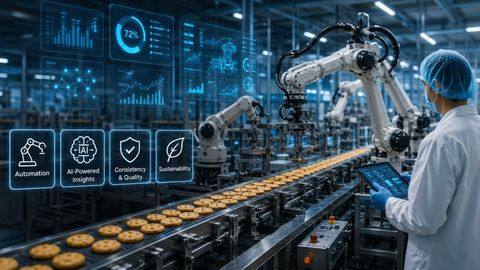
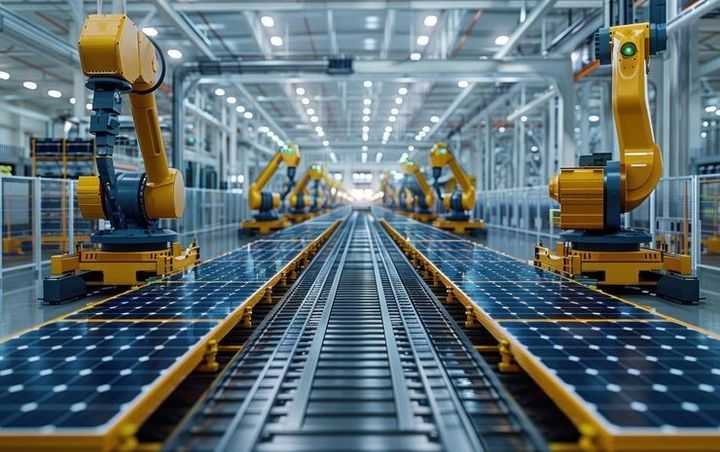
A complete photovoltaic production line can combine several machines with industrial automation, sensors, software, robotics, and quality-control systems.
The exact equipment depends on the manufacturing stage. Solar cell manufacturing requires different technologies from solar module assembly. Advanced facilities may integrate automated material handling and real-time inspection throughout the production process.
Why Solar Manufacturing Technology Matters Today
Solar energy has become an important part of global renewable energy development. As photovoltaic deployment expands, manufacturers need production systems that can maintain quality while handling increasingly sophisticated solar technologies.
Industrial solar manufacturing machines help address several important production challenges.
Consistent production: Automated equipment can repeat manufacturing operations with controlled timing, positioning, pressure, temperature, and alignment.
Quality control: Inspection systems can identify visual and electrical irregularities before modules move to later production stages.
Higher process efficiency: Automation can coordinate multiple production steps and reduce unnecessary material movement.
Technology development: New PV cell designs require manufacturing equipment capable of handling different cell structures, dimensions, interconnection methods, and module formats.
Data-driven manufacturing: Modern equipment can collect production information that helps manufacturers monitor machine performance and identify process variations.
The topic affects manufacturers, engineers, quality teams, renewable energy planners, researchers, and businesses evaluating photovoltaic production technology.
For general users, understanding these machines also provides useful knowledge about how solar panels move from raw materials to finished modules.
Common Machine Categories
| Manufacturing Stage | Typical Equipment | Main Purpose |
|---|---|---|
| Cell preparation | Inspection and sorting systems | Check and classify cells |
| Interconnection | Tabbing and stringing machines | Connect solar cells |
| Module assembly | Layup equipment | Arrange cells and materials |
| Encapsulation | Lamination systems | Seal module layers |
| Finishing | Framing equipment | Complete module structure |
| Testing | EL and electrical testers | Detect defects and verify performance |
| Material movement | Automated handling systems | Move components between stages |
Recent Developments in Solar Manufacturing
Solar manufacturing technology has continued to change rapidly during 2025 and 2026. One notable trend is the increasing use of high-efficiency photovoltaic technologies and more automated production systems.
A 2025 report on India's manufacturing expansion indicated that the country added substantial solar module and cell capacity during the first half of 2025. TOPCon represented the largest portion of new module capacity, while HJT capacity also expanded.
TOPCon, or Tunnel Oxide Passivated Contact technology, has therefore become an important consideration for modern solar production lines. Heterojunction technology is another advanced approach requiring specialized production processes.
Machine manufacturers and plant engineers increasingly focus on equipment flexibility. Production systems may need to accommodate different wafer sizes, cell designs, module configurations, and inspection requirements.
Artificial intelligence and machine vision are also becoming more relevant in industrial quality control. Cameras and analytical software can assist with detecting cracks, alignment problems, surface defects, and other production irregularities.
Another important development is greater integration between individual machines. Instead of treating every production stage as an isolated operation, modern factories can connect equipment through automated material handling and manufacturing data systems.
The International Energy Agency's 2026 analysis notes that industrial and trade policies are encouraging greater domestic solar PV manufacturing in India and other markets. Its analysis projects India's share of global solar PV production to rise substantially under its stated policy scenario.
These developments indicate that solar production technology is moving toward greater automation, higher efficiency, digital monitoring, and advanced cell architectures.
Indian Laws, Policies, and Manufacturing Frameworks
India has developed several policies that influence photovoltaic manufacturing and the equipment used in solar production.
The Ministry of New and Renewable Energy implements the Production Linked Incentive (PLI) Scheme for high-efficiency solar PV modules. The program has an overall outlay of ₹24,000 crore and is intended to strengthen domestic manufacturing capacity and develop an integrated solar PV manufacturing ecosystem.
The Approved List of Models and Manufacturers, commonly known as ALMM, is another important framework. MNRE states that eligible models and manufacturers listed under the applicable ALMM requirements are required for specified government and government-assisted projects, along with other covered project categories.
The policy environment has continued to change during 2026. MNRE published an updated ALMM List-I for solar PV modules on July 6, 2026. It has also continued revisions to ALMM List-II for solar PV cells, including an eighth revision dated July 22, 2026.
MNRE's current notices also include implementation information concerning the Solar Systems Devices and Components Goods Order 2025.
For manufacturers and plant planners, these policies make regulatory awareness important. Equipment selection should be considered alongside applicable quality, testing, manufacturing, procurement, and project requirements.
Policies can change, so current government notifications should always be checked before making technical or production decisions.
Important Features of Modern Solar Production Equipment
Modern industrial solar manufacturing machines can include several features that improve production monitoring and process control.
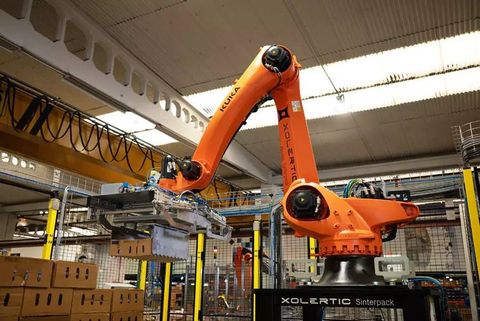
Automated material handling: Conveyors, robotic systems, and controlled handling equipment can move fragile cells and modules between production stages.
Machine vision: Cameras can inspect cell positioning, surface conditions, soldering, cracks, and other visible characteristics.
Electroluminescence testing: EL inspection can help identify defects that may not be visible through normal visual inspection.
Temperature control: Processes such as lamination require controlled temperature and pressure to produce consistent module encapsulation.
Digital monitoring: Production equipment can record operational information such as cycle times, temperatures, alarms, and inspection results.
Production traceability: Manufacturing software can associate production information with specific batches or production stages.
These technologies support a more structured approach to photovoltaic manufacturing and quality management.
Tools and Resources for Learning About Solar Manufacturing
People researching solar panel manufacturing machines can use several categories of tools and resources.
- PV production process diagrams for understanding manufacturing stages
- Equipment specification sheets for comparing technical capabilities
- Production-capacity calculators for estimating line requirements
- Energy-consumption calculators for evaluating manufacturing processes
- Quality-control checklists for reviewing production stages
- Preventive-maintenance templates for industrial equipment
- Manufacturing data dashboards for monitoring production information
- Technical training materials for photovoltaic manufacturing
- Government policy portals for checking current renewable-energy requirements
- Engineering simulation tools for evaluating production layouts
- Electrical testing instruments for photovoltaic module assessment
- Machine-vision systems for automated inspection
When evaluating equipment, it is useful to examine compatibility with the intended cell technology, module format, production capacity, automation level, inspection requirements, and future expansion plans.
Frequently Asked Questions
What are industrial solar manufacturing machines used for?
They are used for different stages of photovoltaic cell and module production, including cell interconnection, module assembly, lamination, framing, inspection, testing, and material handling.
What is the difference between solar cell and solar module manufacturing?
Solar cell manufacturing focuses on producing functional photovoltaic cells from semiconductor materials. Solar module manufacturing combines cells with glass, encapsulation materials, backsheets or related structures, frames, junction boxes, and other components to create a finished module.
Why is automation important in solar manufacturing?
Automation helps maintain repeatable production processes, controlled material handling, consistent positioning, inspection, and production data collection. It can also reduce dependence on repetitive manual operations.
What solar technologies are influencing modern production lines?
TOPCon and heterojunction technology are among the important advanced PV technologies influencing manufacturing equipment. Production systems must increasingly accommodate changing cell designs and module configurations.
Do Indian solar manufacturers need to consider ALMM requirements?
ALMM requirements apply to specified categories of solar projects in India. Manufacturers and project participants should review the latest MNRE notifications and applicable ALMM lists because requirements and lists can be updated over time.
Conclusion
Industrial solar manufacturing machines form an important part of the modern photovoltaic industry. They support processes ranging from cell handling and module assembly to lamination, inspection, testing, and automated material movement.