Industrial IoT Gateway Resources for Data Integration and Monitoring
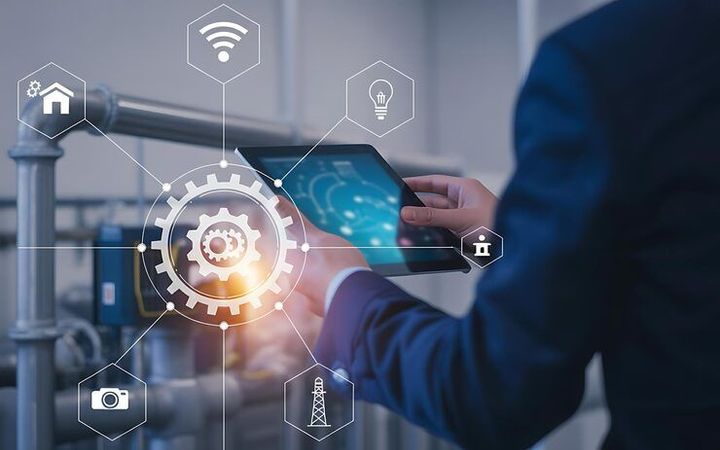
An Industrial IoT Gateway is a specialized hardware and software solution that connects industrial equipment, sensors, machines, and control systems to modern digital networks. It acts as a bridge between operational technology (OT) and information technology (IT), enabling data exchange across manufacturing facilities, utilities, transportation systems, and industrial infrastructure.
Industrial environments often contain machines that use different communication protocols and technologies. Many legacy devices were not designed to connect directly to cloud platforms or advanced analytics systems. An Industrial IoT Gateway solves this challenge by collecting, processing, translating, and transmitting data between devices and applications.
As Industry 4.0 adoption continues to expand, Industrial IoT Gateways have become an essential component for real-time monitoring, predictive maintenance, industrial automation, and operational efficiency.
How an Industrial IoT Gateway Works
An Industrial IoT Gateway serves as an intermediary layer between industrial devices and higher-level applications.
The process typically involves:
- Collecting data from sensors, PLCs, RTUs, and industrial machines
- Converting data from various industrial protocols
- Filtering and processing information at the edge
- Encrypting and securing communications
- Sending relevant data to cloud or on-premises platforms
- Receiving commands and transmitting them back to connected equipment
By performing data processing closer to the source, gateways reduce network traffic and improve response times.
Core Components of an Industrial IoT Gateway
Hardware Components
- Industrial-grade processor
- Memory and storage modules
- Ethernet interfaces
- Wireless communication modules
- Serial communication ports
- Power management systems
- Environmental protection enclosures
Software Components
- Operating system
- Protocol conversion software
- Edge computing applications
- Security management tools
- Device management platforms
- Data analytics engines
Connectivity Interfaces
- Ethernet
- Wi-Fi
- Cellular connectivity
- Bluetooth
- RS-232
- RS-485
- USB
- CAN Bus
Common Industrial Communication Protocols
Industrial IoT Gateways support multiple protocols to ensure interoperability between devices.
| Protocol | Primary Purpose | Common Industries |
|---|---|---|
| Modbus TCP | Device communication | Manufacturing |
| Modbus RTU | Serial communication | Industrial automation |
| OPC UA | Data interoperability | Smart factories |
| MQTT | Lightweight IoT messaging | Industrial IoT |
| PROFINET | Real-time automation | Manufacturing |
| EtherNet/IP | Industrial networking | Process industries |
| BACnet | Building automation | Facilities management |
| DNP3 | Utility communications | Energy and utilities |
Importance of Industrial IoT Gateways
Modern industrial operations generate large volumes of machine data. Without a gateway, integrating this information across systems becomes difficult.
Industrial IoT Gateways help organizations:
- Improve operational visibility
- Enable predictive maintenance programs
- Reduce downtime
- Increase productivity
- Support digital transformation initiatives
- Enhance equipment monitoring
- Simplify data integration
- Strengthen industrial cybersecurity
They allow businesses to modernize existing infrastructure without replacing all legacy equipment.
Key Features of Industrial IoT Gateways
Edge Computing Capabilities
Edge computing allows data processing to occur near industrial devices rather than relying entirely on remote servers.
Benefits include:
- Faster response times
- Reduced latency
- Lower bandwidth usage
- Improved reliability
Protocol Translation
Industrial facilities often use equipment from different manufacturers.
Gateways can:
- Convert Modbus to MQTT
- Translate OPC UA data
- Connect legacy systems with cloud applications
- Standardize communication formats
Industrial Cybersecurity
Security features commonly include:
- Data encryption
- Secure authentication
- Firewall protection
- Virtual private network support
- Access control mechanisms
- Security event monitoring
Remote Device Management
Administrators can remotely:
- Monitor connected assets
- Configure devices
- Update firmware
- Troubleshoot network issues
Data Filtering and Aggregation
Gateways can process raw sensor information before transmission, reducing unnecessary network traffic and improving efficiency.
Types of Industrial IoT Gateways
Edge Gateways
Designed for local processing and analytics near industrial equipment.
Cloud-Connected Gateways
Focused on transmitting industrial data to cloud platforms for storage and advanced analytics.
Wireless Gateways
Support wireless communication technologies for flexible deployment.
Multi-Protocol Gateways
Provide compatibility with numerous industrial communication standards.
AI-Enabled Gateways
Include artificial intelligence and machine learning capabilities for advanced analytics at the edge.
Real-World Applications
Industrial IoT Gateways are widely used across multiple sectors.
Smart Manufacturing
Factories use gateways to:
- Monitor production lines
- Analyze machine performance
- Improve quality control
- Support predictive maintenance
Energy and Utilities
Utilities deploy gateways for:
- Grid monitoring
- Substation automation
- Renewable energy management
- Remote asset monitoring
Oil and Gas Operations
Applications include:
- Pipeline monitoring
- Equipment diagnostics
- Environmental monitoring
- Remote facility management
Transportation Systems
Gateways support:
- Fleet monitoring
- Railway automation
- Traffic management
- Infrastructure monitoring
Building Automation
Facilities use gateways to integrate:
- HVAC systems
- Security systems
- Lighting controls
- Energy management platforms
Problems Solved by Industrial IoT Gateways
Industrial organizations frequently encounter connectivity and data management challenges.
Industrial IoT Gateways help solve:
- Legacy equipment integration issues
- Data silos between systems
- Network congestion
- Delayed operational insights
- Limited remote monitoring capabilities
- Inconsistent communication standards
- Industrial cybersecurity concerns
These capabilities make gateways a foundational element of digital industrial environments.
Recent Trends and Developments (2025–2026)
The Industrial IoT Gateway market has experienced significant technological advancement during 2025 and 2026.
AI at the Edge
Many gateway platforms now integrate artificial intelligence directly into edge devices. This enables:
- Real-time anomaly detection
- Predictive maintenance analysis
- Intelligent data filtering
- Automated operational decision support
5G Industrial Connectivity
Industrial facilities are increasingly adopting private and public 5G networks.
Advantages include:
- Higher bandwidth
- Lower latency
- Improved device density support
- Enhanced reliability
Zero Trust Security Models
Industrial cybersecurity strategies increasingly adopt Zero Trust frameworks that require continuous authentication and authorization.
Digital Twin Integration
Industrial gateways now play an important role in supporting digital twin environments by providing real-time operational data from physical assets.
Sustainability Monitoring
Organizations are using Industrial IoT Gateways to track:
- Energy consumption
- Carbon emissions
- Resource utilization
- Environmental performance indicators
Regulations and Compliance Considerations
Industrial IoT Gateway deployments may need to align with industry-specific regulations and standards.
Common frameworks include:
IEC 62443
A globally recognized cybersecurity standard for industrial automation and control systems.
NIST Cybersecurity Framework
Provides guidance for identifying, protecting, detecting, responding to, and recovering from cybersecurity risks.
ISO 27001
Focuses on information security management systems and organizational security controls.
GDPR
Organizations processing personal data within connected industrial environments may need to consider General Data Protection Regulation requirements.
Industry-Specific Requirements
Certain sectors such as energy, healthcare manufacturing, transportation, and utilities may have additional regulatory obligations depending on operating regions.
Useful Tools and Platforms
Several technologies support Industrial IoT Gateway deployments.
Industrial IoT Platforms
- Microsoft Azure IoT
- Amazon Web Services IoT
- Siemens Insights Hub
- PTC ThingWorx
- IBM Maximo Application Suite
Edge Computing Platforms
- Azure IoT Edge
- AWS IoT Greengrass
- EdgeX Foundry
- KubeEdge
Industrial Monitoring Tools
- Grafana
- Node-RED
- Ignition
- Kepware
- OpenSCADA
Learning Resources
- Industry 4.0 training programs
- Industrial automation certification courses
- OPC Foundation documentation
- MQTT technical documentation
- IEC cybersecurity standards publications
FAQs
What is the primary purpose of an Industrial IoT Gateway?
An Industrial IoT Gateway connects industrial devices with modern applications, enabling secure data collection, protocol conversion, monitoring, and analytics.
How is an Industrial IoT Gateway different from a standard IoT Gateway?
Industrial gateways are designed for harsh environments, industrial communication protocols, higher reliability requirements, and advanced cybersecurity needs.
Why is edge computing important in Industrial IoT?
Edge computing reduces latency, improves response times, lowers bandwidth consumption, and enables faster operational decision-making.
Which industries use Industrial IoT Gateways most frequently?
Manufacturing, energy, utilities, transportation, oil and gas, mining, and building automation sectors are among the most common users.
Can Industrial IoT Gateways work with legacy equipment?
Yes. One of their primary functions is connecting older industrial systems with modern digital infrastructure through protocol translation and data integration.
Conclusion
Industrial IoT Gateways are a critical component of modern industrial automation and Industry 4.0 initiatives. They bridge the gap between legacy operational systems and advanced digital platforms, enabling secure communication, data integration, edge computing, and real-time monitoring.
By supporting multiple protocols, strengthening cybersecurity, and improving operational visibility, these gateways help organizations optimize industrial processes and make better use of connected technologies. As developments in AI, edge analytics, 5G connectivity, and digital twin technology continue to evolve through 2025 and 2026, Industrial IoT Gateways will remain central to the future of smart industrial operations.