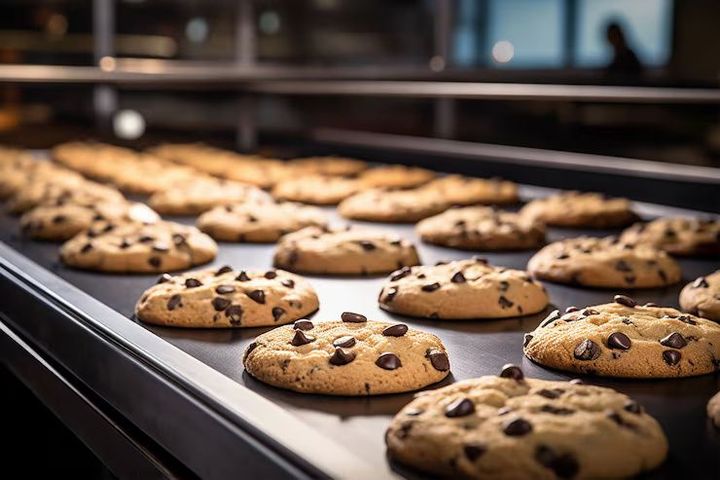
Industrial Biscuit Manufacturing Process & Industry Guide
Industrial biscuit manufacturing is the large-scale production of biscuits using automated machinery, standardized production methods, and quality control systems. Unlike small-scale baking, industrial manufacturing focuses on producing consistent products while maintaining food safety, hygiene, and production efficiency.
The biscuit industry has grown significantly due to increasing consumer demand for packaged snacks, longer shelf-life products, and consistent product quality. Modern manufacturing facilities use advanced processing equipment that helps improve productivity while maintaining uniform taste, texture, and appearance.
Industrial biscuit production exists because consumers expect reliable food products that meet safety standards and remain consistent across different batches. Manufacturers also need efficient production systems that reduce waste, improve energy efficiency, and maintain high-quality standards.
Today, industrial biscuit manufacturing combines food science, automation, engineering, quality management, and sustainable production practices. These advancements help manufacturers respond to changing consumer preferences while maintaining product consistency.
Importance of Industrial Biscuit Manufacturing
Industrial biscuit manufacturing plays an important role in the modern food processing sector. It supports food availability, encourages technological innovation, and contributes to organized food production systems.
Supports Consistent Food Production
Large-scale manufacturing enables consistent production of biscuits with standardized ingredients, controlled baking temperatures, and uniform packaging.
Improves Food Safety
Modern production facilities follow strict hygiene procedures, quality inspections, and food safety practices that help reduce contamination risks.
Encourages Manufacturing Efficiency
Automation helps improve production speed while reducing material waste and improving process control.
Supports Innovation
Manufacturers continue developing new recipes, healthier ingredient combinations, improved packaging methods, and sustainable manufacturing techniques.
Meets Changing Consumer Preferences
Growing interest in healthier snacks, whole grains, reduced sugar options, and functional ingredients has encouraged manufacturers to improve product development strategies.
Key Benefits
| Benefit | Description |
|---|---|
| Quality Control | Uniform product appearance and taste |
| Production Efficiency | Automated manufacturing improves consistency |
| Food Safety | Better hygiene and monitoring systems |
| Product Innovation | Development of healthier biscuit varieties |
| Sustainability | Improved resource and energy management |
Industrial Biscuit Manufacturing Process
Modern biscuit production follows several carefully controlled manufacturing stages.
Raw Material Preparation
The manufacturing process begins with selecting ingredients such as:
- Wheat flour
- Sugar
- Vegetable fats
- Salt
- Milk powder
- Baking agents
- Natural flavors
- Food-grade additives approved by regulations
All ingredients undergo quality inspection before entering production.
Dough Mixing
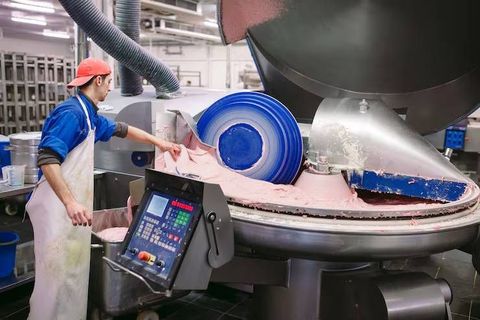
Industrial mixers combine ingredients according to standardized recipes. Computer-controlled systems monitor mixing time, temperature, and dough consistency.
Dough Forming
The prepared dough passes through forming equipment that creates uniform biscuit shapes using rotary moulders, cutters, or wire-cut systems depending on product type.
Baking
Industrial ovens bake biscuits under carefully controlled temperatures and baking times. Proper baking ensures:
- Uniform color
- Desired texture
- Moisture control
- Food safety
Cooling
Cooling conveyors gradually reduce biscuit temperature before packaging. Controlled cooling prevents cracking and maintains product quality.
Quality Inspection
Manufacturers inspect products for:
- Size
- Shape
- Weight
- Moisture content
- Texture
- Appearance
- Packaging quality
Automated inspection systems often assist with quality monitoring.
Packaging
Finished biscuits are packed using automated packaging systems that help preserve freshness and extend shelf life.
Common Equipment Used in Industrial Biscuit Manufacturing
Modern production facilities rely on specialized equipment throughout the manufacturing process.
| Equipment | Primary Function |
|---|---|
| Flour Handling System | Ingredient transportation |
| Industrial Mixer | Dough preparation |
| Dough Feeder | Continuous dough movement |
| Rotary Moulder | Biscuit shaping |
| Dough Cutter | Product forming |
| Baking Oven | Controlled baking |
| Cooling Conveyor | Temperature reduction |
| Inspection System | Quality monitoring |
| Packaging Machine | Product packaging |
| Metal Detection System | Food safety inspection |
Automation allows these machines to work together with minimal production interruptions while maintaining consistent quality.
Recent Updates in Industrial Biscuit Manufacturing
The biscuit manufacturing industry has experienced several developments during 2025–2026.
Greater Automation
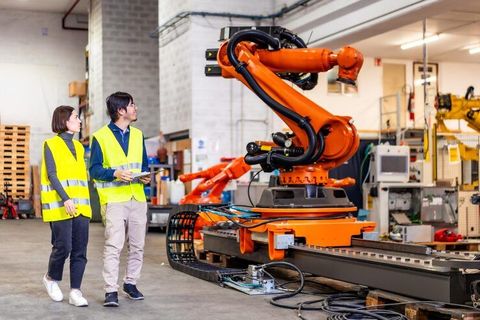
Manufacturers continue adopting smart automation systems that improve production monitoring and reduce manual intervention.
Artificial Intelligence for Quality Control
Artificial intelligence assists with visual inspection, identifying product defects more accurately during production.
Sustainable Manufacturing
Many production facilities are focusing on:
- Energy-efficient ovens
- Reduced food waste
- Water conservation
- Improved recycling practices
- Environmentally responsible packaging
Health-Focused Product Development
Consumer interest in healthier foods has encouraged greater use of:
- Whole grains
- High-fiber ingredients
- Plant-based formulations
- Lower sugar recipes
Digital Production Monitoring
Factories increasingly use digital dashboards that monitor equipment performance, production efficiency, and maintenance schedules in real time.
Improved Food Traceability
Digital record-keeping helps manufacturers track ingredient sources and production batches more effectively, supporting transparency and quality management.
Laws and Policies Affecting Industrial Biscuit Manufacturing
Food manufacturing is regulated to protect consumers and maintain product quality. Regulations vary by country, but many share similar objectives.
Food Safety Standards
Manufacturers generally follow food safety management systems that address:
- Hygiene
- Sanitation
- Hazard identification
- Production monitoring
- Record maintenance
Ingredient Regulations
Governments regulate:
- Approved food ingredients
- Food additives
- Label declarations
- Nutritional information
- Allergen identification
Manufacturing Practices
Production facilities usually follow Good Manufacturing Practices (GMP), which cover:
- Employee hygiene
- Equipment sanitation
- Facility cleanliness
- Production controls
Packaging and Labeling
Food labels generally include:
- Ingredient lists
- Nutritional information
- Manufacturing details
- Storage instructions
- Expiry information
Environmental Compliance
Many countries encourage manufacturers to reduce:
- Industrial emissions
- Energy consumption
- Waste generation
- Water usage
Environmental regulations continue evolving to support sustainable manufacturing practices.
Tools and Resources for Industrial Biscuit Manufacturing
Several general tools help improve manufacturing efficiency, quality management, and production planning.
Production Planning Software
These tools assist with scheduling production, inventory management, and workflow coordination.
Quality Inspection Checklists
Inspection templates help maintain consistent quality throughout production.
Food Safety Documentation
Digital documentation systems simplify compliance with food safety requirements.
Production Calculators
Useful calculators include:
- Batch formulation calculators
- Production efficiency calculators
- Yield calculators
- Ingredient ratio calculators
Maintenance Tracking Systems
Maintenance tools help monitor equipment servicing schedules and reduce unexpected downtime.
Learning Resources
Manufacturing professionals often use:
- Industry publications
- Food processing manuals
- Engineering guides
- Technical training materials
- Manufacturing standards documents
Industry Trends Shaping the Future
Several long-term trends continue influencing industrial biscuit manufacturing.
Smart Manufacturing
Connected production systems improve monitoring and operational efficiency.
Predictive Maintenance
Data analysis helps identify maintenance needs before equipment failures occur.
Digital Twins
Virtual production models help optimize manufacturing performance before implementing process changes.
Sustainable Production
Manufacturers increasingly focus on reducing carbon emissions and improving resource efficiency.
Consumer-Centered Innovation
Manufacturers continue adapting products to meet changing dietary preferences and nutritional expectations.
Frequently Asked Questions
What is industrial biscuit manufacturing?
Industrial biscuit manufacturing is the large-scale production of biscuits using automated machinery, standardized recipes, and quality control systems to maintain consistent product quality.
Which equipment is commonly used in biscuit production?
Common equipment includes industrial mixers, dough feeders, rotary moulders, baking ovens, cooling conveyors, inspection systems, packaging machines, and metal detection equipment.
Why is quality control important in biscuit manufacturing?
Quality control helps maintain product consistency, food safety, correct moisture levels, proper baking, accurate packaging, and compliance with food regulations.
What recent trends are influencing biscuit manufacturing?
Recent trends include automation, artificial intelligence for quality inspection, sustainable production methods, digital monitoring systems, and healthier ingredient formulations.
How do government regulations affect biscuit manufacturing?
Regulations establish food safety requirements, ingredient standards, hygiene practices, labeling rules, packaging requirements, and environmental compliance that manufacturers must follow.
Conclusion
Industrial biscuit manufacturing has become a highly advanced segment of the food processing industry, combining automation, engineering, quality management, and food science to produce safe and consistent products. Modern manufacturing facilities continue adopting digital technologies, smart production systems, and sustainable practices that improve operational efficiency while maintaining strict food safety standards.