Industrial Biogas Plant Manufacturing: Technology, Process & Renewable Energy Guide
Industrial biogas plants are engineered facilities that convert biodegradable organic materials into biogas through a biological process called anaerobic digestion. Unlike conventional waste treatment systems that mainly focus on disposal, a biogas plant can recover energy from organic materials while also producing nutrient-rich digestate.
Industrial biogas plant manufacturing involves designing, fabricating, assembling, testing, and commissioning equipment used throughout this process. The technology can be applied to agricultural residues, food-processing waste, dairy waste, sewage-related organic material, and other biodegradable industrial feedstocks.
Biogas primarily contains methane and carbon dioxide, along with small quantities of other gases. Methane provides the energy value and can be used for heating, electricity generation, or further purification into biomethane or compressed biogas.
A typical industrial biogas plant includes several interconnected stages:
- Feedstock receiving and storage
- Waste preparation and mixing
- Anaerobic digestion
- Biogas collection
- Gas cleaning and moisture removal
- Energy generation or gas upgrading
- Digestate handling
- Monitoring and control
Manufacturing therefore requires more than simply constructing a digester. Engineers must consider feedstock characteristics, plant capacity, temperature, hydraulic retention time, gas requirements, safety systems, automation, and environmental conditions.
Why Industrial Biogas Technology Matters Today
Industrial biogas technology has become increasingly relevant as industries look for practical approaches to renewable energy, organic waste management, and resource recovery.
Large quantities of organic waste are generated by agriculture, food processing, dairy operations, municipal activities, and several manufacturing industries. If poorly managed, biodegradable waste can create odors, attract pests, contaminate water, and contribute to greenhouse-gas emissions.
Anaerobic digestion provides a controlled environment where microorganisms break down organic matter without oxygen. The resulting biogas can then become an energy source.
The technology can address several industrial challenges:
- Renewable energy generation: Biogas can support thermal applications or electricity generation.
- Organic waste management: Biodegradable material can be processed in a controlled system.
- Resource recovery: Digestate can be processed for agricultural applications where appropriate.
- Energy diversification: Facilities can reduce dependence on a single energy source.
- Circular economy development: Waste materials can become inputs for energy and nutrient recovery.
- Environmental management: Controlled digestion can improve the management of suitable organic waste streams.
Industrial biogas plants can therefore connect waste management with renewable energy production.
The most suitable plant design depends heavily on the feedstock. A facility processing liquid dairy waste may require a different configuration from a plant handling food-processing residues or agricultural biomass.
Industrial Biogas Plant Manufacturing Process
Manufacturing generally begins with technical assessment and plant design. Engineers evaluate the expected feedstock quantity, moisture content, organic loading, methane potential, contamination levels, and seasonal availability.
The major manufacturing and installation stages include:
Feedstock Handling
Organic material first enters a receiving and preparation system. Depending on the feedstock, equipment may include storage tanks, conveyors, pumps, grinders, shredders, separators, or mixing units.
The objective is to create a consistent feedstock suitable for anaerobic digestion.
Digester Manufacturing
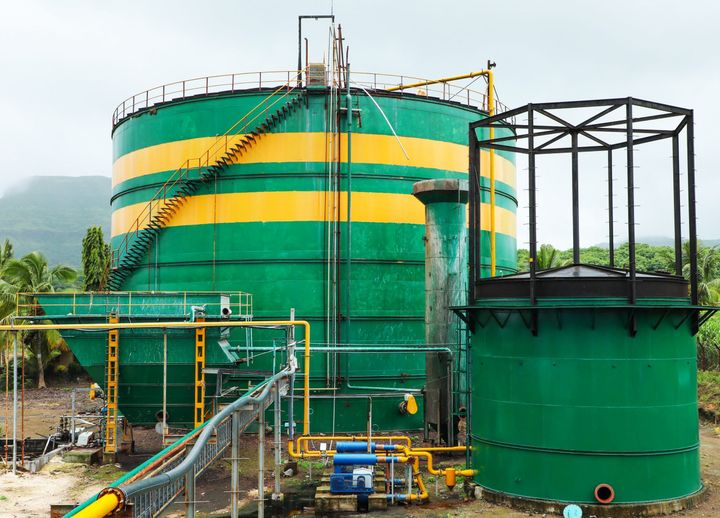
The anaerobic digester is the central component of the plant. It provides the controlled environment needed for microbial activity.
Digesters may use different configurations depending on the material being processed. Important design factors include:
- Operating temperature
- Retention time
- Organic loading rate
- Digester volume
- Mixing requirements
- Feedstock characteristics
- Gas production expectations
Industrial digesters can be constructed using reinforced concrete, steel, or other engineered materials appropriate for the operating environment.
Mixing and Heating Systems
Consistent mixing helps distribute microorganisms, nutrients, and organic material throughout the digester.
Some industrial systems also require heating to maintain an appropriate biological operating temperature. Heat exchangers, circulation systems, pumps, and temperature controls may therefore form part of the plant design.
Biogas Collection
As microorganisms decompose organic matter, biogas accumulates above or around the digestion zone.
Gas collection systems generally include:
- Gas piping
- Gas holders or storage systems
- Pressure regulation
- Moisture removal
- Safety equipment
- Gas monitoring instruments
Proper engineering is essential because biogas contains combustible methane.
Gas Cleaning and Upgrading
Raw biogas may contain moisture, hydrogen sulfide, carbon dioxide, and other impurities. Depending on its intended application, treatment systems can be incorporated to improve gas quality.
For electricity or heat generation, the required gas quality may differ from applications involving biomethane or compressed biogas.
Gas upgrading technologies can separate carbon dioxide and other components to produce a methane-rich gas stream.
Energy Conversion
Biogas can be used in suitable equipment for thermal energy or electricity generation.
Common industrial configurations include:
- Gas engines
- Combined heat and power systems
- Boilers
- Thermal energy systems
- Biomethane upgrading systems
The selected technology should match the gas quantity, gas quality, operating profile, and energy requirement of the facility.
Digestate Management
Anaerobic digestion produces digestate after organic material has been processed. The digestate contains water, remaining organic matter, and nutrients.
A complete industrial plant therefore needs a plan for digestate storage, separation, treatment, and appropriate end use.
Important Equipment in a Biogas Plant
Industrial biogas plant manufacturing combines mechanical, electrical, civil, instrumentation, and process-engineering components.
| Equipment | Main Function |
|---|---|
| Feedstock tank | Receives and stores organic material |
| Mixing system | Creates a consistent feed mixture |
| Digester | Supports anaerobic digestion |
| Heating system | Maintains suitable process temperature |
| Gas holder | Temporarily stores biogas |
| Gas scrubber | Removes selected impurities |
| Gas dryer | Reduces moisture |
| Gas engine | Converts biogas into electricity |
| Control system | Monitors and regulates operations |
| Digestate system | Handles post-digestion material |
Automation can improve process monitoring by tracking parameters such as temperature, pressure, gas flow, pH, and other operating conditions.
Recent Developments and Industry Trends
The biogas industry has continued moving toward larger integrated waste-to-energy projects, improved gas purification, digital monitoring, and biomethane applications.
In India, the Ministry of New and Renewable Energy has supported biogas and waste-to-energy development through the National Bioenergy Programme. The programme's Phase-I framework covered FY 2021–22 through FY 2025–26 and included support for biogas-related applications.
A notable recent development came in June 2025, when MNRE published revisions to guidelines under the National Bioenergy Programme's Biomass Programme. The revisions addressed several documentation and implementation provisions.
Another important trend is the integration of biogas plants with waste-to-energy projects. MNRE's Waste to Energy framework covers projects using biodegradable urban, agricultural, and industrial wastes for producing biogas, BioCNG, and power.
Digital plant monitoring is also becoming increasingly important. Automated sensors and control systems can help operators observe gas production, temperature, pressure, and other process parameters in real time.
Biomethane and compressed biogas are receiving attention because purified biogas can potentially be integrated into appropriate fuel and energy applications. However, actual feasibility depends on feedstock availability, gas quality, infrastructure, regulations, and project-specific technical conditions.
Laws, Policies, and Regulatory Considerations in India
Industrial biogas projects in India can be affected by renewable-energy programmes, environmental regulations, waste-management requirements, pollution-control rules, building standards, electrical regulations, and local approvals.
The National Bioenergy Programme is one important government framework. MNRE describes its Biogas Programme as supporting biogas plants for applications including clean cooking, thermal energy, small-scale power generation, and organic-enriched bio-manure.
For larger facilities, project developers may need to consider requirements administered by relevant state authorities and pollution-control bodies. The exact approvals depend on factors such as plant location, feedstock type, capacity, emissions, wastewater generation, electrical configuration, and digestate handling.
Safety requirements are particularly important because methane is combustible and hydrogen sulfide can be hazardous. Industrial facilities should therefore incorporate appropriate gas detection, pressure protection, ventilation, electrical safety, emergency procedures, and trained operating personnel.
Government programme conditions can also change. For example, MNRE's BioURJA information currently states that the submission window for certain Biomass and Waste-to-Energy applications closed on 31 December 2025 until further notice.
Organizations planning a new project should therefore verify the latest government notifications and applicable state-level requirements before making technical or financial decisions.
Tools and Resources for Biogas Planning
Several categories of tools can help engineers, researchers, students, and project planners understand industrial biogas systems.
Useful resources include:
- Biogas yield calculators: Estimate potential gas production from different organic feedstocks.
- Feedstock analysis worksheets: Record moisture, solids, volatile solids, and organic loading information.
- Energy conversion calculators: Compare biogas production with potential electricity or thermal energy output.
- Process-flow diagrams: Visualize feedstock, digestion, gas treatment, and digestate pathways.
- Equipment sizing worksheets: Support preliminary sizing of tanks, pumps, digesters, and gas systems.
- Gas-quality monitoring instruments: Measure methane, carbon dioxide, hydrogen sulfide, oxygen, and other parameters.
- SCADA systems: Monitor industrial plant conditions and operating trends.
- Maintenance checklists: Track inspections of pumps, valves, sensors, piping, and safety systems.
- Government renewable-energy portals: Provide information about applicable programmes and guidelines.
- Environmental assessment templates: Help organize information required during project planning.
These tools are most useful when combined with laboratory feedstock testing and professional engineering assessment.
Frequently Asked Questions
What is an industrial biogas plant?
An industrial biogas plant is a facility that uses anaerobic digestion to process biodegradable organic material and produce biogas. The gas can be used for suitable heat, electricity, or upgraded-gas applications.
What materials can be processed in a biogas plant?
Potential feedstocks include agricultural residues, animal manure, food-processing waste, sewage-related organic material, and other biodegradable industrial waste. Suitability depends on composition, contamination, moisture, and biological characteristics.
What is the main gas produced by anaerobic digestion?
Biogas primarily contains methane and carbon dioxide. Methane provides most of its useful energy value, while the exact composition varies according to the feedstock and digestion conditions.
Can biogas generate electricity?
Yes. Biogas can fuel suitable gas engines or combined heat and power systems to generate electricity. The practical output depends on gas production, methane concentration, equipment efficiency, and operating conditions.
Is industrial biogas technology considered renewable energy?
Biogas produced from appropriate renewable organic feedstocks is generally considered a form of bioenergy. Its environmental performance depends on feedstock sourcing, plant efficiency, methane management, and overall system design.
Conclusion
Industrial biogas plant manufacturing combines renewable energy technology, waste management, mechanical engineering, process control, and environmental planning. A well-designed facility can transform suitable organic materials into biogas while producing digestate for appropriate resource-recovery applications.