Factory Automation Software: Complete Guide to Modern Smart Manufacturing
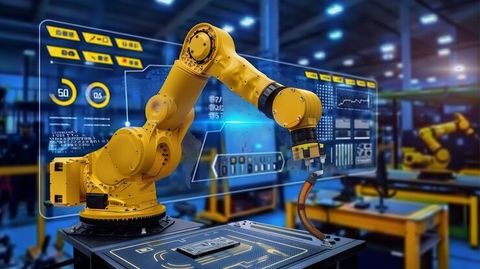
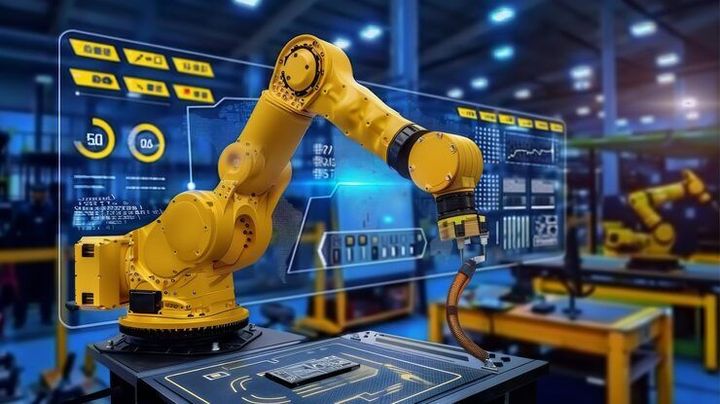
Factory Automation Software is a digital solution that helps manufacturers monitor, control, analyze, and improve production processes through connected technologies. Modern manufacturing facilities use software platforms to automate repetitive tasks, coordinate machines, collect production data, and support informed decision-making across operations.
In modern manufacturing, this often means connecting PLCs, SCADA, MES, historian systems, alarm handling, and analytics tools so production can run with better visibility and consistency. OPC UA is widely used as an interoperability standard for secure, reliable industrial data exchange across vendors, while platforms such as Ignition, FactoryTalk, and Siemens TIA Portal show how automation software spans supervision, engineering, and enterprise connection.
How it works
Factory automation software usually sits between the physical equipment and the people or systems that need the data. Sensors and controllers collect signals from machines, the software organizes that information, and operators or planners use dashboards, alarms, and reports to act on it.
In many plants, the same software also sends commands back to controllers, tracks production states, and stores operational history for analysis. This is why automation software is often described as a bridge between control, monitoring, and business decisions.
Common structure
| Layer | What it does |
|---|---|
| Field devices | Capture machine signals such as temperature, speed, pressure, and counts |
| Control layer | Uses PLCs and controllers to manage machine actions |
| Supervision layer | Shows live dashboards, alarms, trends, and operator screens |
| Production layer | Tracks orders, batches, downtime, quality, and work progress |
| Data layer | Stores history for reporting, analytics, and traceability |
| Security layer | Protects access, communications, backups, and recovery |
This structure helps plants keep operations organized, reduce manual coordination, and respond faster when conditions change. It also supports scaling from a single line to a full multi-site operation.
Why it matters
Factory automation software solves problems that are common in manufacturing: delayed reporting, human error, inconsistent quality, slow fault detection, and disconnected data. It helps teams see equipment status sooner, standardize procedures, and reduce the gap between what the machine is doing and what the business thinks is happening. It is especially useful in automotive, food processing, packaging, pharmaceuticals, electronics, and industrial assembly, where timing, traceability, and repeatability are important.
It also supports better decision-making. When live data, alarm history, and production records are in one place, managers can identify recurring bottlenecks, measure downtime more accurately, and compare shifts or lines more reliably. That makes the software useful not only for automation engineers, but also for quality teams, maintenance teams, and operations leaders.
Key features
- Live monitoring of machines, alarms, and process values
- Dashboard views for operators, supervisors, and management
- Data logging and historical reporting
- Alarm management and event tracking
- Recipe, batch, or sequence handling where needed
- Integration with PLCs, sensors, databases, and enterprise systems
- User access controls and audit trails
- Remote visibility for distributed plants or multiple sites
These features matter because manufacturing environments need fast access to trustworthy data, controlled changes, and a clear record of events. They also reduce the need to move between separate tools for supervision, reporting, and engineering.
Main types
- SCADA-focused platforms for supervision and control visualization
- MES-oriented systems for production tracking and traceability
- HMI software for machine-level operator interaction
- PLC engineering suites for programming, configuration, and maintenance
- IIoT and data platforms for connectivity, analytics, and cross-system visibility
In practice, many vendors combine several of these functions in one platform. For example, Ignition is positioned as a universal industrial platform for SCADA, MES, IIoT, and related use cases, while TIA Portal is built as an integrated engineering environment for automation systems and PLCs. FactoryTalk is designed to support advanced industrial applications from the edge to the cloud.
Recent trends and updates
The strongest current trend is the shift toward AI-assisted manufacturing. On 3 June 2025, Rockwell Automation reported that 95% of manufacturers were investing in AI, with cybersecurity ranking as the second biggest external risk; 49% planned to use AI for cybersecurity in 2025, up from 40% in 2024. The same report said 41% were using AI and automation to help close the skills gap and labor shortage. Rockwell also highlighted digital twins as a growing tool for predictive maintenance and sustainability.
Another important development is the continued move toward more integrated engineering platforms. Siemens announced TIA Portal Version 20 on 7 November 2024 with performance and efficiency improvements aimed at faster engineering and better competitiveness. On 16 September 2025, Inductive Automation released Ignition 8.3, extending a platform used for SCADA, IIoT, MES, and HMI projects. These updates point to a broader trend: factories want software that scales, integrates cleanly, and handles more data without adding unnecessary complexity.
A third trend is stronger use of edge and interoperability standards. Industrial automation teams increasingly want software that can work closer to the machine, exchange data across vendors, and support real-time decisions without forcing every signal into a single proprietary stack. OPC UA remains central to that goal because it is designed for secure, reliable industrial interoperability across different systems and suppliers.
Standards, policies, and security expectations
There is no single global law that covers all factory automation software, but several standards and guidance documents are widely used in practice. NIST Cybersecurity Framework 2.0, published on 26 February 2024, helps organizations manage and communicate cybersecurity risk. NIST SP 800-82 Rev. 3 provides guidance for operational technology security, including the unique reliability and safety needs of OT environments. ISA/IEC 62443 addresses industrial automation and control system security across the lifecycle and emphasizes shared responsibility among asset owners, suppliers, and integrators.
For factories, this means security is not only a technical issue. Access control, backup handling, segmentation, patch planning, incident response, and supplier coordination all matter. If a plant handles regulated data, safety-critical processes, or personal information, local privacy, safety, and sector rules may also apply, so compliance needs to be reviewed by jurisdiction and industry.
Useful tools and learning resources
Practical platforms
- Ignition for SCADA, MES, IIoT, and web-based industrial applications. It is designed as a universal industrial platform with scalable architectures.
- FactoryTalk for industrial applications from edge to cloud, including HMI and predictive maintenance workflows.
- Siemens TIA Portal for PLC programming, engineering, and coordinated automation design.
- OPC UA for vendor-neutral machine and system interoperability.
Learning and security references
- NIST CSF 2.0 for cybersecurity risk management and governance.
- NIST SP 800-82 Rev. 3 for OT security guidance in industrial environments.
- ISA/IEC 62443 for industrial automation and control system security across the lifecycle.
These references are useful because factory automation software is not just about screens and dashboards. It is also about integration, reliability, maintainability, and secure operation over time.
FAQs
What does factory automation software do?
It connects equipment, collects production data, displays live status, manages alarms and records, and helps teams coordinate control and reporting more efficiently.
Is it only useful for large factories?
No. The same core approach can support a single machine, one line, or a multi-site operation. NIST CSF 2.0 is also written for organizations of different sizes and maturity levels, which matches the way automation software scales in practice.
How is it different from SCADA?
SCADA is usually one part of the overall stack. Factory automation software can also include MES, HMI, PLC engineering, data integration, reporting, and analytics. Platforms such as Ignition and FactoryTalk show that broader scope clearly.
Which security standard matters most?
For OT environments, the most practical references are NIST CSF 2.0 for risk management, NIST SP 800-82 Rev. 3 for OT security guidance, and ISA/IEC 62443 for industrial control system security across the lifecycle.
What is the most important trend right now?
The biggest current shift is toward AI-enabled automation, digital twins, stronger interoperability, and better OT cybersecurity. In 2025, manufacturers reported growing AI investment, including cybersecurity uses and labor-gap support, while vendors continued improving integrated industrial software platforms.
Conclusion
Factory automation software brings machines, operators, and production data into one coordinated system. It improves visibility, helps reduce manual work, supports traceability, and makes it easier to respond to faults or bottlenecks. Its value is strongest when it is built around reliable data exchange, clear engineering structure, and secure operations. With AI, digital twins, and stronger OT security now shaping the field, the software is becoming more important not just for control, but for long-term manufacturing resilience.