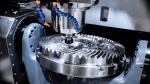
Modern lens production can involve several stages, from selecting a lens blank and calculating the required optical geometry to precision surfacing, polishing, coating, inspection, edging, and final fitting.
The manufacturing process varies according to the lens material, prescription, lens design, production volume, and required optical characteristics. Modern free-form technologies have also made it possible to produce increasingly customized lens surfaces based on detailed digital calculations.
This guide explains the major stages of eyeglass lens manufacturing, equipment used in production, precision technologies, coatings, quality control, automation, and current industry trends.
What Is an Eyeglass Lens?
An eyeglass lens is an optical component positioned in front of the eye to modify the path of incoming light.
Lenses can be designed for different visual requirements, including:
-
Single-vision correction
-
Bifocal correction
-
Progressive correction
-
Occupational applications
-
Specialized optical requirements
Modern lenses may also incorporate features such as:
-
Anti-reflective coatings
-
UV filtering
-
Scratch-resistant coatings
-
Tinted surfaces
-
Photochromic properties
-
Polarization
-
Blue-light filtering characteristics
The optical design and material determine how the lens behaves when light passes through it.
Main Materials Used in Eyeglass Lenses
CR-39
CR-39 is a widely known plastic optical material that has historically been used for ophthalmic lenses.
It offers optical characteristics suitable for many applications and can be processed through conventional lens-manufacturing techniques.
Polycarbonate
Polycarbonate is known for its impact resistance and relatively low density.
It is used in applications where impact performance is an important consideration.
Trivex
Trivex is another lightweight lens material with impact-resistant characteristics and optical applications.
High-Index Plastics
High-index materials allow certain prescriptions to be produced with thinner profiles than conventional materials.
Their refractive characteristics can be advantageous for higher prescriptions where lens thickness is an important design consideration.
Glass
Glass lenses have historically played an important role in ophthalmic optics.
However, modern plastic materials have become widely used because of their weight, impact characteristics, and manufacturing flexibility.
Understanding Lens Blanks
A lens blank is the starting piece of optical material used during lens production.
Blanks may be supplied in different forms depending on the manufacturing method.
Important characteristics include:
-
Material
-
Diameter
-
Base curve
-
Thickness
-
Optical properties
-
Surface geometry
For prescription production, the blank provides the material that will eventually be shaped into the required optical geometry.
Prescription and Digital Lens Design
Modern lens manufacturing often begins with digital prescription information.
The design process can incorporate:
-
Prescription power
-
Cylinder correction
-
Axis
-
Addition power
-
Pupillary measurements
-
Frame geometry
-
Vertex distance
-
Pantoscopic angle
-
Wrap angle
-
Desired visual zones
Digital calculations can then determine the surface geometry needed to achieve the intended optical performance.
Understanding Lens Surfacing
Surfacing is one of the most important manufacturing stages.
The objective is to modify the lens surface so that it achieves the required optical geometry.
Traditional production may use a combination of grinding and polishing.
Modern free-form manufacturing uses computer-controlled equipment to generate highly customized surface geometries.
Traditional Lens Manufacturing Process
A simplified conventional process can include:
Lens Blank → Blocking → Generating → Fining → Polishing → Coating → Inspection → Edging → Final Assembly
Each stage performs a different function.
Blocking
Blocking involves attaching the lens blank to a holder or block so that it can be accurately positioned during machining.
Correct positioning is important because the manufacturing equipment must reference the lens accurately.
Generating
Generating removes material from the lens surface to create the approximate required curvature.
Modern generators can use precision cutting tools controlled according to digitally calculated surface information.
Fining
Fining is a secondary surface-processing stage that refines the generated surface.
It helps prepare the lens for final polishing.
Polishing
Polishing produces a smoother optical surface.
The objective is to achieve the required surface quality while preserving the intended optical geometry.
Precision polishing is particularly important because surface imperfections can affect optical performance.
Free-Form Lens Manufacturing
Free-form technology represents a major development in modern ophthalmic lens production.
Instead of relying entirely on standardized surface geometries, computer-controlled equipment can generate highly customized surfaces.
Free-form manufacturing can account for parameters such as:
-
Individual prescription
-
Viewing position
-
Frame geometry
-
User-specific measurements
-
Desired visual zones
The resulting lens can therefore be designed more specifically around the intended optical application.
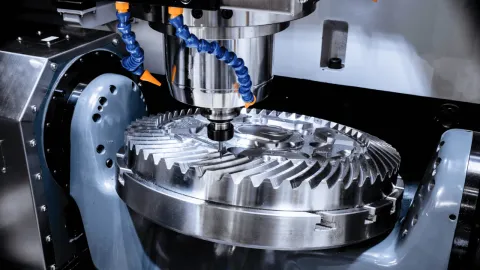
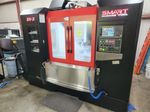
CNC and Computer-Controlled Equipment
Computer-controlled manufacturing equipment plays an important role in modern lens production.
Potential equipment includes:
-
CNC generators
-
Precision lathes
-
Digital surfacing systems
-
Automated polishing machines
-
CNC edging systems
-
Robotic handling systems
Digital control helps translate calculated optical geometry into physical lens surfaces.
Precision Measurement Equipment
Manufacturing requires measurement systems capable of evaluating optical and dimensional characteristics.
Equipment can include:
-
Lensmeters
-
Focimeters
-
Optical power measurement systems
-
Surface analyzers
-
Thickness gauges
-
Diameter measurement systems
-
Coordinate measurement systems
Automated inspection systems can compare measured results against production specifications.
Optical Power Measurement
Optical power is a fundamental lens characteristic.
A focimeter or lensmeter can be used to evaluate lens power and other prescription-related characteristics.
Measurement may include:
-
Sphere
-
Cylinder
-
Axis
-
Addition
-
Prism
The exact measurements depend on the lens design and applicable quality requirements.
Lens Edging
After the optical surface is completed, the lens may need to be shaped to fit a particular eyeglass frame.
Edging machines can cut the lens perimeter according to a digital frame shape.
The process may include:
-
Frame tracing
-
Digital shape generation
-
Lens positioning
-
Edge cutting
-
Beveling or grooving
-
Final dimensional inspection
Modern computerized edging equipment can automatically calculate the appropriate lens shape and edge geometry.
Frame and Lens Alignment
Precise alignment is important during final fitting.
The lens must be positioned correctly relative to:
-
Frame shape
-
Optical center
-
Pupillary position
-
Segment position
-
Progressive corridor
-
Frame orientation
Incorrect positioning can affect the intended optical performance.
Lens Coating Technologies
Coatings are commonly applied after lens surfacing and polishing.
Anti-Reflective Coatings
Anti-reflective coatings reduce reflections from lens surfaces and can improve light transmission.
Scratch-Resistant Coatings
Plastic lenses generally benefit from protective hard coatings that improve resistance to surface damage.
UV Protection
Some lens materials inherently provide varying levels of UV absorption, while additional treatments may be used depending on the product.
Photochromic Technology
Photochromic lenses can change their light transmission characteristics in response to environmental conditions.
Mirror Coatings
Mirror coatings create a reflective surface that can alter the appearance and light transmission of the lens.
Lens Coating Equipment
Coating processes can use specialized equipment such as:
-
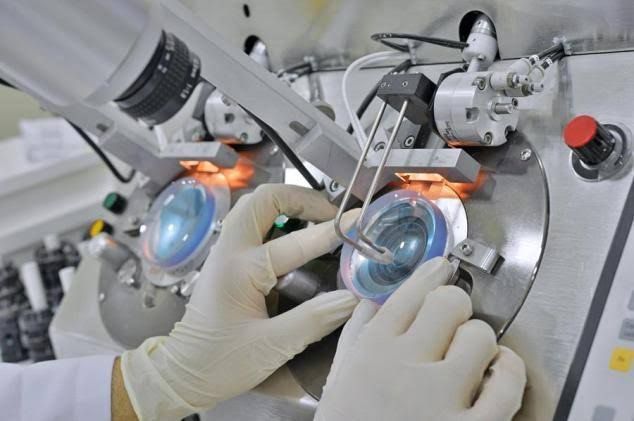
Vacuum coating systems
-
Dip-coating systems
-
Spin-coating equipment
-
Curing systems
-
Cleaning stations
-
Plasma-treatment systems
The exact equipment depends on the coating technology.
Vacuum Coating
Vacuum deposition is commonly associated with advanced optical coatings.
The process can involve placing lenses inside a controlled chamber where coating materials are deposited onto the lens surface.
Controlled environmental conditions help achieve consistent coating thickness and optical properties.
Cleaning Before Coating
Lens surfaces must be appropriately prepared before coating.
Contamination can affect coating adhesion and appearance.
Preparation can include:
-
Washing
-
Rinsing
-
Drying
-
Surface treatment
-
Particle removal
Automated cleaning systems can improve consistency in high-volume production.
Quality Control
Quality control is required throughout lens manufacturing.
Inspection can evaluate:
-
Optical power
-
Surface quality
-
Coating quality
-
Thickness
-
Diameter
-
Shape
-
Optical center
-
Cosmetic appearance
Automated inspection systems can reduce variability and identify production defects.
Common Lens Manufacturing Defects
Potential defects can include:
-
Surface scratches
-
Coating imperfections
-
Incorrect optical power
-
Surface irregularities
-
Edge defects
-
Thickness variation
-
Alignment errors
-
Contamination
Manufacturing controls are designed to identify and reduce these issues.
Digital Inspection Systems
Modern production facilities can use automated vision systems and optical measurement equipment.
These systems may evaluate:
-
Surface defects
-
Lens dimensions
-
Coating uniformity
-
Optical characteristics
-
Markings
-
Edge geometry
Digital inspection can support high-volume manufacturing while maintaining repeatable measurement procedures.
Automation in Lens Manufacturing
Automation is increasingly integrated throughout the manufacturing workflow.
Potential automated operations include:
-
Lens identification
-
Material handling
-
Blocking
-
Surfacing
-
Polishing
-
Cleaning
-
Coating
-
Inspection
-
Edging
-
Packaging
Automation can reduce repetitive manual handling and support consistent production.
Robotics
Robotic systems can move lenses between manufacturing stations.
They may be integrated with:
-
CNC equipment
-
Inspection systems
-
Cleaning stations
-
Coating systems
-
Conveyor systems
Robotics are particularly useful in facilities processing large numbers of lenses.
Digital Manufacturing Workflow
A modern digital lens workflow can connect prescription information with manufacturing equipment.
A simplified sequence is:
Prescription Data → Digital Lens Design → Production File → CNC Surfacing → Polishing → Coating → Digital Inspection → Edging
This connected approach can reduce manual data entry and improve traceability.
Importance of Precision
Small changes in optical geometry can influence lens performance.
Precision is therefore important in:
-
Surface curvature
-
Lens thickness
-
Optical power
-
Axis
-
Prism
-
Optical center
-
Progressive design
-
Frame positioning
Modern free-form equipment and digital measurement technologies help manufacturers control these characteristics more precisely.
Progressive Lens Manufacturing
Progressive lenses require particularly complex surface geometry because their optical power changes progressively across different regions of the lens.
The lens may contain:
-
Distance zone
-
Intermediate zone
-
Near zone
-
Progressive corridor
-
Peripheral regions
Modern free-form technology allows these surfaces to be calculated and manufactured digitally.
Personalized Lens Design
Modern digital lens manufacturing can incorporate individual parameters.
These may include:
-
Pupillary distance
-
Fitting height
-
Frame dimensions
-
Viewing angle
-
Vertex distance
-
Facial position
-
Head and eye movement characteristics
The goal is to produce a lens geometry that corresponds more closely to the intended wearing conditions.
Lens Manufacturing for Different Applications
Everyday Prescription Lenses
These are designed for general visual correction.
Sports Lenses
Sports applications may emphasize:
-
Impact resistance
-
Wrap compatibility
-
Lightweight materials
-
Optical clarity
Safety Lenses
Safety eyewear can require specific impact and optical performance characteristics depending on its intended use and applicable standards.
Occupational Lenses
Occupational designs can be optimized for specific working distances or visual tasks.
Sunglass Lenses
Sunglass lenses can incorporate:
-
Tints
-
Polarization
-
UV protection
-
Mirror coatings
-
Specialized materials
Sustainable Lens Manufacturing
Environmental considerations are increasingly relevant to optical manufacturing.
Potential areas of focus include:
-
Material efficiency
-
Reduced process waste
-
Water management
-
Energy-efficient equipment
-
Recycling
-
Packaging reduction
-
Longer product life
Manufacturers may also explore more efficient machining strategies that reduce material removal.
Industry 4.0 in Lens Manufacturing
Industry 4.0 technologies are influencing optical manufacturing through:
-
Connected equipment
-
Real-time monitoring
-
Production analytics
-
Automated quality inspection
-
Digital production records
-
Predictive maintenance
-
Robotics
Machine data can be used to monitor production performance and identify process variations.
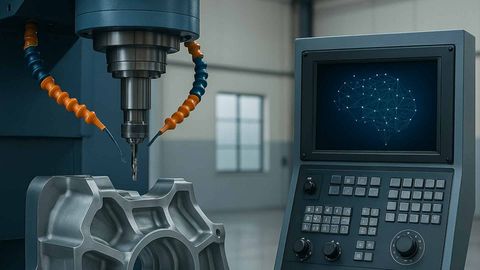
AI in Optical Manufacturing
Artificial intelligence and machine learning can support manufacturing and inspection applications.
Potential uses include:
-
Automated defect detection
-
Process monitoring
-
Predictive maintenance
-
Production optimization
-
Image analysis
-
Quality classification
AI-based systems should complement established measurement and quality-control procedures rather than replace required verification.
Industry Trends
Several developments are shaping modern eyeglass lens manufacturing.
Greater Personalization
Digital manufacturing is making individualized lens geometries increasingly practical.
Advanced Free-Form Surfacing
Computer-controlled surfacing continues to expand the range of optical designs that can be produced.
Automated Inspection
Vision systems and digital optical measurement are increasingly integrated into quality-control processes.
Smart Manufacturing
Connected machines and production analytics can provide more detailed manufacturing information.
Advanced Coatings
Coating technology continues to evolve to improve optical performance, durability, and surface characteristics.
Sustainable Production
Manufacturers are increasingly examining material usage, energy consumption, water management, and production waste.
Future of Eyeglass Lens Manufacturing
The future of lens manufacturing is likely to combine increasingly sophisticated optical calculations with automated precision manufacturing.
Potential developments include:
-
AI-assisted lens design
-
More individualized optical surfaces
-
Automated inspection
-
Advanced coating systems
-
Robotic production
-
Connected manufacturing equipment
-
Digital twin technologies
-
More efficient materials
-
Improved recycling systems
The increasing integration of design software, precision CNC equipment, robotics, measurement systems, and data analytics could make lens manufacturing more adaptable and traceable.
Frequently Asked Questions
How are eyeglass lenses manufactured?
Eyeglass lenses are generally produced by selecting an appropriate lens blank, creating the required optical surface through precision machining, refining and polishing the surface, applying coatings, inspecting the lens, and shaping the edge to fit the frame.
What machines are used to manufacture eyeglass lenses?
Equipment can include CNC generators, surfacing machines, polishing systems, coating equipment, optical measurement instruments, automated inspection systems, and computerized edging machines.
What is free-form lens manufacturing?
Free-form manufacturing uses computer-controlled equipment to create customized optical surfaces rather than relying solely on standardized surface geometries.
Why are coatings applied to eyeglass lenses?
Coatings can provide characteristics such as reduced reflections, increased surface durability, UV filtering, tinting, or other optical properties depending on the coating system.
How is lens quality checked?
Quality control can evaluate optical power, surface quality, dimensions, thickness, coating condition, lens shape, and alignment.
How is technology changing lens manufacturing?
Digital design, free-form surfacing, CNC equipment, automation, robotics, machine vision, connected production systems, and AI-assisted inspection are contributing to increasingly automated and personalized lens manufacturing.
Conclusion
Eyeglass lens manufacturing combines optical science, materials engineering, precision machining, digital design, surface treatment, and automated quality control.
The process begins with selecting an appropriate lens material and blank before moving through digital design, blocking, generating, fining, polishing, coating, inspection, and edging. Each stage contributes to the optical and physical characteristics of the finished lens.
Free-form manufacturing has been particularly important because it allows manufacturers to produce increasingly customized lens surfaces based on prescription information and individual fitting parameters. CNC systems and automated inspection equipment further support precision and repeatability.
Coating technologies add another important layer to lens production. Anti-reflective, hard, UV-related, photochromic, mirror, and other surface treatments can modify the functional characteristics of the finished lens.
Looking ahead, automation, robotics, AI-assisted inspection, connected manufacturing, advanced coatings, personalized optical design, and sustainable production are likely to remain important areas of development.
The modern eyeglass lens is therefore much more than a shaped piece of transparent material. It is a precision optical product produced through an increasingly sophisticated combination of digital engineering, manufacturing technology, and quality-control processes.
Disclaimer
This article is intended solely for informational and educational purposes. It does not provide medical, optical, engineering, manufacturing, procurement, or professional eyewear advice. It does not endorse, recommend, compare, rank, review, market, or promote any specific lens manufacturer, optical equipment manufacturer, coating technology, laboratory, eyewear company, or product. Manufacturing processes, equipment specifications, materials, optical tolerances, and applicable standards vary by application and jurisdiction. Qualified optical, engineering, manufacturing, and regulatory professionals should be consulted for specific production, quality-control, safety, or compliance requirements.