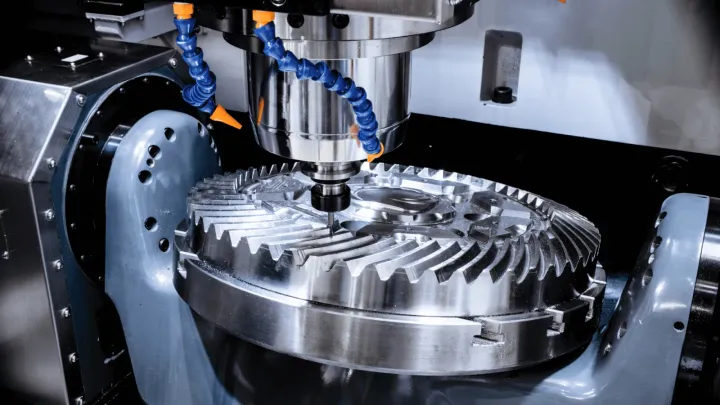
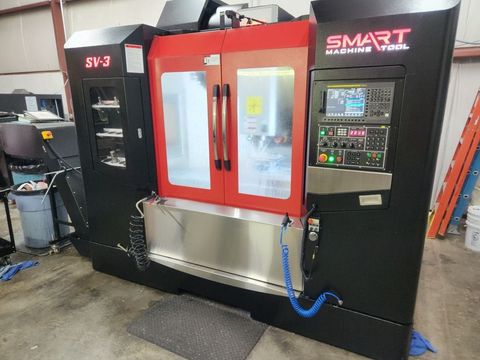
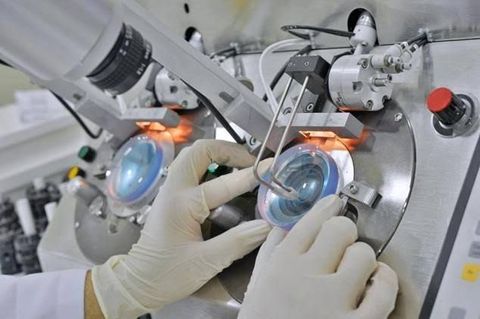
CNC stands for Computer Numerical Control. Instead of relying entirely on manual machine movements, a CNC milling machine follows programmed instructions that control movements of the cutting tool and workpiece.
Modern CNC milling has become an important part of precision manufacturing because it combines:
-
Computer-controlled movement
-
Accurate cutting
-
Repeatable production
-
Multiple machining operations
-
Automated tool movement
-
Digital manufacturing workflows
From metal components and automotive parts to aerospace structures, medical devices, electronics components, and industrial machinery, CNC milling supports a wide range of manufacturing applications.
1. What Is a CNC Milling Machine?
A CNC milling machine is a machine tool that uses a rotating cutting tool to remove material from a stationary or controlled-moving workpiece.
The machine receives programmed instructions, commonly written using G-code and M-code, which tell the system how to move, cut, change tools, control spindle functions, and perform other machining actions.
A typical CNC milling process involves:
Digital design → CAM programming → Machine setup → Workholding → Tool selection → Material removal → Inspection
This combination of software, mechanical systems, electronics, and cutting tools enables highly controlled manufacturing.
2. How CNC Milling Works
The basic milling process follows several stages.
Step 1: Create the Design
A component is first designed using CAD software.
The digital model defines dimensions, surfaces, holes, pockets, curves, and other geometric features.
Step 2: Prepare the Manufacturing Program
CAM software can convert the CAD model into machining toolpaths.
The resulting instructions determine how the cutting tool moves around the workpiece.
Step 3: Set Up the Machine
The operator installs:
-
Workholding equipment
-
Cutting tools
-
Tool holders
-
Workpiece
-
Required fixtures
Machine coordinates and work offsets are then established.
Step 4: Machining Begins
The spindle rotates the cutting tool while programmed machine axes move according to the toolpath.
Material is progressively removed until the required geometry is produced.
Step 5: Inspection
The completed component can be measured using appropriate inspection equipment to verify dimensional accuracy and surface requirements.
3. Main Components of a CNC Milling Machine
Although machine designs vary, most CNC milling systems contain several major components.
Machine Bed
The bed provides a rigid foundation for the machine.
Its purpose is to support the main mechanical structures while minimizing vibration.
Column
The column supports important machine components and contributes to overall rigidity.
Spindle
The spindle rotates the cutting tool.
Spindle speed and power are important factors in determining machining performance.
Worktable
The table supports the workpiece or fixture.
Depending on the machine configuration, the table may move along one or more axes.
CNC Controller
The controller interprets programmed instructions and coordinates machine movements.
It effectively acts as the machine's electronic control center.
Drive Motors
Motors move the machine axes according to commands from the controller.
Linear Guides
Linear guide systems allow controlled movement along machine axes while supporting accuracy and rigidity.
Tool Holder
Tool holders connect cutting tools to the spindle.
Different tool-holder systems are selected according to machine type, tooling requirements, and machining conditions.
Coolant System
Coolant can help manage:
-
Cutting temperature
-
Tool wear
-
Chip evacuation
-
Surface quality
Not every milling operation requires the same coolant strategy.
4. CNC Milling Machine Axes
CNC milling machines commonly operate along three primary linear axes.
X-Axis
The X-axis generally controls horizontal movement from one side to another.
Y-Axis
The Y-axis controls movement in the perpendicular horizontal direction.
Z-Axis
The Z-axis generally controls vertical movement.
Together, these axes enable three-dimensional machining.
More advanced machines can include additional rotational axes.
5. 3-Axis CNC Milling Machines
A 3-axis CNC milling machine controls movement along X, Y, and Z axes.
It is widely used for:
-
Flat surfaces
-
Pockets
-
Slots
-
Holes
-
Basic contours
-
General mechanical components
Three-axis machining is relatively straightforward and can be suitable for many manufacturing requirements.
6. 4-Axis CNC Milling Machines
A 4-axis machine adds a rotational axis to the standard X, Y, and Z movements.
This can allow the workpiece to be rotated during machining.
Potential benefits include:
-
Access to additional surfaces
-
Reduced repositioning
-
More complex machining
-
Improved workflow efficiency
The specific fourth-axis configuration varies between machines.
7. 5-Axis CNC Milling Machines
A 5-axis CNC milling machine provides simultaneous or indexed movement across five axes.
This allows cutting tools to approach a component from multiple directions.
Five-axis machining is useful for complex components such as:
-
Aerospace parts
-
Turbine components
-
Medical components
-
Complex molds
-
Automotive parts
-
Precision mechanical structures
A major advantage is the ability to machine complex geometries while reducing the number of setups.
8. Vertical CNC Milling Machines
In a vertical milling machine, the spindle is oriented vertically.
The configuration is commonly used for:
-
General machining
-
Drilling
-
Pocketing
-
Facing
-
Contouring
-
Prototype production
Vertical machining centers are among the most widely recognized CNC milling systems.
9. Horizontal CNC Milling Machines
Horizontal milling machines position the spindle horizontally.
This configuration can provide advantages for certain heavy-duty and high-volume machining applications.
Potential benefits include:
-
Efficient chip evacuation
-
Strong cutting performance
-
Access to multiple surfaces
-
Suitable configurations for larger components
The ideal configuration depends on component geometry and production requirements.
10. CNC Machining Centers
A machining center combines CNC milling with automated capabilities.
Many machining centers include:
-
Automatic tool changers
-
Enclosed work areas
-
Programmable coolant systems
-
Automated spindle control
-
Multiple-axis movement
-
Integrated inspection options
Machining centers can reduce manual intervention and support repeatable production.
11. CNC Milling Operations
CNC milling machines can perform numerous machining operations.
Face Milling
Face milling produces flat surfaces using cutting edges positioned to machine the surface of a workpiece.
Plain Milling
Plain milling is used to produce relatively flat surfaces.
End Milling
End mills can cut:
-
Pockets
-
Slots
-
Contours
-
Profiles
Slot Milling
Slot milling creates grooves or channels in the workpiece.
Pocket Milling
Pocket milling removes material from an enclosed or partially enclosed region.
Drilling
CNC milling machines can perform programmed drilling operations when equipped with suitable tools.
Boring
Boring enlarges or refines an existing hole to achieve specific dimensional requirements.
Thread Milling
Thread mills can create internal or external threads using controlled toolpaths.
Contour Milling
Contour milling follows curved or irregular paths to create complex profiles.
12. Face Milling Explained
Face milling is commonly used to create smooth, flat surfaces.
A face mill may use multiple cutting inserts to remove material efficiently.
Important variables include:
-
Cutting speed
-
Feed rate
-
Depth of cut
-
Tool diameter
-
Material
-
Coolant strategy
Proper parameter selection influences tool life, productivity, and surface quality.
13. End Milling Explained
End mills are among the most versatile cutting tools used in CNC milling.
They can create:
-
Pockets
-
Slots
-
Profiles
-
Shoulders
-
Contours
-
3D surfaces
Different end-mill geometries are selected according to material and machining requirements.
14. CNC Cutting Tools
Cutting tools play a major role in CNC milling performance.
Common tools include:
-
End mills
-
Face mills
-
Ball-nose cutters
-
Slot cutters
-
Drill bits
-
Reamers
-
Boring tools
-
Thread mills
-
Chamfer tools
Tool geometry, material, coating, and dimensions can all influence machining results.
15. Carbide Cutting Tools
Carbide tools are widely used for CNC machining because they can withstand relatively high cutting speeds and temperatures.
Carbide tools are commonly used for:
-
Steel
-
Stainless steel
-
Aluminum
-
Cast iron
-
Titanium
-
Engineering plastics
The appropriate carbide grade and geometry depend on the workpiece material and machining conditions.
16. Ball-Nose End Mills
Ball-nose cutters have a rounded cutting end.
They are particularly useful for:
-
3D contours
-
Curved surfaces
-
Mold components
-
Die machining
-
Sculpted geometries
They are frequently used in advanced CNC machining where smooth three-dimensional surfaces are required.
17. Workholding Systems
Workholding keeps the component securely positioned during machining.
Common methods include:
-
Vises
-
Clamps
-
Fixtures
-
Chucks
-
Vacuum systems
-
Magnetic workholding
A good workholding strategy should provide stability while allowing the cutting tool adequate access to the component.
18. CNC Fixtures
Fixtures are specially designed workholding systems that position components consistently.
They can help improve:
-
Repeatability
-
Setup consistency
-
Machining access
-
Production efficiency
Complex production environments may use dedicated fixtures designed around specific component geometries.
19. CNC Programming
CNC programming tells the machine what actions to perform.
A program can control:
-
Tool movement
-
Spindle speed
-
Feed rate
-
Tool changes
-
Coolant
-
Coordinate systems
-
Machining cycles
G-code and M-code are commonly associated with CNC programming.
20. G-Code and M-Code
G-Code
G-code generally controls machine movements and machining-related commands.
Examples can include commands associated with:
-
Rapid movement
-
Linear interpolation
-
Circular interpolation
-
Coordinate positioning
M-Code
M-code is commonly used for machine functions such as:
-
Spindle control
-
Coolant control
-
Program stops
-
Tool-related machine functions
Specific codes vary between controllers and manufacturers.
21. CAD and CAM in CNC Milling
Modern CNC milling is closely connected to digital design.
CAD
Computer-Aided Design software creates the digital component model.
CAM
Computer-Aided Manufacturing software converts the design into machining strategies and toolpaths.
Together they create a digital manufacturing workflow:
CAD model → CAM toolpath → CNC program → Machining
This integration allows complex components to be produced from digital designs.
22. CNC Toolpath Strategies
Toolpath selection can significantly influence machining performance.
Common strategies include:
-
Contouring
-
Pocketing
-
Facing
-
Adaptive clearing
-
High-speed machining
-
Parallel finishing
-
Pencil milling
-
Spiral machining
The appropriate strategy depends on geometry, material, cutting tool, machine capabilities, and required surface quality.
23. Cutting Speed and Feed Rate
Two important machining parameters are cutting speed and feed rate.
Cutting speed describes how quickly the cutting edge moves relative to the workpiece.
Feed rate describes how quickly the tool advances through the material.
Incorrect settings can result in:
-
Excessive tool wear
-
Poor surface finish
-
Tool breakage
-
Heat generation
-
Reduced productivity
Manufacturers generally provide recommended starting parameters for specific tools and materials.
24. Depth of Cut
Depth of cut determines how much material is removed during a machining pass.
Machining may involve:
-
Roughing passes
-
Semi-finishing passes
-
Finishing passes
Roughing removes material quickly, while finishing focuses on achieving the final geometry and surface characteristics.
25. CNC Milling Materials
CNC milling can process a wide range of materials.
Metals
Common examples include:
-
Aluminum
-
Steel
-
Stainless steel
-
Cast iron
-
Brass
-
Copper
-
Titanium
-
Nickel-based alloys
Non-Metallic Materials
Depending on machine configuration and tooling, milling can also process:
-
Engineering plastics
-
Composites
-
Certain ceramics
-
Wood-based materials
Tool selection and machining parameters must be matched to the material.
26. CNC Milling Aluminum
Aluminum is widely machined using CNC milling because it is relatively lightweight and can be efficiently cut with suitable tooling.
Important considerations include:
-
Tool geometry
-
High-speed cutting capability
-
Chip evacuation
-
Coolant or lubrication strategy
-
Workholding
Sharp tools and appropriate cutting parameters can help produce clean aluminum surfaces.
27. CNC Milling Steel
Steel machining typically requires careful control of:
-
Cutting speed
-
Feed
-
Tool geometry
-
Cutting depth
-
Tool material
-
Heat management
Carbide tooling is frequently used for many steel machining operations.
28. CNC Milling Titanium
Titanium presents greater machining challenges because of its strength, relatively low thermal conductivity, and tendency to retain heat near the cutting zone.
Successful titanium machining may require:
-
Specialized tooling
-
Controlled cutting speeds
-
Stable workholding
-
Appropriate coolant
-
Careful toolpath strategies
These factors are particularly important in aerospace manufacturing.
29. CNC Milling Applications
CNC milling is used across numerous industries.
Major applications include:
-
Automotive manufacturing
-
Aerospace manufacturing
-
Medical-device manufacturing
-
Electronics
-
Industrial machinery
-
Energy equipment
-
Robotics
-
Tool and die production
-
Mold manufacturing
-
Consumer products
The technology is particularly valuable where dimensional accuracy and repeatability are important.
30. CNC Milling in Automotive Manufacturing
Automotive manufacturing uses CNC milling for numerous components and production tools.
Applications can include:
-
Engine components
-
Transmission components
-
Suspension parts
-
Fixtures
-
Prototypes
-
Mold components
-
Specialized mechanical parts
CNC machining can support both prototype development and production manufacturing.
31. CNC Milling in Aerospace
Aerospace components often require complex geometry, tight tolerances, and lightweight structures.
CNC milling can be used for:
-
Structural components
-
Brackets
-
Engine-related parts
-
Aircraft fittings
-
Tooling
-
Prototype components
Five-axis machining can be particularly valuable for complex aerospace geometries.
32. CNC Milling in Medical Manufacturing
Medical manufacturing can require precise components with carefully controlled dimensions.
CNC milling can be used for:
-
Surgical instruments
-
Orthopedic components
-
Equipment components
-
Dental components
-
Prototypes
Material selection and manufacturing controls depend on the specific application.
33. CNC Milling for Molds and Dies
Mold and die manufacturing often requires highly detailed three-dimensional surfaces.
CNC milling can create:
-
Injection-molding molds
-
Die components
-
Forming tools
-
Cavities
-
Inserts
Ball-nose cutters and multi-axis machining can help produce complex curved surfaces.
34. Advantages of CNC Milling
CNC milling provides several important manufacturing benefits.
Precision
Computer-controlled movement can produce highly accurate components.
Repeatability
The same program can be used repeatedly to manufacture consistent parts.
Complex Geometry
Multi-axis machines can create shapes that are difficult to produce manually.
Automation
Automated tool changes and digital programming can reduce manual intervention.
Flexibility
A CNC machine can produce different components by changing the program, tooling, and setup.
Productivity
Appropriate automation and machining strategies can improve production throughput.
35. Limitations of CNC Milling
CNC milling also has limitations.
These can include:
-
High equipment complexity
-
Significant initial investment
-
Need for trained personnel
-
Tool wear
-
Programming requirements
-
Setup time
-
Maintenance requirements
-
Material waste from subtractive machining
Choosing the correct machine configuration is therefore important.
36. CNC Milling vs Conventional Milling
CNC Milling
-
Computer controlled
-
Highly repeatable
-
Suitable for complex geometries
-
Automated toolpaths
-
Digital programming
-
Strong production flexibility
Conventional Milling
-
More operator-controlled
-
Generally simpler for basic work
-
Useful for certain low-volume tasks
-
Less automated
-
More dependent on operator skill
CNC milling is generally preferred when repeatability, automation, and complex machining are important.
37. CNC Milling vs CNC Turning
The two processes use different primary machining approaches.
CNC milling: A rotating cutting tool removes material from a workpiece.
CNC turning: The workpiece generally rotates while a cutting tool removes material.
Milling is particularly suitable for:
-
Slots
-
Pockets
-
Flat surfaces
-
Complex contours
Turning is particularly suitable for:
-
Shafts
-
Cylindrical components
-
Threads
-
Rotational surfaces
Some modern CNC machines combine milling and turning capabilities.
38. CNC Milling Accuracy
Machining accuracy depends on multiple factors.
Important influences include:
-
Machine rigidity
-
Thermal stability
-
Tool condition
-
Workholding
-
Programming
-
Machine calibration
-
Material behavior
-
Cutting parameters
-
Operator setup
High-precision manufacturing often requires controlled environmental and inspection conditions.
39. Surface Finish in CNC Milling
Surface finish describes the texture produced by machining.
It can be affected by:
-
Tool geometry
-
Feed rate
-
Cutting speed
-
Tool condition
-
Machine vibration
-
Workpiece material
-
Toolpath strategy
Finishing passes are often used to achieve the desired surface characteristics.
40. CNC Milling and Automation
Modern CNC milling increasingly integrates automation technologies.
Examples include:
-
Automatic tool changers
-
Robotic loading
-
Pallet systems
-
Automated inspection
-
Machine monitoring
-
Digital production tracking
-
Tool-condition monitoring
Automation can reduce repetitive manual activities and support more consistent production workflows.
41. CNC Milling and Robotics
Robots can be integrated into CNC machining environments for tasks such as:
-
Loading components
-
Unloading components
-
Moving workpieces
-
Handling finished parts
-
Tool-related support
-
Machine tending
Robotic integration can be especially useful in repetitive production environments.
42. Smart CNC Milling Machines
Modern CNC systems increasingly incorporate sensors and digital monitoring.
Smart CNC technologies can monitor:
-
Spindle load
-
Temperature
-
Vibration
-
Tool condition
-
Machine status
-
Production data
This information can support predictive maintenance and process optimization.
43. AI in CNC Milling
Artificial intelligence is becoming increasingly relevant to advanced manufacturing.
Potential applications include:
-
Predictive maintenance
-
Tool-wear prediction
-
Process optimization
-
Defect detection
-
Production scheduling
-
Automated quality analysis
-
Energy monitoring
AI does not replace the fundamental machining process but can improve how machines are monitored and managed.
44. Digital Twin Technology
A digital twin is a digital representation of a physical machine, process, or manufacturing system.
In CNC environments, digital twins can help simulate:
-
Tool movement
-
Machining processes
-
Machine behavior
-
Potential collisions
-
Production workflows
Simulation can help identify problems before machining begins.
45. CNC Milling and Quality Control
Quality control is an important part of CNC manufacturing.
Inspection methods can include:
-
Calipers
-
Micrometers
-
Height gauges
-
Coordinate measuring machines
-
Optical measurement systems
-
Surface measurement equipment
The appropriate inspection method depends on component complexity and required accuracy.
46. Coordinate Measuring Machines
A CMM, or coordinate measuring machine, determines the position of points on a component using a precision measurement system.
CMMs can verify:
-
Dimensions
-
Geometric relationships
-
Hole positions
-
Profiles
-
Surface characteristics
They are commonly used for high-precision inspection.
47. CNC Milling Maintenance
Regular maintenance helps maintain machine performance.
Typical maintenance activities can include:
-
Lubrication
-
Coolant management
-
Cleaning
-
Filter inspection
-
Tool inspection
-
Guideway maintenance
-
Spindle monitoring
-
Electrical-system checks
Maintenance schedules should follow the machine manufacturer's recommendations.
48. CNC Machine Safety
CNC milling machines contain rapidly moving components and rotating cutting tools, so appropriate safety procedures are essential.
Important practices include:
-
Use machine guards.
-
Follow operating procedures.
-
Wear appropriate personal protective equipment.
-
Keep hands away from moving components.
-
Secure the workpiece correctly.
-
Verify tool installation.
-
Check programs before machining.
-
Keep the work area clean.
-
Never bypass safety systems.
Training and manufacturer instructions should always take priority.
49. Factors for Selecting a CNC Milling Machine
Selecting a CNC milling machine involves evaluating the intended application.
Important factors include:
-
Number of axes
-
Work envelope
-
Spindle speed
-
Spindle power
-
Table capacity
-
Machine rigidity
-
Tool capacity
-
Controller
-
Automation options
-
Material requirements
-
Accuracy requirements
-
Production volume
The best configuration depends on the type of components being manufactured.
50. Future of CNC Milling
CNC milling is evolving toward increasingly connected and automated manufacturing environments.
Important trends include:
-
AI-assisted machining
-
Robotics
-
Predictive maintenance
-
Digital twins
-
Automated inspection
-
Cloud-connected production systems
-
Advanced multi-axis machining
-
Improved energy efficiency
-
Smarter tool monitoring
The future of CNC milling is likely to involve closer integration between machines, software, sensors, robotics, and data analytics.
FAQs
What is a CNC milling machine?
A CNC milling machine is a computer-controlled machine tool that uses rotating cutting tools to remove material from a workpiece and create precise shapes and features.
What are the main types of CNC milling machines?
Common categories include 3-axis, 4-axis, 5-axis, vertical, horizontal, and CNC machining centers. Each configuration is designed for different machining requirements.
What materials can CNC milling machines process?
CNC milling can process materials such as aluminum, steel, stainless steel, cast iron, brass, copper, titanium, engineering plastics, and various composites when appropriate tooling and machining parameters are used.
What is the difference between CNC milling and CNC turning?
CNC milling generally uses a rotating cutting tool to machine a workpiece, while CNC turning typically rotates the workpiece against a cutting tool. Milling is especially useful for pockets, slots, surfaces, and complex profiles.
What is 5-axis CNC milling?
Five-axis CNC milling allows controlled movement across five axes, enabling the cutting tool to approach a component from multiple directions. It is particularly useful for complex three-dimensional parts.
Conclusion
CNC milling machines have transformed modern manufacturing by combining precision machining, digital programming, automation, and repeatable production.
From basic 3-axis systems to advanced 5-axis machining centers, different configurations support different manufacturing requirements. Cutting tools, workholding, programming, material selection, toolpaths, and machine rigidity all contribute to the final result.
The technology is also becoming increasingly intelligent. Robotics, sensors, AI, predictive maintenance, digital twins, and automated inspection are gradually connecting CNC milling with broader smart-manufacturing systems.
The core principle remains straightforward: a digital instruction controls a precise machining process, turning raw material into accurately shaped components.
Disclaimer
This article is provided for general educational and informational purposes only. It does not endorse, recommend, rank, or promote any specific CNC machine, manufacturer, technology provider, product, or commercial opportunity. Machine capabilities, specifications, machining parameters, tooling recommendations, safety requirements, and manufacturing practices vary according to equipment, materials, applications, and operating conditions. Always consult qualified manufacturing professionals and follow the machine manufacturer's technical documentation and safety instructions before operating CNC equipment.