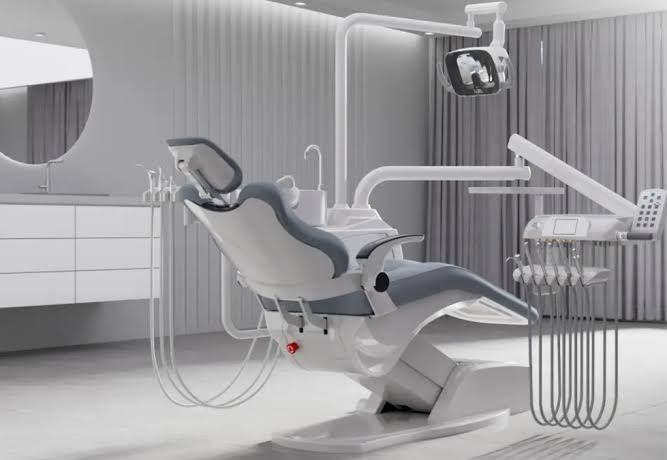
A dental chair is usually part of a larger treatment unit rather than an isolated piece of furniture. Depending on its configuration, it can work alongside operating lights, instrument delivery systems, suction equipment, water systems, foot controls, imaging equipment, and digital technologies.
Clinic furniture provides the supporting infrastructure around the treatment environment. Cabinets, stools, workstations, reception furniture, storage units, sterilization-area furniture, and consultation desks all contribute to how a practice functions.
Modern practice planning increasingly combines ergonomics, infection prevention, digital equipment, accessibility, workflow design, and efficient space utilization. The Centers for Disease Control and Prevention emphasizes infection prevention as a priority in dental settings and identifies clean and disinfected environmental surfaces among the elements of Standard Precautions.
This guide explores dental chair features, clinic furniture categories, ergonomic principles, equipment integration, treatment-room design, hygiene considerations, and modern dental practice setup.
What Is a Dental Chair?
A dental chair is a specialized clinical chair designed to position and support a patient during dental examinations and procedures.
Unlike ordinary seating, a dental chair is designed to move into different positions according to the procedure and the working requirements of the dental professional.
Depending on its configuration, a dental chair may incorporate:
-
Adjustable backrest
-
Headrest
-
Seat positioning
-
Armrests
-
Foot controls
-
Instrument delivery systems
-
Operating light
-
Suction connections
-
Water systems
-
Assistant controls
-
Integrated control panels
The exact features vary between systems and clinical applications.
Main Components of a Dental Chair
Patient Chair
The main chair structure supports the patient throughout the treatment process.
Adjustable positioning can help accommodate different procedures and patient requirements.
Headrest
The headrest supports the patient's head and can often be adjusted to achieve an appropriate treatment position.
Backrest
The backrest changes the patient's body position during examination and treatment.
Seat Mechanism
The seat may move vertically or change position depending on the design of the dental unit.
Armrests
Some systems include movable or fixed armrests that provide additional support and facilitate patient entry and exit.
Foot Control
Foot controls can allow clinicians to operate selected chair or instrument functions without repeatedly reaching for hand-operated controls.
Dental Delivery Systems
A dental delivery system provides access to instruments used during treatment.
Depending on the configuration, it may accommodate:
-
High-speed handpieces
-
Low-speed instruments
-
Air-water syringes
-
Suction equipment
-
Ultrasonic instruments
-
Auxiliary dental equipment
The positioning of the delivery system is important because instruments should remain accessible without creating unnecessary movement.
Dental Operating Lights
Dental operating lights provide focused illumination of the treatment area.
Important characteristics can include:
-
Adjustable positioning
-
Brightness control
-
Appropriate color characteristics
-
Shadow reduction
-
Easy-to-clean surfaces
-
Touch or sensor controls
The light should provide adequate visibility while avoiding unnecessary glare or discomfort.
Dental Chair Ergonomics
Ergonomics is an important consideration in dental practice design.
Dental professionals frequently perform detailed procedures while working in relatively constrained spaces. Poor positioning or poorly arranged equipment can contribute to awkward movements and physical strain.
Ergonomic planning considers:
-
Patient positioning
-
Dentist position
-
Assistant position
-
Instrument accessibility
-
Chair height
-
Lighting
-
Storage
-
Equipment placement
The objective is to create a treatment environment where frequently used tools and controls can be accessed efficiently.
Dentist and Assistant Positioning
A treatment room should accommodate the working positions of the dentist and dental assistant.
Equipment and furniture can be arranged around these working zones so that commonly used instruments and materials remain accessible.
A well-planned environment can reduce unnecessary:
-
Reaching
-
Twisting
-
Bending
-
Walking
-
Repositioning
This is particularly relevant in procedures requiring prolonged concentration and precise movements.
Patient Comfort
Dental chair design also affects the patient's physical experience.
Relevant considerations include:
-
Cushioning
-
Head support
-
Chair movement
-
Arm support
-
Entry and exit
-
Noise
-
Lighting
-
Room temperature
A comfortable and organized environment can help create a more approachable clinical setting.
Types of Dental Chairs
Basic Dental Treatment Chairs
These provide patient positioning and may be combined with separate clinical equipment.
Integrated Dental Units
Integrated units combine the patient chair with systems such as instrument delivery, lighting, controls, water, and suction.
Pediatric Dental Chairs
Pediatric treatment environments may use appropriately scaled equipment and design elements intended for younger patients.
Specialized Treatment Chairs
Some dental procedures can require specialized positioning or equipment configurations.
The appropriate design depends on the clinical procedures and workflow of the practice.
Dental Clinic Furniture
Dental furniture extends beyond the treatment chair.
A typical practice may contain several furniture categories.
Reception Furniture
Reception areas may include:
-
Reception desk
-
Waiting chairs
-
Side tables
-
Storage
-
Shelving
-
Computer workstations
Consultation Furniture
Consultation areas can contain:
-
Desk
-
Patient chairs
-
Computer workstation
-
Storage cabinets
-
Documentation space
Treatment-Room Furniture
Treatment rooms commonly require:
-
Clinical cabinets
-
Instrument storage
-
Work surfaces
-
Mobile carts
-
Dental stools
-
Shelving
Sterilization-Area Furniture
Sterilization areas require suitable work surfaces and storage arrangements that support organized instrument-processing workflows.
Staff Furniture
Staff areas can include:
-
Desks
-
Lockers
-
Storage cabinets
-
Workstations
-
Seating
Dental Cabinets and Storage
Storage is an important part of treatment-room organization.
Dental cabinets can contain:
-
Drawers
-
Shelves
-
Instrument compartments
-
Work surfaces
-
Consumable storage
-
Waste-management areas
Frequently used items can be positioned closer to the working area, while less frequently used materials can be placed in secondary storage.
Mobile Dental Furniture
Mobile carts can provide flexibility when treatment rooms accommodate different procedures.
Examples include:
-
Instrument carts
-
Auxiliary tables
-
Mobile cabinets
-
Utility carts
-
Equipment stands
Mobility can make it easier to adjust the workspace without permanently changing the room layout.
Materials Used in Clinic Furniture
Dental furniture can use materials such as:
-
Stainless steel
-
Powder-coated metals
-
Laminated surfaces
-
Engineered panels
-
Medical-grade plastics
-
Glass in selected applications
Material selection should consider durability, moisture exposure, cleaning requirements, surface characteristics, and the environment in which the furniture will be used.
Hygiene and Infection Prevention
Hygiene should be incorporated into dental clinic design rather than treated as an afterthought.
The CDC identifies hand hygiene, appropriate personal protective equipment, sterile instruments and devices, and clean and disinfected environmental surfaces as elements of Standard Precautions in dental settings.
Furniture design can support these practices through:
-
Smooth surfaces
-
Accessible cleaning areas
-
Appropriate storage
-
Reduced unnecessary gaps
-
Durable finishes
-
Logical separation of materials
Cleaning and disinfection procedures should follow applicable guidance and the manufacturer's instructions for the specific surface or equipment.
Treatment-Room Workflow
The treatment room is generally organized around the dental chair.
A simplified workflow might be:
Patient Entry → Examination → Treatment → Instrument Processing → Patient Exit
Additional clinical workflows may involve:
Storage → Preparation → Treatment → Cleaning → Sterilization → Storage
Furniture and equipment should support these workflows while minimizing unnecessary movement and cross-traffic.
Four-Handed Dentistry
Four-handed dentistry involves coordinated work between the dentist and dental assistant.
The positioning of:
-
Instruments
-
Suction
-
Trays
-
Controls
-
Materials
-
Storage
can influence the efficiency of this coordinated workflow.
The layout should allow both professionals to work within their designated areas without repeatedly crossing paths.
Dental Stools
Dental stools are another important ergonomic component.
Potential features include:
-
Adjustable height
-
Back support
-
Stable base
-
Foot support
-
Easy movement
-
Suitable cushioning
The appropriate stool configuration depends on the clinician's working position and treatment style.
Digital Equipment Integration
Modern dental practices increasingly use digital equipment alongside conventional clinical systems.
Examples include:
-
Computers
-
Intraoral cameras
-
Digital radiography
-
Intraoral scanners
-
Digital displays
-
Electronic patient records
-
Digital treatment-planning systems
Dental informatics is also expanding the role of electronic records, imaging, and other digital technologies in modern dental practice.
Furniture should accommodate these technologies without obstructing clinical movement.
Cable Management
Digital equipment can introduce numerous power and data connections.
Good cable planning can help:
-
Reduce trip hazards
-
Improve equipment accessibility
-
Maintain an organized environment
-
Simplify maintenance
-
Reduce visible clutter
Electrical and data infrastructure should ideally be considered during room planning rather than added after furniture and equipment have been installed.
Treatment-Room Layout
A practical treatment room generally begins with the position of the dental chair.
Other elements can then be organized around it.
Consider:
-
Dentist working zone
-
Assistant working zone
-
Instrument access
-
Cabinet placement
-
Sink position
-
Computer location
-
Equipment clearances
-
Patient entry and exit
Exact room dimensions and clearances should be determined according to applicable building, accessibility, equipment, and professional requirements rather than relying on generic measurements.
Reception and Waiting Area
The reception area serves a different purpose from the clinical treatment room.
Furniture selection can consider:
-
Seating capacity
-
Accessibility
-
Reception-desk workflow
-
Privacy
-
Storage
-
Lighting
-
Ease of cleaning
-
Traffic flow
The waiting area should provide comfortable circulation without unnecessarily obstructing the reception desk or access routes.
Consultation Area
A consultation area can provide a separate environment for discussion, documentation, treatment planning, or patient education.
Typical elements include:
-
Consultation desk
-
Two or more chairs
-
Computer
-
Display
-
Storage
-
Documentation area
The arrangement should allow communication while maintaining appropriate privacy.
Sterilization Area
Instrument processing requires careful workflow planning.
The CDC's dental infection-prevention guidance emphasizes appropriate sterilization and disinfection procedures and provides facility-level recommendations and checklists for dental settings.
Furniture planning can support this through:
-
Suitable work surfaces
-
Organized storage
-
Clearly defined workflow areas
-
Appropriate equipment placement
-
Separation of different processing stages
Specific sterilization workflows should follow applicable professional guidance, regulations, and equipment instructions.
Lighting Design
A dental clinic generally needs different lighting conditions for different activities.
General Lighting
Provides overall room illumination.
Treatment Lighting
Provides focused illumination around the patient's oral cavity.
Reception Lighting
Can create a comfortable environment while providing adequate visibility.
Consultation Lighting
Should support reading, communication, and screen use without excessive glare.
Lighting should be selected according to the function of each area.
Acoustic Considerations
Dental practices contain equipment that can generate noise, including:
-
Handpieces
-
Suction systems
-
Compressors
-
Pumps
-
Mechanical equipment
Acoustic planning can consider equipment location, room separation, sound-absorbing materials, and equipment maintenance.
Accessibility
Dental practices should consider accessibility for patients, staff, and visitors.
Planning can address:
-
Entrances
-
Doorways
-
Clear circulation paths
-
Accessible seating
-
Treatment-room access
-
Restroom access
Applicable local accessibility standards should be reviewed during facility planning.
Safety Considerations
Dental practices contain electrical, mechanical, water, clinical, and digital systems.
Important considerations may include:
-
Electrical safety
-
Equipment grounding
-
Cable management
-
Slip prevention
-
Safe storage
-
Emergency access
-
Equipment maintenance
-
Appropriate waste handling
Specific requirements depend on the jurisdiction, facility, equipment, and clinical activities.
Smart Dental Clinics
A smart dental clinic can connect digital records, imaging, equipment, software, and clinical workflows.
Potential technologies include:
-
Digital patient records
-
Connected imaging
-
Intraoral scanning
-
Digital treatment planning
-
Equipment monitoring
-
Practice-management software
-
Digital displays
The objective is to create better-connected workflows rather than simply adding more technology.
AI and Dental Equipment
Artificial intelligence is also becoming part of dental technology.
AI-based systems can assist with certain image-analysis, documentation, workflow, and decision-support applications. Research into dental image analysis, for example, includes machine-learning approaches for identifying and classifying dental structures and conditions.
AI capabilities should be treated as technology-assisted tools rather than substitutes for professional clinical judgment.
Choosing a Dental Chair
Several factors can be evaluated when selecting a dental chair.
Adjustability
Consider whether the chair provides appropriate positioning for the procedures performed.
Ergonomics
Evaluate whether clinicians and assistants can work comfortably around the patient.
Equipment Integration
Consider compatibility with the required instruments, lights, suction, water systems, and digital technologies.
Cleaning and Maintenance
Surfaces and components should be compatible with the clinic's cleaning procedures and maintenance requirements.
Patient Positioning
The chair should support the positioning requirements of the procedures performed.
Space Requirements
The chair and associated equipment should fit within the planned treatment room while maintaining appropriate circulation.
Choosing Clinic Furniture
Furniture selection can consider:
-
Available space
-
Workflow
-
Storage requirements
-
Material durability
-
Cleaning procedures
-
Equipment integration
-
Accessibility
-
Ergonomics
-
Future adaptability
The furniture should support the function of each room rather than simply occupy available space.
Common Dental Clinic Design Mistakes
Overcrowding
Too much furniture can restrict movement around the dental chair.
Poor Storage Placement
Frequently used materials placed too far away can increase unnecessary movement.
Insufficient Equipment Planning
Adding digital equipment after furniture installation can create cable and workspace problems.
Inadequate Cleaning Consideration
Furniture should be compatible with the cleaning and disinfection methods used in the practice.
Poor Workflow Separation
Unclear movement between treatment, instrument processing, and storage areas can complicate operations.
Ignoring Future Technology
A room designed only for current equipment may become difficult to adapt as digital technologies are introduced.
Modern Trends in Dental Clinic Furniture
Modular Furniture
Modular systems can make treatment areas easier to adapt.
Integrated Storage
Built-in cabinets can reduce clutter and keep frequently used materials organized.
Minimalist Design
Simple forms and clean surfaces can create visually organized clinical environments.
Technology-Ready Furniture
Workstations and cabinets increasingly accommodate computers, displays, scanners, and other digital devices.
Patient-Centered Interiors
Modern practices may use lighting, furniture, colors, and spatial design to create a more approachable environment while maintaining clinical functionality.
Future of Dental Chairs and Clinic Furniture
Dental treatment environments are likely to become increasingly connected and adaptable.
Potential developments include:
-
Smart chair controls
-
Sensor-based equipment monitoring
-
Integrated displays
-
Modular treatment rooms
-
Connected clinical equipment
-
AI-assisted workflows
-
More flexible storage
-
Digital treatment planning
-
Advanced ergonomic systems
The growth of digital dentistry is likely to influence not only clinical equipment but also the physical design of treatment rooms.
Practice Setup Planning
A dental practice can be divided into several functional zones:
Reception Zone
Includes reception, waiting, administrative work, and patient entry.
Consultation Zone
Supports discussions, documentation, and treatment planning.
Treatment Zone
Contains the dental chair, clinical equipment, storage, lighting, and operator work areas.
Sterilization Zone
Supports instrument-processing activities.
Storage Zone
Holds clinical materials, equipment, and other supplies.
Staff Zone
Provides workspace and storage for the dental team.
The exact arrangement depends on facility size, clinical scope, patient flow, equipment, and applicable regulations.
Practice Setup Checklist
Before finalizing a dental clinic layout, consider:
-
Dental chair location
-
Dentist working position
-
Assistant working position
-
Equipment access
-
Storage
-
Instrument-processing workflow
-
Lighting
-
Electrical requirements
-
Data connections
-
Plumbing
-
Ventilation
-
Accessibility
-
Cleaning requirements
-
Emergency access
-
Future expansion
Planning these elements together can reduce the need for disruptive changes later.
Frequently Asked Questions
What is the main purpose of a dental chair?
A dental chair supports and positions patients during dental examination and treatment while often serving as the central platform for associated clinical equipment.
What makes a dental chair ergonomic?
Adjustable positioning, suitable head support, accessible controls, appropriate patient positioning, and sufficient working space can contribute to an ergonomic treatment environment.
What furniture is commonly found in a dental clinic?
Common furniture includes reception desks, waiting chairs, treatment cabinets, dental stools, mobile carts, consultation desks, storage cabinets, and sterilization-area work surfaces.
Why is furniture material important in dental clinics?
Furniture materials should be durable and compatible with the cleaning and disinfection procedures appropriate for the clinical environment.
How should a dental treatment room be planned?
The dental chair is typically the central element, with equipment, storage, lighting, and workstations arranged around the dentist and assistant working zones.
What technologies are influencing dental clinic design?
Digital imaging, intraoral scanners, electronic records, connected equipment, digital displays, treatment-planning systems, and AI-assisted technologies are influencing modern dental environments.
Conclusion
Dental chairs and clinic furniture form the physical foundation of a well-organized dental practice. The dental chair provides patient positioning and can integrate several clinical systems, while cabinets, stools, workstations, storage units, reception furniture, and sterilization-area furniture support the wider practice workflow.
Ergonomics is particularly important because dental professionals often perform precise procedures in relatively constrained working environments. Appropriate chair positioning, instrument accessibility, stool design, storage placement, lighting, and team positioning can contribute to a more organized workspace.
Hygiene and infection prevention should also influence furniture and room design. Surfaces, storage, equipment placement, and workflow should support applicable infection-prevention procedures. The CDC specifically identifies clean and disinfected environmental surfaces and sterile instruments and devices among fundamental infection-prevention practices for dental settings.
Digital dentistry is adding another layer to practice design. Computers, imaging equipment, intraoral scanners, digital records, connected devices, and AI-assisted technologies increasingly need to be accommodated within treatment rooms.
The future of dental clinic design is therefore likely to combine ergonomics, hygiene, flexible furniture, connected equipment, digital workflows, and adaptable spaces. Rather than focusing only on appearance, effective practice setup requires careful consideration of how patients, clinicians, equipment, information, and materials move through the environment.
Disclaimer
This article is intended solely for informational and educational purposes. It does not provide dental, medical, engineering, infection-control, workplace-safety, accessibility, or professional facility-design advice. It does not endorse, recommend, compare, rank, review, market, or promote any specific dental chair manufacturer, furniture provider, dental equipment company, software platform, or clinical technology. Dental equipment specifications, furniture requirements, infection-prevention procedures, accessibility standards, and facility requirements vary by location and application. Dental practices should consult appropriately qualified professionals, relevant authorities, applicable standards, and manufacturer documentation when planning or modifying a clinical facility.