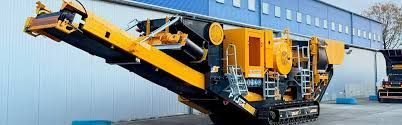
The development of crushing equipment became important as industries needed efficient ways to process hard materials for roads, buildings, railways, and industrial manufacturing. Large rocks are difficult to transport and process directly, so crushing systems help create manageable material sizes for further use.
Modern jaw crushers are designed to handle materials such as:
-
Granite
-
Limestone
-
Basalt
-
Quartz
-
Concrete debris
-
Ore materials
The machine typically includes several important components:
| Component | Function |
|---|
| Fixed Jaw Plate | Holds material during crushing |
| Moving Jaw Plate | Applies force to crush material |
| Flywheel | Maintains rotational energy |
| Toggle Plate | Supports movement and safety |
| Feed Opening | Entry point for raw material |
| Discharge Opening | Controls output size |
Jaw crushers are commonly classified into two main categories:
| Type | Description |
|---|
| Single Toggle Jaw Crusher | Uses one toggle plate for movement |
| Double Toggle Jaw Crusher | Uses two toggles for heavier crushing |
These machines are considered foundational equipment in mineral processing and aggregate production systems.
Why Jaw Crushers Matter in Modern Industries
Jaw crushers continue to play an important role because infrastructure development and mineral extraction remain essential worldwide. Construction projects require crushed stone and aggregate materials for highways, bridges, buildings, and industrial facilities.
Industries that commonly rely on crushing technology include:
-
Mining and mineral processing
-
Quarry operations
-
Road construction
-
Demolition recycling
-
Cement manufacturing
-
Infrastructure development
One major benefit of jaw crushers is their ability to process hard and abrasive materials with relatively simple mechanical systems. Their design helps improve operational reliability and material reduction efficiency.
Several challenges are addressed by jaw crushing equipment:
| Industry Challenge | Jaw Crusher Contribution |
|---|
| Large rock sizes | Reduces material dimensions |
| Material transportation issues | Produces manageable aggregates |
| Recycling construction waste | Breaks concrete and debris |
| Mineral processing preparation | Prepares ore for further refining |
| Aggregate standardization | Creates uniform output sizes |
Another important factor is energy efficiency. Recent engineering improvements focus on reducing power consumption while maintaining crushing capacity. This matters because industrial electricity use and fuel costs remain significant operational concerns.
Environmental considerations are also influencing crusher technology. Dust suppression systems, noise reduction features, and automated feed controls are increasingly integrated into crushing operations to support safer and cleaner workplaces.
Recent Developments and Industry Trends
Over the past year, several trends have shaped the crushing equipment sector. Between 2025 and 2026, manufacturers and industrial operators increasingly focused on automation, predictive maintenance, and energy optimization.
Some notable developments include:
-
Increased use of sensor-based monitoring systems
-
Expansion of electric-powered mobile crushers
-
Integration of artificial intelligence for maintenance prediction
-
Improved dust management systems
-
Growth in recycled aggregate processing equipment
In early 2026, several industrial equipment manufacturers introduced updated jaw crusher models with automated control panels and remote monitoring features. These systems allow operators to track machine performance, temperature, vibration levels, and wear conditions in real time.
Another growing trend involves hybrid and electric-powered mobile crushing units. These systems aim to reduce fuel dependency and lower emissions in construction and mining operations.
The recycling industry has also contributed to increased demand for compact crushing equipment. Urban redevelopment projects generate large amounts of concrete and demolition material, creating a need for efficient recycling solutions.
The chart below shows common industry priorities influencing crusher development in 2026:
| Industry Priority | Estimated Focus Level |
|---|
| Energy Efficiency | High |
| Automation | High |
| Dust Reduction | Medium |
| Remote Monitoring | High |
| Mobile Crushing Systems | Medium |
| Recycling Applications | High |
Digitalization has become another important factor. Many industrial plants now use centralized monitoring software that tracks crushing performance and maintenance schedules across multiple machines.
Regulations, Safety Standards, and Environmental Policies
Jaw crushers operate within industrial environments that are often regulated by workplace safety and environmental laws. Regulations vary between countries, but most industrial regions apply standards related to:
-
Worker safety
-
Noise exposure
-
Dust emissions
-
Equipment maintenance
-
Industrial energy efficiency
-
Environmental impact management
Mining and aggregate industries are typically required to follow occupational safety standards that include machine guarding, emergency shutdown systems, and operator training.
Environmental agencies in many regions also regulate airborne dust and particulate emissions generated during crushing operations. As a result, crushing plants may use:
-
Water spray systems
-
Dust collectors
-
Enclosed conveyors
-
Noise barriers
-
Emission monitoring systems
In several regions during 2025, environmental authorities increased attention toward sustainable mining and recycling practices. This encouraged greater adoption of recycled aggregate processing equipment and energy-efficient crushing technologies.
Industrial facilities may also follow international equipment standards such as:
| Standard Area | Purpose |
|---|
| Machine Safety Standards | Reduce workplace accidents |
| Environmental Emission Rules | Control dust and pollution |
| Electrical Compliance Standards | Improve operational safety |
| Industrial Maintenance Protocols | Support equipment reliability |
Government infrastructure programs can also influence crusher demand because road construction and public development projects often require large volumes of crushed materials.
Helpful Tools, Software, and Industrial Resources
Modern crushing operations rely on several digital tools and industrial resources to improve productivity and maintenance planning.
Commonly used resources include:
| Tool or Resource | Purpose |
|---|
| Crusher Simulation Software | Evaluates material flow |
| Maintenance Tracking Systems | Schedules inspections |
| Vibration Monitoring Sensors | Detects equipment wear |
| Aggregate Size Calculators | Measures output consistency |
| Industrial CAD Software | Assists equipment design |
| Conveyor Monitoring Systems | Tracks production flow |
Several engineering software platforms help operators analyze crushing chamber performance and optimize material reduction ratios.
Mobile inspection applications are also becoming more common in industrial facilities. These apps allow maintenance teams to record equipment conditions, document wear patterns, and generate inspection reports directly from field locations.
Educational resources related to crushing technology often include:
-
Industrial engineering publications
-
Mining technology journals
-
Equipment operation manuals
-
Safety training programs
-
Aggregate processing handbooks
Below is a simplified comparison of common crushing systems:
| Crusher Type | Best For | Material Hardness |
|---|
| Jaw Crusher | Primary crushing | Hard materials |
| Cone Crusher | Secondary crushing | Medium to hard |
| Impact Crusher | Recycling applications | Medium hardness |
| Hammer Crusher | Soft materials | Low hardness |
Understanding the appropriate crusher type helps industries improve efficiency and reduce unnecessary equipment wear.
Frequently Asked Questions About Jaw Crushers
What is the primary function of a jaw crusher?
A jaw crusher is designed to reduce large rocks and raw materials into smaller pieces using compressive force. It is commonly used in mining, quarrying, and construction industries.
How does a jaw crusher work?
The machine uses two jaw plates. One plate remains fixed while the other moves back and forth. Material placed between the jaws becomes compressed and breaks into smaller sizes.
What materials can jaw crushers process?
Jaw crushers can handle hard and abrasive materials such as granite, basalt, quartz, limestone, and construction debris.
Why are jaw crushers important in recycling?
They help break down demolished concrete and construction waste into reusable aggregate material, supporting recycling and waste reduction efforts.
What maintenance is commonly required?
Regular maintenance usually includes:
-
Inspecting jaw plates
-
Lubricating moving parts
-
Checking belt tension
-
Monitoring vibration levels
-
Replacing worn components
Preventive maintenance helps improve equipment lifespan and operational safety.
Conclusion
Jaw crushers remain essential equipment in mining, construction, aggregate processing, and recycling industries. Their simple mechanical design, strong crushing capability, and adaptability make them valuable for handling hard materials efficiently.
Recent advancements in automation, energy efficiency, and environmental control are shaping the next generation of crushing systems. Industrial operators are increasingly using digital monitoring tools, predictive maintenance technologies, and sustainable processing methods to improve performance and reduce environmental impact.
Understanding how jaw crushers work, why they matter, and how regulations affect their operation can help readers better understand the broader role of material processing in infrastructure and industrial development.