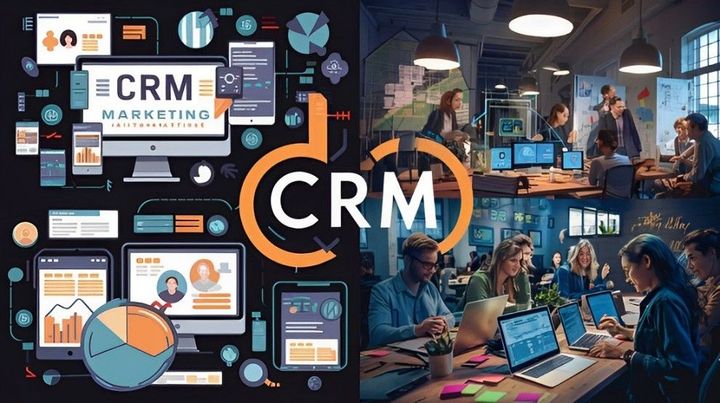
In many organizations, sales teams, marketing departments, and customer support teams interact with the same corporate clients. Without a centralized enterprise CRM platform, information may become fragmented across spreadsheets, email threads, and disconnected software tools. A CRM database brings all interactions, communication history, and account data into one unified system.
Modern SaaS CRM solutions typically operate through cloud infrastructure. This allows real-time data synchronization, role-based access controls, and cross-department collaboration. Many platforms integrate with email marketing automation, ERP systems, accounting software, and business intelligence dashboards.
Below is a simplified comparison of traditional record-keeping and CRM-enabled workflows:
| Feature | Manual Tracking | B2B CRM Platform |
|---|
| Lead Tracking | Spreadsheets | Automated lead management system |
| Sales Forecasting | Manual estimation | Predictive analytics dashboard |
| Communication History | Email inboxes | Centralized activity timeline |
| Reporting | Static reports | Real-time CRM analytics dashboard |
| Data Security | Limited controls | Encrypted cloud infrastructure |
Why B2B CRM Platforms Matter Today
The global business environment has become increasingly data-driven. Organizations rely on accurate customer insights, marketing attribution analysis, and performance metrics to guide decision-making. B2B CRM software plays a central role in this process.
Key challenges addressed by enterprise CRM systems include:
• Managing long and complex sales cycles
• Coordinating multiple stakeholders within client organizations
• Tracking recurring revenue and contract renewals
• Automating repetitive administrative tasks
• Improving lead scoring and qualification processes
High-value keywords such as sales automation software, predictive sales analytics, customer data platform integration, and marketing automation workflow reflect how CRM systems are now tied closely to revenue intelligence and digital transformation strategies.
Industries that frequently adopt B2B CRM platforms include:
• Technology and SaaS companies
• Financial services organizations
• Healthcare and pharmaceutical firms
• Manufacturing and supply chain enterprises
• Professional consulting and advisory sectors
In data-intensive sectors, CRM analytics dashboards provide performance visibility across marketing funnels, conversion rates, and account engagement metrics.
The following visual representation shows how CRM adoption typically enhances pipeline clarity:
Leads Generated → Qualified Prospects → Opportunities → Negotiations → Contracted Accounts
Manual Tracking: Low visibility between stages
CRM-Enabled Workflow: Real-time tracking and automated alerts
As regulatory requirements and cybersecurity risks increase, CRM platforms also help maintain data governance standards and compliance monitoring.
Recent Updates and Trends in B2B CRM Platforms (2025–2026)
Over the past year, several technological and regulatory developments have influenced enterprise CRM systems.
In 2025, AI-powered CRM analytics expanded significantly. Companies such as Salesforce and HubSpot enhanced AI-based forecasting models and automated lead scoring tools. These improvements focus on predictive revenue modeling and behavioral data analysis.
Another major trend in 2025 has been the integration of generative AI assistants within CRM dashboards. These assistants help draft emails, summarize meeting notes, and generate sales reports while maintaining compliance with data security frameworks.
In early 2026, enterprise security standards tightened due to rising concerns around cross-border data transfers and cloud infrastructure vulnerabilities. Vendors like Microsoft Dynamics 365 expanded encryption protocols and zero-trust architecture implementations within their CRM ecosystems.
Additional trends include:
• Increased integration with Customer Data Platforms (CDPs)
• Advanced API connectivity for ERP and financial systems
• Greater emphasis on first-party data management
• Enhanced consent tracking for marketing automation
Data visualization has also improved. Many CRM dashboards now offer customizable KPI charts such as:
Quarterly Revenue Growth (%)
Q1: ████ 12%
Q2: ██████ 18%
Q3: ███████ 22%
Q4: █████████ 28%
This evolution reflects a shift toward real-time decision intelligence rather than static reporting.
Laws and Policies Affecting B2B CRM Platforms
CRM platforms operate within a structured regulatory environment. Because they store corporate contact details, transaction records, and communication logs, they must comply with data protection and cybersecurity regulations.
Key frameworks influencing CRM systems include:
• General Data Protection Regulation (GDPR)
• California Consumer Privacy Act (CCPA)
• Digital Operational Resilience Act (DORA)
GDPR requires lawful data processing, transparency, and secure data storage for personal information within business contacts. CCPA establishes disclosure and data access rights for certain jurisdictions. DORA emphasizes operational resilience and cybersecurity for financial sector entities.
CRM administrators often implement:
• Role-based access controls
• Multi-factor authentication
• Data encryption at rest and in transit
• Consent management logs
• Automated audit trails
Compliance is not limited to technology providers. Organizations using B2B CRM software must also ensure internal data governance policies are clearly defined.
Tools and Resources Related to B2B CRM Platforms
Organizations evaluating CRM implementation often rely on several complementary tools and resources.
Common categories include:
CRM Comparison Platforms
• Gartner Magic Quadrant reports
• Forrester Wave evaluations
Analytics and Integration Tools
• Tableau for business intelligence dashboards
• Zapier for workflow automation
Project Planning Resources
• CRM implementation checklists
• Data migration templates
• API documentation libraries
• Security compliance audit frameworks
Below is a simplified CRM selection checklist table:
| Evaluation Criteria | Key Considerations |
|---|
| Scalability | Multi-user enterprise capability |
| Integration | ERP, email, accounting systems |
| Analytics | Advanced reporting dashboards |
| Security | Encryption and compliance tools |
| Customization | Workflow automation flexibility |
These tools help organizations assess suitability based on operational complexity and digital maturity.
Frequently Asked Questions
What is the difference between B2B CRM and B2C CRM systems?
B2B CRM platforms focus on account-based relationship management involving multiple stakeholders, longer negotiation cycles, and contractual agreements. B2C systems primarily handle individual customer transactions and shorter buying journeys.
How does CRM analytics improve forecasting accuracy?
CRM analytics dashboards use historical transaction data, lead conversion patterns, and engagement metrics to generate predictive models. This reduces reliance on manual estimations.
Are cloud-based CRM platforms secure for enterprise use?
Most SaaS CRM solutions implement encrypted data storage, access controls, and compliance monitoring aligned with regulatory frameworks such as GDPR and CCPA.
Can CRM systems integrate with marketing automation software?
Yes. Modern enterprise CRM platforms often connect with marketing automation workflows, email campaign systems, and customer data platforms to streamline lead nurturing processes.
What factors should organizations evaluate before implementation?
Key considerations include integration capability, scalability, compliance standards, user training requirements, analytics functionality, and long-term digital strategy alignment.
Conclusion
B2B CRM platforms have evolved into comprehensive enterprise intelligence systems that unify sales automation, marketing automation software, predictive analytics, and compliance management. They enable organizations to track complex account relationships, streamline communication, and strengthen data-driven decision-making.
Recent technological advancements in AI-driven forecasting and enhanced cybersecurity protocols highlight the strategic importance of CRM adoption. At the same time, regulatory requirements continue to shape how data is collected, processed, and stored.
For organizations navigating digital transformation, an enterprise CRM platform functions as a central operational backbone. By combining automation tools, compliance safeguards, and analytics dashboards, businesses can maintain structured customer relationship management while adapting to an increasingly data-centric environment.