Discover Cable Manufacturing Processes Techniques and Industrial Applications
Cable manufacturing is a critical industrial process that supports modern infrastructure, including power distribution, telecommunications, construction, and transportation. Cables are designed to transmit electricity or signals efficiently and safely, making them essential for both residential and industrial applications. The manufacturing process involves multiple stages such as conductor preparation, insulation, shielding, and protective layering.
In recent years, the cable industry has evolved significantly due to rising demand for renewable energy systems, smart grids, electric vehicles, and high-speed communication networks. These developments have increased the need for high-performance cables with improved durability, conductivity, and environmental resistance. Additionally, automation and advanced materials are transforming traditional production methods, enabling greater precision and efficiency.
Understanding cable manufacturing processes and techniques is important for engineers, procurement professionals, and businesses involved in infrastructure development. It helps in selecting the right cable types, ensuring compliance with standards, and optimizing long-term performance.
Who It Affects and What Problems It Solves
Cable manufacturing impacts a wide range of industries, including energy, construction, telecommunications, automotive, and manufacturing. Engineers and contractors rely on cables to ensure reliable power supply and communication systems. Utility companies depend on high-quality cables to maintain grid stability, while industries use specialized cables for machinery and automation.
The quality and type of cable used directly affect safety, efficiency, and operational reliability. Poor-quality cables can lead to power losses, equipment failure, and safety hazards such as short circuits or fires. Therefore, selecting the right manufacturing techniques and materials is essential for both performance and compliance.
Problems It Solves
- Inefficient power transmission and energy losses
- Signal interference in communication systems
- Safety risks due to poor insulation or material quality
- Limited durability in harsh environmental conditions
- Difficulty in scaling infrastructure projects
- Compatibility issues with modern technologies
Cable manufacturing processes address these challenges by ensuring consistent quality, optimized design, and compliance with industry standards.
Recent Updates and Trends
The cable manufacturing industry has seen notable advancements over the past year. One major trend is the increasing use of eco-friendly and recyclable materials, driven by sustainability goals and environmental regulations. Manufacturers are focusing on reducing carbon footprints by adopting energy-efficient production methods.
Another significant development is the adoption of advanced insulation materials such as cross-linked polyethylene (XLPE), which offers better thermal resistance and longer lifespan. High-voltage and ultra-high-voltage cables are also gaining attention due to the expansion of renewable energy projects and long-distance power transmission.
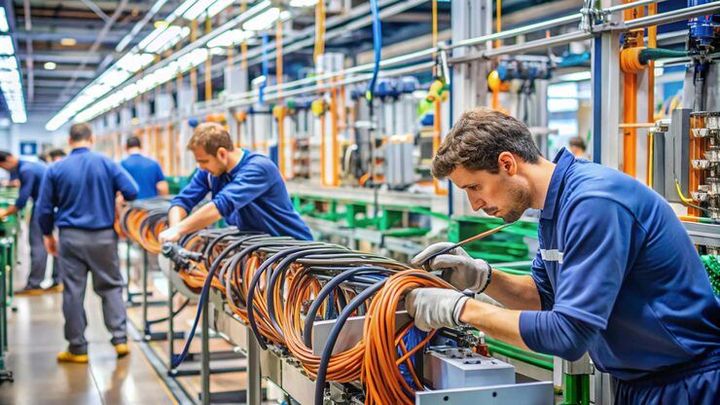
Automation and digitalization are transforming production lines, with smart factories using sensors and data analytics to monitor quality and reduce defects. Additionally, the demand for fiber optic cables continues to grow with the expansion of 5G networks and high-speed internet infrastructure.
Cable Manufacturing Process Overview
| Process Stage | Description | Key Benefit | Common Application |
|---|---|---|---|
| Conductor Drawing | Metal (copper/aluminum) is drawn into thin wires | Improved conductivity | Power and communication cables |
| Stranding | Multiple wires are twisted together | Flexibility and strength | Flexible cables |
| Insulation | Protective layer applied over conductor | Electrical safety and insulation | All cable types |
| Shielding | Metallic layer added to prevent interference | Reduced signal loss | Data and telecom cables |
| Sheathing | Outer protective covering applied | Environmental protection | Industrial and outdoor cables |
| Testing and Quality Check | Electrical and mechanical tests conducted | Ensures reliability and compliance | All industries |
Laws or Policies and Practical Guidance
Cable manufacturing and usage are governed by various standards and regulations to ensure safety, quality, and environmental compliance. In India, cables must adhere to standards set by the Bureau of Indian Standards (BIS), which defines specifications for materials, insulation, and performance. Additionally, international standards such as IEC (International Electrotechnical Commission) are widely followed in global projects.
Environmental regulations are also influencing cable production, encouraging the use of non-toxic and recyclable materials. Fire safety standards require cables to have flame-retardant properties, especially in residential and commercial buildings.
Practical Guidance
- Use XLPE-insulated cables for high-voltage and long-distance transmission
- Choose shielded cables for communication systems to reduce interference
- Select flame-retardant cables for buildings and public infrastructure
- Ensure compliance with BIS and IEC standards before procurement
- Opt for eco-friendly materials to meet sustainability requirements
Proper selection based on application and regulatory compliance ensures safety and long-term performance.
Tools and Resources
To support cable manufacturing and selection, several tools and resources are available:
- Cable Design Software: Helps engineers calculate load capacity and select appropriate cable types
- Material Testing Equipment: Ensures quality of conductors and insulation materials
- Industry Standards Documentation: Provides guidelines for manufacturing and compliance
- Cost Estimation Tools: تساعد in budgeting and project planning
- Automation Systems: Improve production efficiency and reduce defects
- Training Programs: Offer technical knowledge on cable design and installation
These tools enable manufacturers and engineers to maintain quality, improve efficiency, and meet industry requirements.
Frequently Asked Questions
What materials are commonly used in cable manufacturing?
Copper and aluminum are the most commonly used conductor materials, while insulation materials include PVC and XLPE.
What is the importance of insulation in cables?
Insulation prevents electrical leakage, ensures safety, and protects the conductor from environmental damage.
How do manufacturers ensure cable quality?
Quality is ensured through rigorous testing, including electrical performance, mechanical strength, and environmental resistance checks.
What are the main types of cables used in industries?
Power cables, control cables, and communication cables are the main types used across various industries.
Why are standards important in cable manufacturing?
Standards ensure safety, compatibility, and reliability, reducing risks and improving performance in different applications.
Conclusion
Cable manufacturing is a complex yet essential process that supports modern infrastructure and industrial development. Data-driven trends highlight increasing demand for high-performance, sustainable, and technologically advanced cables. From conductor drawing to final testing, each stage plays a crucial role in ensuring quality and reliability.
As industries continue to evolve, the importance of selecting the right cable type and manufacturing technique becomes more critical. Businesses must consider factors such as application requirements, regulatory compliance, and long-term performance when making decisions.
Overall, advanced cable manufacturing processes contribute to safer, more efficient, and scalable infrastructure, making them a cornerstone of modern industrial systems.