Metal Rod and Plate Guide With Industrial Materials And Engineering Insights
Metal rods and metal plates are among the most widely used engineering materials in modern industry, serving as essential components for manufacturing, construction, infrastructure, transportation, machinery, energy systems, and precision engineering. Produced in various alloys, dimensions, and mechanical grades, these materials provide the structural strength, durability, machinability, and corrosion resistance required for a broad range of industrial applications. From heavy industrial equipment to precision-engineered components, metal rods and plates support countless manufacturing processes around the world.
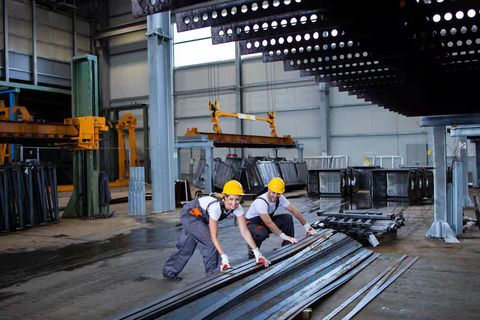
Modern production technologies have significantly improved the quality and performance of metal materials. Advanced rolling mills, continuous casting systems, precision machining, heat treatment, laser cutting, waterjet processing, CNC machining, robotic material handling, and automated inspection systems help manufacturers produce metal rods and plates with consistent mechanical properties and dimensional accuracy. Many facilities also integrate Industrial Internet of Things (IIoT) technologies, artificial intelligence (AI), digital quality monitoring, and predictive maintenance to optimize production efficiency and improve product consistency.
Understanding metal rods and plates involves more than identifying material dimensions. Mechanical engineers, manufacturing professionals, structural designers, fabrication specialists, maintenance engineers, procurement teams, educators, students, and industrial planners benefit from understanding material properties, production methods, engineering applications, fabrication techniques, corrosion behavior, and quality evaluation. This guide introduces the fundamentals of metal rods and plates, industrial materials, and engineering technologies.
Who It Affects & Problems It Solves
Metal rods and plates are used across numerous industries including construction, automotive manufacturing, aerospace, shipbuilding, railway engineering, energy generation, mining, agriculture, heavy equipment production, electronics, and industrial fabrication. These materials form the foundation of machine frames, structural supports, pressure vessels, shafts, brackets, tooling, equipment enclosures, bridges, pipelines, and industrial machinery.
Without reliable engineering materials, manufacturing processes may encounter structural weakness, dimensional inaccuracies, reduced durability, excessive wear, and inconsistent product performance. Properly selected metal rods and plates help address these challenges by providing dependable mechanical strength, excellent machinability, predictable fabrication characteristics, and long service life under demanding operating conditions.
For example, an industrial equipment manufacturer may utilize steel plates for machine frames, aluminum plates for lightweight assemblies, stainless steel rods for corrosion-resistant shafts, and alloy steel rods for high-strength drive components. Combining appropriate materials improves equipment performance while supporting manufacturing efficiency. These practical advantages naturally lead to recent developments in engineering material technology.
Recent Updates
Recent developments in metal processing focus on advanced alloy development, intelligent manufacturing, digital quality inspection, and sustainable production technologies. Modern rolling mills now utilize automated thickness measurement, laser profile inspection, and real-time process monitoring to improve dimensional precision throughout production.
Artificial intelligence is increasingly used to optimize rolling parameters, monitor production quality, predict maintenance requirements, and improve material consistency through advanced process analytics.
Industrial Internet of Things (IIoT) platforms enable continuous monitoring of rolling equipment, furnaces, cooling systems, cutting lines, and inspection stations. Connected manufacturing systems provide real-time operational visibility while supporting predictive maintenance and production optimization.
Industry information also highlights increasing adoption of high-strength alloys, lightweight engineering materials, automated warehouse systems, robotic material handling, digital twins, and environmentally efficient manufacturing processes that improve both productivity and sustainability.
Comparison Table
| Material Type | Common Properties | Typical Applications | Corrosion Resistance | Strength | Machinability | Weight |
|---|---|---|---|---|---|---|
| Carbon Steel Rod | High Strength | Machinery, Structures | Moderate | High | Excellent | High |
| Stainless Steel Rod | Corrosion Resistant | Food Processing, Chemical Equipment | Excellent | High | Good | High |
| Aluminum Plate | Lightweight | Aerospace, Transportation | Excellent | Moderate | Excellent | Low |
| Carbon Steel Plate | Structural Strength | Construction, Heavy Equipment | Moderate | High | Good | High |
| Stainless Steel Plate | Hygiene and Durability | Processing Equipment | Excellent | High | Good | High |
| Copper Rod | High Conductivity | Electrical Systems | Excellent | Moderate | Excellent | High |
| Brass Rod | Good Machinability | Precision Components | Good | Moderate | Excellent | Moderate |
| Alloy Steel Plate | Wear Resistance | Mining Equipment | Good | Very High | Moderate | High |
| Titanium Plate | High Strength-to-Weight Ratio | Aerospace, Medical Equipment | Excellent | Very High | Moderate | Low |
| Nickel Alloy Plate | High Temperature Resistance | Energy and Industrial Processing | Excellent | Very High | Moderate | High |
The comparison demonstrates that different metal rods and plates are designed to satisfy specific engineering requirements. Selecting the appropriate material depends on mechanical strength, corrosion resistance, operating environment, fabrication methods, weight considerations, and long-term performance objectives.
Regulations & Practical Guidance
Across global industries, metal rods and plates are generally manufactured and processed using established engineering practices covering material traceability, dimensional inspection, mechanical testing, surface quality evaluation, heat treatment verification, workplace safety, and quality management. Production facilities commonly inspect chemical composition, tensile strength, hardness, flatness, diameter, thickness, surface finish, and dimensional tolerances to maintain consistent material quality.
Successful material selection also depends on evaluating operating conditions, fabrication requirements, welding compatibility, machining characteristics, corrosion exposure, thermal performance, and maintenance expectations. Proper storage, handling, and identification help preserve material integrity throughout manufacturing and fabrication processes.
Which Option Suits Your Situation?
Heavy structural applications commonly utilize carbon steel plates because they provide excellent strength, durability, and fabrication flexibility for industrial equipment and infrastructure.
Facilities requiring corrosion-resistant components frequently select stainless steel rods and plates because they perform reliably in demanding processing environments.
Industries emphasizing lightweight engineering often use aluminum plates due to their favorable strength-to-weight ratio, corrosion resistance, and machining performance.
Applications exposed to high temperatures or severe operating conditions commonly incorporate alloy steel, nickel alloys, or titanium materials to achieve enhanced mechanical performance and durability.
Tools & Resources
Professionals working with metal rods and plates commonly rely on several technical resources.
- Material Engineering Handbooks — Explain metal properties, alloy classifications, and engineering applications.
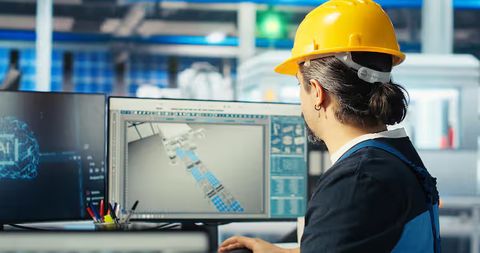
- CAD/CAM Software — Supports component design, machining, and fabrication planning.
- CNC Programming Systems — Control precision cutting, drilling, and machining operations.
- Material Testing Equipment — Evaluate hardness, tensile strength, dimensional accuracy, and surface quality.
- Quality Management Software — Monitor production data, inspection records, and traceability.
- Technical Training Programs — Cover metallurgy, manufacturing processes, machining, welding, and engineering materials.
- Manufacturing Publications — Share developments in alloy technology, fabrication methods, automation, and industrial materials.
Frequently Asked Questions
What are metal rods and plates?
Metal rods are cylindrical engineering materials used for shafts, fasteners, and machined components, while metal plates are flat materials widely used for structural fabrication, machinery, equipment, and industrial assemblies.
Which industries use metal rods and plates?
They are widely used in construction, automotive manufacturing, aerospace, shipbuilding, mining, energy, heavy equipment, transportation, industrial fabrication, electronics, and engineering applications.
Why is material selection important?
Selecting the appropriate material helps achieve the required mechanical strength, corrosion resistance, durability, machinability, fabrication performance, and operational reliability for a specific application.
How is technology improving metal manufacturing?
Modern production increasingly integrates AI, IIoT, robotic automation, digital inspection, predictive maintenance, precision rolling, laser measurement, and advanced alloy development to improve manufacturing efficiency and product consistency.
How should organizations choose metal rods and plates?
Organizations generally evaluate material properties, mechanical requirements, operating environment, corrosion exposure, fabrication methods, maintenance expectations, production objectives, and long-term engineering performance before selecting suitable materials.
Conclusion
Metal rods and plates remain fundamental engineering materials that support modern manufacturing, infrastructure, transportation, machinery, and industrial production. Advances in metallurgy, intelligent manufacturing, automated inspection, predictive maintenance, and digital production technologies continue improving material quality while enhancing manufacturing efficiency and engineering reliability.
The most appropriate material depends on mechanical requirements, environmental conditions, fabrication processes, weight objectives, corrosion resistance, and long-term operational performance. Understanding engineering materials and manufacturing technologies enables organizations to implement dependable solutions that support efficient industrial operations.
As industrial manufacturing continues advancing globally, metal rods and plates will likely benefit from increasingly intelligent production systems, advanced alloy innovations, sustainable processing methods, and digitally connected manufacturing technologies that support the next generation of engineering applications.