Conference rooms in Andheri can support many types of professional activities, including business meetings, interviews, training sessions, workshops, presentations, seminars, networking events, and hybrid meetings.
Choosing the right conference room requires more than checking its size. Factors such as capacity, seating arrangement, technology, internet connectivity, accessibility, privacy, comfort, acoustics, and location can significantly influence the meeting experience.
This guide explains the important features and planning considerations to understand when selecting a conference room.
1. Context: Understanding Conference Rooms
A conference room is a dedicated space designed for organized meetings and collaborative activities.
Depending on its size and configuration, a conference room may be used for:
-
Business meetings
-
Team discussions
-
Client presentations
-
Training sessions
-
Interviews
-
Workshops
-
Seminars
-
Video conferences
-
Strategy meetings
-
Networking sessions
Modern conference rooms increasingly combine physical meeting spaces with digital communication technologies.
2. Why Conference Room Selection Matters
The right environment can make meetings more focused and organized.
Important considerations include:
-
Comfortable seating
-
Suitable capacity
-
Clear audio
-
Good screen visibility
-
Reliable internet
-
Appropriate lighting
-
Presentation technology
-
Accessibility
-
Privacy
A room may look attractive but still be unsuitable if it lacks the technology, space, or layout required for the meeting.
3. Types of Conference Rooms
Small Meeting Rooms
Small meeting rooms are designed for limited groups and focused conversations.
They can be suitable for:
-
Interviews
-
Team discussions
-
One-to-one meetings
-
Short presentations
-
Private conversations
Executive Conference Rooms
Executive conference rooms generally provide a formal environment with a central meeting table and comfortable seating.
They can support:
-
Management meetings
-
Strategy discussions
-
Business presentations
-
Decision-making sessions
Training Rooms
Training rooms are designed around learning and instruction.
Typical features may include:
-
Classroom-style seating
-
Presentation screens
-
Whiteboards
-
Writing surfaces
-
Internet connectivity
Large Conference Rooms
Large conference rooms can accommodate bigger groups and may include advanced audio-visual equipment.
They can be used for:
-
Seminars
-
Corporate presentations
-
Conferences
-
Workshops
-
Group discussions
Hybrid Meeting Rooms
Hybrid conference rooms are designed for meetings involving both physical and remote participants.
They generally require:
-
Cameras
-
Microphones
-
Speakers
-
Displays
-
Reliable internet
-
Video-conferencing technology
4. Conference Room Seating Arrangements
The seating arrangement should match the purpose of the meeting.
Boardroom Layout
Participants sit around a central table.
This arrangement is suitable for:
-
Discussions
-
Executive meetings
-
Negotiations
-
Strategy sessions
Classroom Layout
Tables and chairs face the presenter.
This layout is useful for:
-
Training
-
Workshops
-
Educational sessions
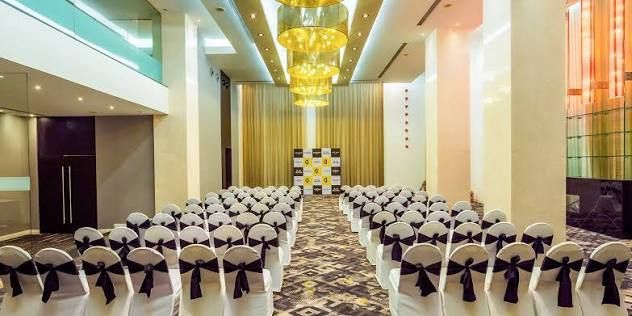
Theatre Layout
Participants sit in rows facing a presentation area.
It works well for:
-
Seminars
-
Speeches
-
Presentations
-
Larger meetings
U-Shaped Layout
Tables are arranged in a U shape with an open area for presentations.
This setup can encourage interaction between participants and presenters.
Cabaret Layout
Participants sit in smaller groups around tables facing a presentation area.
This arrangement can support workshops and collaborative activities.
5. Essential Conference Room Facilities
A modern conference room may include:
-
Comfortable chairs
-
Conference tables
-
Wi-Fi
-
Display screens
-
Projectors
-
Whiteboards
-
Power outlets
-
Air conditioning
-
Video-conferencing equipment
-
Microphones
-
Speakers
-
Presentation connectivity
-
Writing materials
-
Refreshment facilities
Not every meeting requires every facility. The most useful features depend on the meeting's purpose.
6. Technology in Modern Conference Rooms
Technology has become an important part of professional meetings.
Common technologies include:
-
Large digital displays
-
Projectors
-
Wireless presentation systems
-
Video cameras
-
Conference microphones
-
Speakers
-
HDMI connections
-
USB connections
-
Wireless connectivity
-
Video-conferencing platforms
-
Digital whiteboards
The objective should be to use technology that makes the meeting easier rather than technology that simply adds complexity.
7. Internet and Connectivity
Reliable internet is essential for many modern meetings.
It can support:
-
Video conferencing
-
Online presentations
-
Cloud documents
-
Digital collaboration
-
Remote participants
-
Online demonstrations
-
Real-time communication
Organizers should confirm that the available network can support the expected number of participants and connected devices.
8. Audio-Visual Equipment
Clear audio and good visual presentation are essential for effective communication.
Audio equipment can include:
-
Conference microphones
-
Wireless microphones
-
Speakers
-
Audio processors
-
Echo-cancellation systems
Visual equipment can include:
-
Projectors
-
LED displays
-
Interactive screens
-
Presentation monitors
For hybrid meetings, audio quality is especially important because remote participants depend on microphones and speakers to follow conversations.
9. Video Conferencing
Video conferencing allows remote participants to join meetings from different locations.
A suitable setup may include:
-
Camera
-
Microphone
-
Speakers
-
Display
-
Stable internet
-
Video-conferencing software
Camera placement should provide a clear view of participants without requiring frequent adjustments.
10. Smart Conference Rooms
Smart conference rooms combine traditional meeting infrastructure with connected technology.
Potential features include:
-
Touchscreen controls
-
Smart displays
-
Wireless presentation
-
Room-booking systems
-
Occupancy sensors
-
Automated video conferencing
-
Digital control panels
-
Automated lighting
Smart features can reduce setup time and make meeting technology easier to operate.
11. Lighting
Lighting can influence concentration, presentation visibility, and video quality.
A well-designed conference room should provide:
-
Clear visibility
-
Limited screen glare
-
Comfortable brightness
-
Suitable lighting for video calls
-
Adjustable lighting where possible
Natural light can improve the environment, but excessive sunlight may create reflections on screens.
12. Acoustics
Good acoustics allow participants to hear conversations clearly.
Important considerations include:
-
Echo control
-
Background noise
-
Sound insulation
-
Microphone placement
-
Speaker positioning
-
Room shape
Poor acoustics can make even a well-organized meeting difficult to follow.
13. Comfort and Ergonomics
Meetings can last for several hours, making participant comfort important.
Consider:
-
Chair design
-
Table height
-
Seating space
-
Room temperature
-
Ventilation
-
Lighting
-
Screen visibility
-
Movement space
A comfortable environment can help participants remain focused during longer sessions.
14. Location Considerations
Location can influence how easily participants reach a conference room.
Important factors include:
-
Transportation access
-
Road connectivity
-
Parking
-
Public transportation
-
Travel time
-
Nearby accommodation
-
Accessibility
For meetings involving participants from different parts of a city, convenient connectivity can make attendance easier.
15. Accessibility
Conference rooms should be usable by people with different accessibility requirements.
Consider:
-
Accessible entrances
-
Ramps
-
Elevators
-
Accessible restrooms
-
Adequate door widths
-
Clear pathways
-
Accessible seating
-
Suitable signage
Accessibility should be included in the initial planning process rather than added later.
16. Privacy and Security
Some meetings involve confidential or sensitive information.
Privacy can be particularly important for:
-
Management discussions
-
Interviews
-
Business strategy
-
Sensitive presentations
-
Internal meetings
-
Confidential conversations
Consider sound insulation, controlled access, room placement, and appropriate digital-security practices.
17. Conference Room Capacity
Room capacity should be evaluated according to the planned seating arrangement.
A room may accommodate more participants in theatre-style seating than in a boardroom arrangement.
Consider:
-
Number of participants
-
Speakers
-
Technical equipment
-
Tables
-
Walkways
-
Presentation area
-
Emergency access
Comfortable usable capacity is often more important than the maximum theoretical capacity.
18. Conference Rooms for Different Events
Business Meetings
A boardroom setup can create a professional environment for discussions and decision-making.
Training Programs
Classroom seating, presentation equipment, and writing surfaces can support structured learning.
Workshops
Flexible seating and breakout areas can encourage group participation.
Interviews
A private room with reliable connectivity can provide a focused environment.
Presentations
Theatre-style seating and suitable audio-visual equipment can improve visibility and communication.
Hybrid Meetings
Reliable internet, cameras, microphones, and speakers are important when remote participants are involved.
19. Breakout Areas
Larger meetings can benefit from additional spaces for smaller discussions.
Breakout areas can support:
-
Group activities
-
Private conversations
-
Networking
-
Workshop sessions
-
Team discussions
They can make complex meeting schedules easier to manage.
20. Refreshments and Supporting Facilities
Longer meetings may require refreshments and supporting facilities.
Possible arrangements include:
-
Drinking water
-
Tea
-
Coffee
-
Snacks
-
Meal areas
-
Waiting areas
-
Reception areas
-
Restrooms
-
Storage areas
Supporting facilities should be considered alongside the main meeting room.
21. Safety Considerations
Safety should always be included in conference-room planning.
Check for:
-
Emergency exits
-
Fire-safety equipment
-
Clear evacuation routes
-
Emergency procedures
-
Stable furniture
-
Safe electrical connections
-
Adequate lighting
Furniture, cables, and equipment should not block emergency pathways.
22. Conference Room Technology Checklist
Before the meeting, organizers can check:
A short technology test before participants arrive can prevent avoidable interruptions.
23. Planning a Conference Room Meeting
Step 1: Define the Meeting Purpose
Determine whether the meeting is intended for discussion, training, presentation, networking, interviews, or another activity.
Step 2: Estimate Attendance
Determine the expected number of participants.
Step 3: Select the Layout
Choose a boardroom, classroom, theatre, U-shaped, or another appropriate arrangement.
Step 4: Identify Technology Requirements
List the technology needed for presentations, remote participation, and communication.
Step 5: Check Accessibility
Make sure participants can comfortably enter and use the meeting environment.
Step 6: Review Supporting Facilities
Consider internet, parking, refreshments, restrooms, waiting areas, and technical support.
Step 7: Test the Room
Check technology, seating, lighting, sound, connectivity, and presentation visibility before the event.
24. Common Conference Room Planning Mistakes
Choosing the Wrong Room Size
A room that is too small can feel crowded, while an excessively large room can reduce interaction.
Ignoring Seating Layout
The same room can perform very differently depending on its configuration.
Forgetting Technical Testing
Equipment problems can interrupt an otherwise well-planned meeting.
Overlooking Acoustics
Poor sound quality can make conversations and presentations difficult to follow.
Ignoring Accessibility
Accessibility should be part of the planning process from the beginning.
Adding Unnecessary Technology
Technology should solve a real meeting requirement rather than create additional complexity.
Forgetting Setup Time
Presentations, seating, equipment, and registration may require preparation before participants arrive.
25. Sustainability in Conference Rooms
Modern meeting environments can incorporate sustainable practices such as:
-
Energy-efficient lighting
-
Smart climate controls
-
Reduced paper use
-
Recycling facilities
-
Energy-efficient equipment
-
Natural lighting
-
Reusable meeting materials
Digital documents and online collaboration can also reduce dependence on printed materials.
26. Smart Conference Room Trends
Modern conference rooms are increasingly influenced by connected technologies.
Emerging features include:
-
AI-assisted meeting tools
-
Intelligent cameras
-
Automated room controls
-
Digital room-booking systems
-
Interactive displays
-
Wireless presentation
-
Occupancy monitoring
-
Advanced audio systems
The best technology is technology that makes meetings simpler, clearer, and more productive.
27. Conference Room Comparison Framework
| Factor | What to Consider |
|---|
| Capacity | Does the room comfortably fit participants? |
| Layout | Does the arrangement match the meeting? |
| Technology | Are the required tools available? |
| Internet | Can the network support the meeting? |
| Audio | Can everyone hear clearly? |
| Visuals | Can everyone see presentations? |
| Accessibility | Can all participants use the space? |
| Privacy | Is confidential discussion possible? |
| Comfort | Are seating and temperature suitable? |
| Location | Is the venue easy to reach? |
| Safety | Are emergency facilities available? |
| Support | Is technical assistance available? |
28. Tools and Resources
Meeting organizers can use digital resources to improve planning.
Useful tools include:
-
Digital calendars
-
Online scheduling systems
-
Video-conferencing platforms
-
Seating-plan software
-
Presentation tools
-
Collaboration platforms
-
Event registration systems
-
Digital maps
-
Meeting checklists
These resources can help coordinate participants, schedules, technology, and meeting activities.
29. FAQs
What is a conference room?
A conference room is a dedicated space designed for professional meetings, presentations, discussions, training, interviews, workshops, and other organized activities.
What facilities should a conference room have?
Common facilities include comfortable seating, tables, Wi-Fi, displays or projectors, microphones, speakers, power outlets, whiteboards, lighting, and video-conferencing equipment.
What technology is important in a modern conference room?
Important technologies can include reliable internet, digital displays, wireless presentation systems, cameras, microphones, speakers, video-conferencing platforms, and interactive screens.
How should conference room capacity be selected?
Capacity should be based on the number of participants, seating arrangement, presentation requirements, equipment, walkways, and the comfort level required.
What should be checked before a meeting?
Check the room layout, internet, audio, display equipment, lighting, seating, accessibility, power connections, presentation devices, and video-conferencing system.
30. Conclusion
A well-planned conference room is more than a table and chairs. It is a professional environment where people communicate, collaborate, exchange ideas, solve problems, and make decisions.
When considering conference rooms in Andheri, look at the complete picture: capacity, layout, location, accessibility, technology, internet connectivity, acoustics, privacy, comfort, safety, and supporting facilities.
The smartest approach is to start with the purpose of the meeting and then match the room to that purpose. A small team discussion needs a different environment from a training program, large presentation, or hybrid conference.
With thoughtful planning and the right combination of facilities, technology, and comfort, a conference room can create a focused environment where meetings become easier to organize and more productive.
Disclaimer
This article is provided solely for general informational and educational purposes. It does not endorse, recommend, rank, review, or promote any specific conference room, venue, business, office, hotel, coworking facility, company, product, or provider. Conference-room facilities, availability, capacity, technology, accessibility, policies, and operating conditions may vary. Readers should independently verify current information and applicable safety, accessibility, legal, and operational requirements before making any meeting or event arrangements.