CNC Milling Machines Explained: Types, Working Principles, Applications & Precision Manufacturing Guide
Computer Numerical Control (CNC) milling machines are among the most widely used manufacturing systems in modern industry. They use computer-controlled machining processes to remove material from a workpiece with exceptional precision, enabling the production of complex components used in industries such as aerospace, automotive, medical technology, electronics, energy, and industrial equipment.
Unlike conventional milling machines that rely heavily on manual operation, CNC milling machines follow programmed instructions to control tool movement, spindle speed, feed rates, and machining paths. This automation improves consistency, repeatability, and manufacturing efficiency while supporting highly detailed production.
This guide explains CNC milling machines, their working principles, machine types, components, tooling, industrial applications, safety considerations, and emerging manufacturing technologies from an educational perspective. It does not provide purchasing, engineering, production, or professional manufacturing advice.
What Is a CNC Milling Machine?
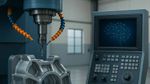
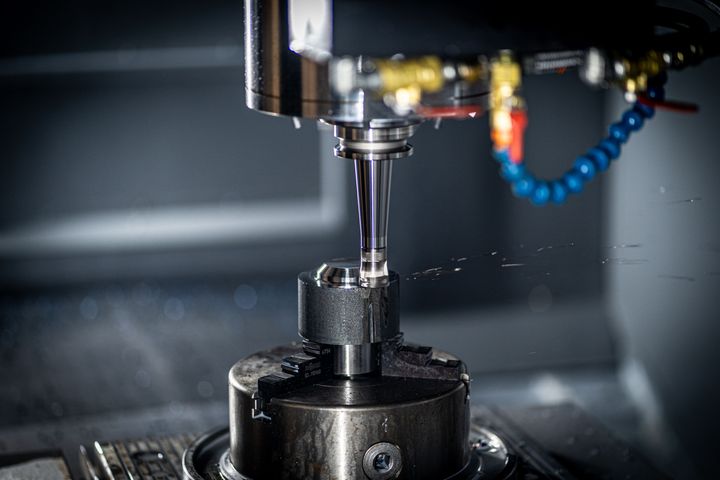
A CNC milling machine is a computer-controlled manufacturing system that removes material from a workpiece using rotating cutting tools. Machine movements are directed by numerical instructions, allowing precise machining of metals, plastics, composites, wood, and other engineering materials.
CNC milling is commonly used to produce:
- Precision mechanical parts
- Industrial components
- Medical equipment parts
- Aerospace components
- Automotive parts
- Electronic enclosures
- Tooling and molds
- Prototype products
Its accuracy and repeatability make it suitable for both low-volume and high-volume manufacturing.
Why CNC Milling Is Important
Modern manufacturing often requires complex geometries and consistent product quality.
CNC milling supports:
- High machining precision
- Excellent repeatability
- Complex component production
- Reduced manual intervention
- Faster production cycles
- Improved manufacturing consistency
- Automated machining
- Flexible production capabilities
The overall performance depends on machine design, tooling, programming, and process control.
How CNC Milling Machines Work
A simplified CNC milling process includes:
- A component is designed using Computer-Aided Design (CAD) software.
- The design is converted into machining instructions using Computer-Aided Manufacturing (CAM) software.
- The workpiece is securely mounted on the machine table.
- Cutting tools are installed in the spindle or automatic tool changer.
- The CNC controller executes programmed machining paths.
- Material is removed according to the programmed tool movements.
- The finished component is inspected for dimensional accuracy and surface quality.
Throughout the process, sensors and control systems help maintain machining precision.
Main Components of a CNC Milling Machine
A typical CNC milling machine includes:
- Machine frame
- Spindle
- Worktable
- CNC controller
- Servo motors
- Linear guideways
- Ball screws
- Tool holder
- Automatic tool changer (ATC)
- Coolant system
- Chip removal system
- Safety enclosure
Each component contributes to machining accuracy and operational reliability.
Types of CNC Milling Machines
Different machine configurations are designed for various manufacturing requirements.
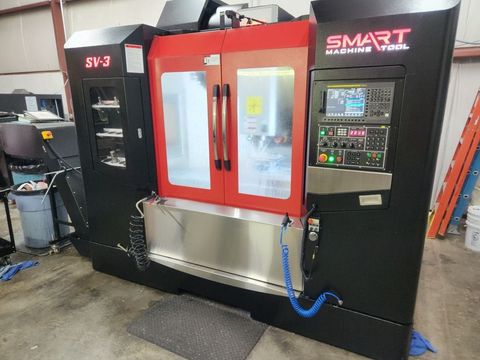
Vertical CNC Milling Machines
In vertical machines, the spindle is positioned vertically.
Typical applications include:
- General machining
- Mold manufacturing
- Prototype development
- Precision components
Vertical machining centers are widely used because of their versatility.
Horizontal CNC Milling Machines
Horizontal machines position the spindle horizontally.
They are commonly used for:
- Heavy material removal
- Large workpieces
- Multi-face machining
- High-production environments
Horizontal machines often improve chip evacuation during machining.
3-Axis CNC Milling Machines
Three-axis machines move along:
- X-axis
- Y-axis
- Z-axis
They are suitable for many standard machining operations.
4-Axis CNC Milling Machines
An additional rotary axis allows machining of more complex geometries with fewer setups.
5-Axis CNC Milling Machines
Five-axis machines simultaneously move along multiple linear and rotational axes.
They are frequently used for:
- Aerospace components
- Medical implants
- Turbine blades
- Precision molds
- Complex engineering parts
Cutting Tools Used in CNC Milling
Various cutting tools are selected depending on the material and machining operation.
Common tools include:
- End mills
- Face mills
- Ball nose cutters
- Slot drills
- Chamfer tools
- Thread mills
- Fly cutters
- T-slot cutters
Tool selection affects machining quality, surface finish, and productivity.
Materials Machined
CNC milling machines can process a wide variety of materials.
Examples include:
- Aluminum
- Steel
- Stainless steel
- Titanium
- Brass
- Copper
- Engineering plastics
- Composite materials
- Wood
- Foam
Material characteristics influence tooling, cutting parameters, and machining strategies.
Industrial Applications
CNC milling supports numerous industries.
Common applications include:
- Aerospace manufacturing
- Automotive production
- Medical device manufacturing
- Electronics
- Defense engineering
- Energy equipment
- Industrial machinery
- Robotics
- Mold and die manufacturing
- Research and development
These machines are valued for producing precise and repeatable components.
Precision Manufacturing
Modern CNC milling machines are designed to achieve high levels of dimensional accuracy.
Factors influencing precision include:
- Machine rigidity
- Tool quality
- Spindle stability
- Thermal control
- Calibration
- Workholding accuracy
- CNC programming
- Material properties
Quality control processes help verify finished components.
Automation Features
Many CNC milling systems incorporate advanced automation.
Examples include:
- Automatic tool changers
- Robotic loading systems
- Tool life monitoring
- Automatic probing
- Adaptive machining
- Process monitoring
- Smart diagnostics
- Remote machine monitoring
Automation improves efficiency and reduces manual intervention.
CAD and CAM Integration
Modern CNC manufacturing typically uses integrated digital workflows.
Common software functions include:
- 3D component design
- Toolpath generation
- Machining simulation
- Collision detection
- Post-processing
- Process optimization
Digital integration improves manufacturing accuracy and planning.
Safety Considerations
Safe machine operation is essential.
General safety practices include:
- Wearing appropriate personal protective equipment
- Keeping safety guards in place
- Securing workpieces correctly
- Inspecting cutting tools before use
- Following operating procedures
- Removing chips safely
- Performing routine maintenance
- Receiving proper operator training
Manufacturers provide detailed safety instructions specific to each machine model.
Maintenance Practices
Routine maintenance supports machine performance and longevity.
Typical activities include:
- Lubrication
- Alignment checks
- Coolant maintenance
- Tool inspection
- Spindle inspection
- Cleaning guideways
- Software updates
- Calibration verification
Preventive maintenance helps minimize downtime.
Emerging Trends in 2026
CNC milling technology continues advancing through digital manufacturing.
Current innovations include:
- AI-assisted machining optimization
- Digital twins
- Smart factory integration
- Industrial Internet of Things (IIoT)
- Predictive maintenance
- Automated quality inspection
- Energy-efficient machine design
- Cloud-connected production monitoring
These technologies continue improving manufacturing productivity and precision.
Frequently Asked Questions
What is a CNC milling machine?
A CNC milling machine is a computer-controlled manufacturing system that removes material from a workpiece using rotating cutting tools to produce precise components.
What materials can CNC milling machines process?
They commonly machine aluminum, steel, stainless steel, titanium, brass, plastics, composites, wood, and other engineering materials.
What is the difference between 3-axis and 5-axis milling?
A 3-axis machine moves along three linear axes, while a 5-axis machine also includes two rotational axes, allowing more complex machining with fewer setups.
Why is CAD/CAM important?
CAD software creates digital component designs, while CAM software converts those designs into machining instructions for CNC equipment.
How does automation improve CNC milling?
Automation supports automatic tool changes, robotic part handling, adaptive machining, process monitoring, and improved manufacturing efficiency.
Conclusion
CNC milling machines have become fundamental to modern precision manufacturing by combining computer-controlled machining, advanced tooling, automation, and digital engineering into highly accurate production systems. Their ability to manufacture complex components with consistent quality makes them indispensable across industries ranging from aerospace and automotive to medical technology and industrial equipment.
As artificial intelligence, digital twins, IIoT connectivity, and smart factory technologies continue to evolve, CNC milling systems are expected to become even more intelligent, connected, and efficient, supporting the next generation of advanced manufacturing.
Disclaimer
This article is intended solely for informational and educational purposes. It does not provide engineering, manufacturing, purchasing, technical consulting, workplace safety, or professional industrial advice. It does not endorse, recommend, compare, rank, review, market, or promote any CNC machine manufacturer, tooling supplier, software platform, or industrial equipment provider. Machine specifications, capabilities, tooling requirements, safety procedures, and performance vary by manufacturer, model, material, and application. Readers should consult official equipment documentation and qualified manufacturing professionals before operating, selecting, or implementing CNC milling systems.