Table of Contents

Best Industrial CNC Machines to Buy in 2026 Explained: Features, Applications, and Performance Insights

Best Industrial CNC Machines to Buy in 2026 Explained: Features, Applications, and Performance Insights

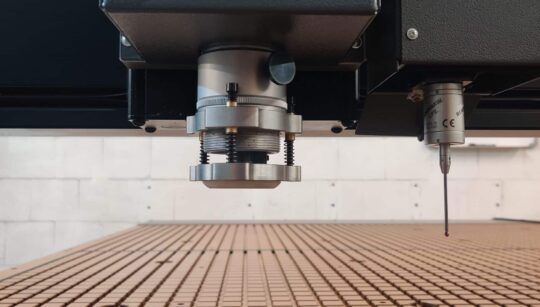
Industrial CNC machines (Computer Numerical Control machines) are advanced manufacturing systems that use programmed instructions to control cutting, shaping, drilling, and milling operations on materials such as metal, plastic, and composites. These systems are designed to improve precision manufacturing and reduce manual dependency in industrial production environments.

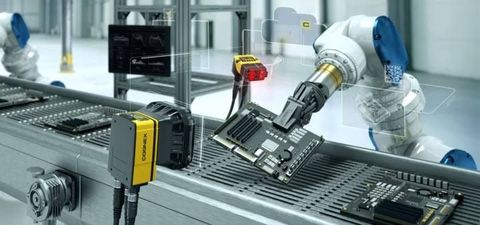
The main categories include CNC milling machines, CNC lathes, machining centers, and multi-axis systems such as 4-axis and 5-axis CNC setups. Each type is built for specific production requirements, from simple component shaping to highly complex aerospace-grade parts.

At their core, CNC systems translate digital designs (CAD/CAM files) into machine actions. This allows consistent production quality, repeatability, and high accuracy across large-scale industrial operations.

Importance – Why CNC Manufacturing Matters Today

CNC machining plays a central role in modern industrial automation and advanced manufacturing systems. It is widely used across aerospace engineering, automotive production, electronics manufacturing, medical device fabrication, and heavy machinery development.

Key reasons for its importance include:

  • High precision and repeatability in mass production environments
  • Reduced human error in complex machining processes
  • Faster production cycles compared to manual machining
  • Compatibility with digital manufacturing and smart factory systems
  • Ability to produce complex geometries with tight tolerances

Industries rely on CNC systems to maintain consistency in quality while optimizing production efficiency. As product designs become more advanced, CNC technology helps meet demands for accuracy and scalability.

Recent Updates – Trends in CNC Technology (2025–2026)

The past year has seen significant developments in industrial CNC systems, especially in automation integration and software intelligence.

Key updates include:

  • AI-assisted machining optimization (2025): Machine learning models are increasingly used to adjust cutting speeds and tool paths in real time for better surface finish and tool life efficiency.
  • Digital twin integration expansion (2025–2026): Manufacturers are using virtual replicas of CNC machines to simulate production before physical execution.
  • Growth of hybrid CNC systems (late 2025): Machines combining additive manufacturing (3D printing) and subtractive machining are becoming more common in prototyping industries.
  • IoT-enabled predictive maintenance (2026 trend): Sensors now monitor vibration, temperature, and spindle load to predict maintenance requirements before breakdowns occur.
  • Advanced 5-axis machining improvements: Enhanced motion control systems allow smoother transitions and higher accuracy in aerospace and automotive components.

These updates are shaping the next generation of precision manufacturing systems, focusing on connectivity, efficiency, and predictive intelligence.

Laws or Policies – Industrial Compliance and Standards

Industrial CNC operations are governed by international safety, quality, and environmental standards to ensure safe and reliable manufacturing processes.

Common regulatory frameworks include:

  • ISO 9001 Quality Management Systems: Ensures consistent product quality in manufacturing environments
  • ISO 16090 Machine Tool Safety Standards: Covers safety requirements for CNC machining centers
  • OSHA-style workplace safety guidelines (global adaptation): Focuses on machine guarding, operator safety, and hazard prevention
  • CE marking requirements (in applicable regions): Ensures machinery meets safety and environmental protection standards
  • Environmental compliance regulations: Encourage reduced energy consumption and controlled industrial waste output

Modern CNC systems are increasingly designed to meet energy efficiency standards and reduce carbon emissions through optimized machining cycles and smart power management systems.

Tools and Resources – Supporting CNC Operations and Learning

Industrial CNC ecosystems rely on a range of digital tools and engineering resources that support design, simulation, and machine control.

Key tools include:

  • CAD software for product design and modeling
  • CAM platforms for toolpath generation and machining simulation
  • CNC controller interfaces for machine operation and monitoring
  • Digital twin platforms for production simulation
  • Predictive maintenance dashboards for equipment monitoring
  • Engineering calculation tools for feed rate, spindle speed, and tool selection
  • Material databases for machining properties and performance behavior

Common CNC Machine Categories Overview

CNC TypePrimary FunctionCommon Applications
CNC Milling MachineMulti-directional cutting operationsAutomotive parts, molds
CNC LatheRotational component shapingShafts, cylindrical parts
5-Axis CNC SystemComplex geometry machiningAerospace, turbines
CNC Machining CenterMulti-process automated machiningIndustrial components

These tools and systems work together to create a fully integrated digital manufacturing environment.

Frequently Asked Questions

What is the main purpose of CNC machining systems?
CNC systems are designed to automate machining tasks using programmed instructions, enabling precise and repeatable manufacturing of complex parts.

What industries use CNC machining most frequently?
CNC technology is widely used in aerospace, automotive, electronics, healthcare devices, and industrial equipment manufacturing.

How does a 5-axis CNC system differ from standard machines?
A 5-axis system can move a cutting tool or workpiece in five directions simultaneously, allowing production of highly complex geometries in a single setup.

What role does software play in CNC operations?
Software is essential for design (CAD), toolpath creation (CAM), simulation, and machine control, forming the digital backbone of CNC manufacturing.

What is predictive maintenance in CNC systems?
It is a monitoring approach that uses sensors and data analytics to predict machine issues before failures occur, improving uptime and operational efficiency.

Conclusion

Industrial CNC machines represent a foundational technology in modern precision manufacturing. Their evolution from basic automated tools to intelligent, connected systems reflects the broader shift toward digital industrial ecosystems.

With advancements in AI-driven machining, predictive maintenance, and multi-axis capabilities, CNC systems continue to improve production efficiency and engineering accuracy. At the same time, regulatory standards and digital tools ensure safer, more consistent, and more sustainable manufacturing practices.

As industries continue to adopt smart factory concepts, CNC technology remains a core element in shaping high-performance, data-driven production environments.


author-image

Harshit Sharma

We are a performance-driven media buying team focused on scaling brands through smart, data-backed advertising strategies

June 04, 2026 . 9 min read