Best Industrial CNC Machines to Buy in 2025 Explained: Features, Applications, and Performance Insights
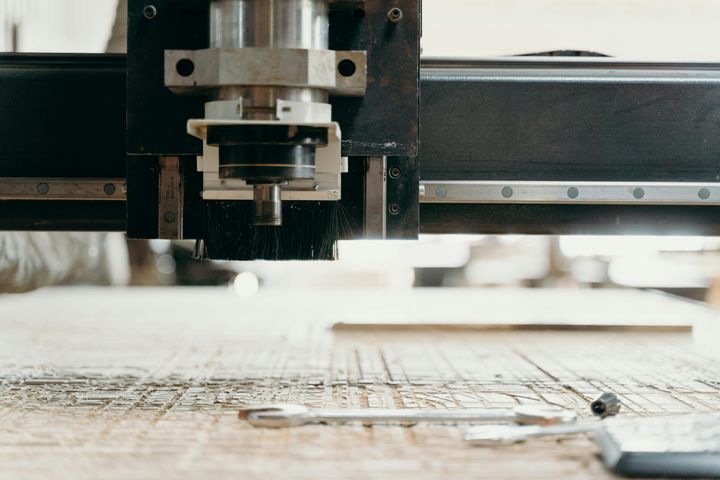
Industrial CNC (Computer Numerical Control) machines are automated manufacturing systems that use programmed software instructions to control cutting, drilling, milling, turning, engraving, and machining operations. These machines have become essential in modern manufacturing because they improve precision, consistency, efficiency, and repeatability
CNC technology was developed to address the limitations of manual machining processes. By using computer-controlled movements, manufacturers can produce complex parts with high accuracy while reducing human error and improving production efficiency.
Today, CNC machines are widely used across industries such as aerospace, automotive manufacturing, medical device production, electronics, energy, defense, metal fabrication, and industrial equipment manufacturing.
High CPC keywords associated with this topic include industrial automation, manufacturing technology, CNC machining solutions, precision engineering, industrial equipment, smart manufacturing, factory automation, production efficiency, industrial robotics, and advanced manufacturing systems.
Why CNC Machines Matter in Modern Manufacturing
Modern industries require precise components, consistent production quality, and efficient manufacturing workflows. CNC machines help organizations meet these requirements by automating machining processes and enabling highly accurate production.
Key challenges addressed by CNC technology include:
- Production consistency
- Manufacturing accuracy
- Material optimization
- Process automation
- Production scalability
- Reduced operational errors
CNC machines affect manufacturers, engineers, production managers, machine operators, industrial designers, and quality control specialists.
As Industry 4.0 technologies continue expanding, CNC systems are increasingly integrated into smart factory environments.
Major Types of Industrial CNC Machines
Different CNC machines are designed for specific manufacturing tasks.
| CNC Machine Type | Primary Function |
|---|---|
| CNC Milling Machines | Material shaping and cutting |
| CNC Lathes | Rotational machining operations |
| CNC Routers | Wood, plastic, and composite machining |
| CNC Plasma Cutters | Metal cutting applications |
| CNC Laser Machines | Precision cutting and engraving |
| CNC Grinding Machines | Surface finishing and precision grinding |
Each machine type supports different industrial applications and production requirements.
Core Features of Modern CNC Machines
Industrial CNC machines incorporate numerous advanced features that improve manufacturing performance.
Common features include:
- Multi-axis machining
- Automatic tool changing
- Digital control systems
- High-speed processing
- Precision positioning
- Real-time monitoring
- CAD/CAM integration
- Predictive maintenance capabilities
These features help manufacturers improve efficiency while maintaining production quality.
Understanding CNC Machine Axes
The number of axes significantly influences machine capability.
| Axis Configuration | Capability |
|---|---|
| 3-Axis CNC | Basic machining operations |
| 4-Axis CNC | Rotational machining support |
| 5-Axis CNC | Complex geometry manufacturing |
| Multi-Axis CNC | Advanced industrial production |
Five-axis CNC systems are increasingly used for aerospace, medical, and high-precision manufacturing applications.
Applications Across Industries
Industrial CNC machines support a wide variety of manufacturing sectors.
Aerospace Manufacturing
Aerospace companies use CNC machines to produce:
- Aircraft components
- Engine parts
- Structural assemblies
- Precision mechanical systems
Automotive Production
Automotive applications include:
- Engine components
- Transmission parts
- Chassis elements
- Custom manufacturing
Medical Device Manufacturing
Medical manufacturers utilize CNC technology for:
- Surgical instruments
- Implants
- Precision medical equipment
- Diagnostic device components
Electronics Industry
Electronics manufacturing frequently relies on CNC systems for:
- Enclosures
- Circuit board fixtures
- Precision housings
- Specialized components
Key Performance Factors
Several factors influence CNC machine performance.
Important considerations include:
- Accuracy
- Repeatability
- Spindle speed
- Tool capacity
- Material compatibility
- Processing speed
- Software integration
- Reliability
Manufacturers typically evaluate these factors when assessing machine capabilities for specific production requirements.
Industrial CNC Technology Trends in 2025
The CNC industry continues evolving through technological innovation.
Major trends include:
- Artificial intelligence integration
- Smart manufacturing systems
- Industrial Internet of Things (IIoT)
- Predictive maintenance technologies
- Digital twin simulations
- Cloud-connected manufacturing
- Robotics integration
- Advanced automation workflows
These technologies are helping organizations improve productivity and operational visibility.
CNC Machine Categories and Applications
| Category | Typical Use |
|---|---|
| Vertical Machining Centers | General manufacturing |
| Horizontal Machining Centers | Large-scale production |
| CNC Turning Centers | Cylindrical components |
| Laser CNC Systems | Precision cutting |
| Router Systems | Composite and wood processing |
| Multi-Tasking Machines | Complex manufacturing operations |
Each category serves specific production environments and manufacturing objectives.
Industry Examples and Technology Leaders
Several companies contribute to CNC technology development and industrial automation innovation.
Examples include:
Industry organizations supporting manufacturing innovation include:
- International Organization for Standardization
- Association for Manufacturing Technology
These references are provided solely for educational purposes.
Recent Developments (2024–2025)
Several developments have influenced the CNC industry over the past year.
Key updates include:
- Increased AI-assisted machining optimization
- Expanded robotics integration
- Improved machine connectivity
- Enhanced predictive maintenance solutions
- Greater adoption of digital manufacturing platforms
- Advanced machine monitoring systems
Manufacturers are increasingly investing in technologies that improve efficiency, data visibility, and process control.
Smart Manufacturing and CNC Integration
Modern CNC machines increasingly function within connected manufacturing ecosystems.
Common integrations include:
- Industrial sensors
- Production monitoring software
- Manufacturing execution systems (MES)
- Enterprise resource planning (ERP) platforms
- Robotics systems
- Quality control software
These integrations support real-time decision-making and operational efficiency.
Laws and Policies Affecting CNC Manufacturing
Industrial CNC operations may be influenced by various regulations and standards.
Important areas include:
- Workplace safety regulations
- Industrial equipment standards
- Environmental compliance requirements
- Machinery certification standards
- Occupational health regulations
- Manufacturing quality standards
Organizations typically follow applicable national and international standards to ensure safe and compliant operations.
Tools and Resources
Useful resources related to CNC machining include:
- CAD software
- CAM software
- Manufacturing simulation tools
- CNC programming platforms
- Industrial monitoring systems
- Toolpath optimization software
- Predictive maintenance platforms
- Manufacturing analytics dashboards
These tools help improve production planning, machine performance, and manufacturing efficiency.
Frequently Asked Questions
What is a CNC machine?
A CNC machine is a computer-controlled manufacturing system that automates machining processes such as cutting, drilling, milling, turning, and shaping materials.
Which industries commonly use CNC machines?
Aerospace, automotive, medical manufacturing, electronics, industrial equipment production, and metal fabrication industries frequently use CNC technology.
What is the difference between 3-axis and 5-axis CNC machines?
A 3-axis machine operates along three directions, while a 5-axis machine can move along additional rotational axes, allowing more complex machining operations.
What are the major CNC technology trends in 2025?
Artificial intelligence, predictive maintenance, smart factory integration, industrial IoT connectivity, robotics, and digital twin technologies are among the leading trends.
Why is CNC machining important in manufacturing?
CNC machining improves accuracy, consistency, efficiency, automation, and production quality while reducing manual intervention and operational errors.
Conclusion
Industrial CNC machines remain a foundational technology in modern manufacturing, supporting precision production across numerous industries. Through automation, advanced software control, multi-axis machining, and smart manufacturing integration, CNC systems help organizations achieve higher levels of productivity and quality.
As Industry 4.0 technologies continue transforming manufacturing environments, CNC machines are becoming increasingly connected, intelligent, and data-driven. Understanding machine types, applications, performance factors, emerging technologies, and industry trends provides valuable insight into the evolving role of CNC machining in modern industrial production.
Disclaimer
This article is intended for informational and educational purposes only. It does not promote, endorse, advertise, or recommend any manufacturer, supplier, distributor, or CNC machine brand. References to technologies, companies, and machine categories are included solely to explain industrial manufacturing concepts and industry developments. This content should not be considered engineering, operational, investment, procurement, or technical consulting advice.