Automatic Curtain Rods: Smart Home Features and Technology Overview
Automatic curtain rods are becoming an increasingly common part of modern smart home environments.
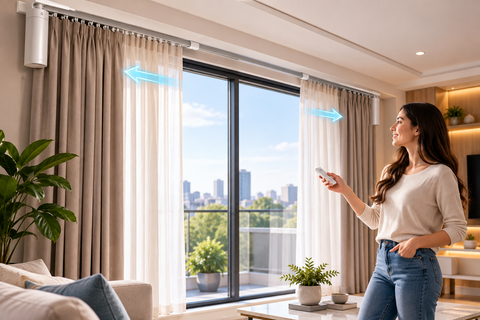
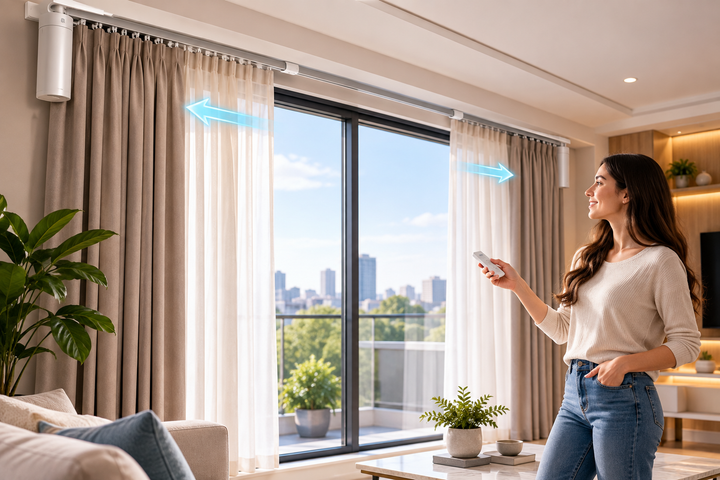
These systems allow curtains to open and close automatically using remote controls, mobile apps, voice commands, timers, or sensors.
As home automation technologies continue to evolve, automatic curtain rods provide a convenient way to manage natural light, privacy, and indoor comfort. They can be integrated with broader smart home ecosystems, creating a more connected and efficient living space.
Whether installed in homes, offices, hotels, or commercial buildings, automatic curtain rods offer a practical combination of automation, convenience, and intelligent control.
Quick Facts Table
| Topic | Purpose | Key Features | Main Benefits | Common Applications |
|---|---|---|---|---|
| Automatic Curtain Rods | Automate curtain movement | Motorized operation, app control, voice control, timers, sensors | Convenience, energy efficiency, privacy, smart home integration | Homes, apartments, offices, hotels, conference rooms |
What Are Automatic Curtain Rods?
Automatic curtain rods are motorized curtain systems that move curtains without manual pulling. A small electric motor installed within the rod or track mechanism controls curtain movement.
Users can operate the system through remote controls, smartphone apps, wall switches, voice assistants, or automated schedules. Some advanced models can also respond to sunlight, temperature, or occupancy sensors.
These systems are part of the growing smart home technology ecosystem that aims to automate everyday household functions.
Why Are Automatic Curtain Rods Important?
Traditional curtains require manual operation each time light conditions or privacy needs change. Automatic curtain rods simplify this process through automation and intelligent controls.
Their growing popularity is linked to several factors:
- Increased smart home adoption
- Greater convenience
- Improved energy management
- Enhanced accessibility
- Better control over natural lighting
- Integration with connected home devices
As smart home infrastructure expands, automated window treatments are becoming a useful component of modern living spaces.
Automatic Curtain Rod Facts
- Smart home adoption continues to grow globally.
- Voice-controlled home devices are becoming increasingly common.
- Automated window treatments support energy management strategies.
- Sensor-based curtain systems can respond to changing environmental conditions.
- Home automation technologies continue to expand across residential and commercial spaces.
Understanding the Concept
Automatic curtain rods combine mechanical components, electric motors, communication technologies, and control systems to automate curtain movement.
Unlike conventional curtain rods, these systems can operate independently or as part of a larger smart home network. Many solutions allow users to create schedules that automatically open curtains in the morning and close them in the evening.
The result is a more convenient and responsive living environment that adapts to user preferences.
Major Components of Automatic Curtain Rod Systems
Most automatic curtain rod systems include:
- Motorized curtain track
- Electric motor
- Power supply
- Remote control
- Mobile app integration
- Voice assistant compatibility
- Wireless communication module
- Mounting hardware
- Curtain carriers
- Smart sensors (optional)
Each component contributes to smooth and automated curtain operation.
Smart Home Features Overview Table
| Feature | Function | User Benefit |
|---|---|---|
| Remote Control | Wireless operation | Convenient access |
| App Control | Smartphone management | Control from anywhere |
| Voice Commands | Hands-free operation | Improved convenience |
| Scheduling | Automated opening and closing | Consistent daily routines |
| Light Sensors | Sunlight-based operation | Better indoor comfort |
| Smart Home Integration | Connected automation | Unified device management |
| Timer Functions | Scheduled operation | Reduced manual adjustments |
Key Features and Core Functions
Modern automatic curtain rods include several useful features:
- Motorized curtain movement
- Wireless connectivity
- Smartphone app control
- Voice assistant integration
- Programmable schedules
- Timer functionality
- Quiet motor operation
- Multiple control options
- Smart home compatibility
- Sensor-based automation
- Adjustable opening positions
- Multi-room control capabilities
These features help improve convenience and automation within residential and commercial environments.
Main Types of Automatic Curtain Rods
Remote-Controlled Curtain Rods
These systems operate using dedicated wireless remote controls. Users can open, close, or pause curtain movement from a distance.
App-Controlled Curtain Rods
App-controlled systems allow operation through smartphones or tablets. Users can manage curtains even when away from the property.
Voice-Controlled Curtain Rods
Voice-controlled systems integrate with smart home assistants and respond to spoken commands.
Sensor-Based Curtain Rods
These solutions use environmental sensors to automate curtain movement based on sunlight, room occupancy, or temperature.
Integrated Smart Home Curtain Systems
These systems connect with broader smart home platforms and participate in automated routines involving lighting, climate control, and security devices.
Types Comparison Table
| Curtain Rod Type | Control Method | Automation Level | Common Use |
|---|---|---|---|
| Remote-Controlled | Remote Device | Medium | Homes |
| App-Controlled | Mobile App | High | Smart Homes |
| Voice-Controlled | Voice Commands | High | Connected Homes |
| Sensor-Based | Sensors | Very High | Energy Management |
| Integrated Smart System | Multiple Controls | Very High | Advanced Automation |
How Automatic Curtain Rods Work
- The user provides a command through a remote, app, voice assistant, or timer.
- The control system sends a signal to the motor.
- The motor activates and moves the curtain track.
- Curtain carriers glide along the rod or track.
- Curtains open or close smoothly.
- Sensors monitor position and movement.
- The system stops automatically when the desired position is reached.
Advanced systems may perform these steps automatically according to schedules or environmental conditions.
Benefits and Advantages
Automatic curtain rods provide several practical benefits:
- Convenient daily operation
- Improved accessibility
- Better privacy management
- Enhanced smart home functionality
- Reduced manual effort
- Consistent curtain positioning
- Automated light control
- Improved indoor comfort
- Energy efficiency support
- Flexible control options
- Better integration with connected devices
- Modern home automation capabilities
Industry Applications
Residential Homes
Homeowners use automated curtain systems for convenience, privacy, and smart home integration.
Apartments
Compact living spaces benefit from app-based curtain control and automation.
Hotels
Hotels use motorized curtains to improve guest convenience and room management.
Offices
Automated window treatments help manage natural light and indoor comfort.
Conference Rooms
Curtains can automatically adjust during presentations or meetings.
Healthcare Facilities
Automated systems support accessibility and simplified room management.
Educational Institutions
Learning environments may use automated curtains to control lighting conditions.
Smart Buildings
Modern buildings integrate curtain automation into centralized building management systems.
Real-World Examples and Applications
Example: Morning Smart Home Routine
A homeowner schedules curtains to open automatically at sunrise. The system allows natural light to enter the room without manual intervention.
Example: Office Energy Management
An office building uses sensor-based curtain systems to reduce excessive sunlight and improve indoor comfort throughout the day.
Example: Hotel Room Automation
A hotel integrates automatic curtain rods with room control systems, allowing guests to adjust curtains through wall controls or mobile apps.
Automatic Curtain Rod Best Practices
- Select curtain rods compatible with curtain weight.
- Keep tracks clean for smooth movement.
- Use scheduling features appropriately.
- Test automation routines regularly.
- Secure wireless connections.
- Position sensors carefully.
- Maintain power supplies properly.
- Review smart home integrations periodically.
- Update connected apps when available.
- Monitor motor performance over time.
Important Factors to Consider
Before choosing an automatic curtain rod system, consider:
- Curtain size
- Curtain weight
- Window dimensions
- Power availability
- Connectivity options
- Noise levels
- Control preferences
- Smart home compatibility
- Installation requirements
- Maintenance needs
These factors help ensure reliable and effective operation.
Common Challenges and Easy Solutions
| Challenge | Impact | Solution |
|---|---|---|
| Motor Noise | Reduced comfort | Quiet motor technology |
| Connectivity Issues | Delayed operation | Stable wireless network |
| Incorrect Sensor Placement | Poor automation | Proper sensor positioning |
| Heavy Curtains | Reduced performance | Appropriate motor capacity |
| Track Obstructions | Movement interruptions | Regular cleaning and inspection |
Smart Home Integration Technologies
Automatic curtain rods often work alongside:
- Smart lighting systems
- Climate control devices
- Home security systems
- Occupancy sensors
- Voice assistants
- Smart hubs
- Energy management platforms
- Connected home ecosystems
This integration creates more intelligent and automated living environments.
Future Trends and Industry Insights
Several innovations are expected to shape the future of automatic curtain rod technology.
Artificial Intelligence Automation
AI technologies may improve automation by learning user preferences and daily routines.
Advanced Sensor Systems
Future sensors may provide more accurate environmental monitoring and automation.
Energy Management Integration
Automated curtains may play a greater role in supporting indoor temperature management.
Enhanced Voice Control
Voice interfaces are expected to become more natural and responsive.
Predictive Automation
Systems may anticipate user behavior and adjust curtain positions automatically.
Smart Building Connectivity
Commercial facilities will likely increase integration with centralized building management platforms.
Improved Wireless Technologies
Faster and more reliable communication technologies will enhance device performance.
Expert Insights
Automatic curtain rods represent an important part of modern smart home technology. By combining automation, connectivity, and intelligent controls, these systems simplify everyday tasks while improving comfort and convenience.
As smart homes continue to evolve, automated window treatments are expected to become more integrated with lighting, climate control, security, and energy management technologies. Their ability to automate natural light management makes them a valuable component of connected living environments.
Key Takeaways
- Automatic curtain rods automate curtain movement.
- Motorized systems improve convenience and accessibility.
- Multiple control methods are available.
- Smart home integration enhances functionality.
- Sensors enable automated operation.
- Scheduling features support daily routines.
- Commercial and residential applications continue to grow.
- Future systems will become increasingly intelligent and connected.
Frequently Asked Questions (FAQ)
What are automatic curtain rods?
Automatic curtain rods are motorized systems that open and close curtains automatically.
How do automatic curtain rods work?
They use electric motors and control systems to move curtains along a track or rod.
Can automatic curtain rods be controlled by smartphones?
Yes. Many systems include mobile app compatibility.
Do automatic curtain rods support voice control?
Many modern systems work with voice assistants and smart home platforms.
Are automatic curtain rods suitable for large windows?
Yes. Many systems are designed to handle large window installations.
What is a motorized curtain track?
A motorized curtain track contains the mechanism that moves curtains automatically.
Can curtains open automatically at sunrise?
Many systems support scheduling and sensor-based automation.
What are sensor-based curtain systems?
These systems use environmental sensors to automate curtain movement.
Do automatic curtain rods work with smart homes?
Yes. Many solutions integrate with connected home ecosystems.
What factors should be considered before installation?
Window size, curtain weight, connectivity, and smart home compatibility are important considerations.
Can automatic curtain rods improve energy efficiency?
They can help manage sunlight and indoor temperature conditions more effectively.
What is app-controlled curtain automation?
It allows users to manage curtains through smartphone applications.
Are automatic curtain rods used in commercial buildings?
Yes. Offices, hotels, healthcare facilities, and smart buildings often use these systems.
What is the future of automatic curtain rod technology?
Future systems are expected to include AI-driven automation, advanced sensors, and deeper smart home integration.
Conclusion
Automatic curtain rods combine motorized operation, smart controls, and automation technologies to simplify curtain management in residential and commercial spaces. These systems support convenience, accessibility, privacy, and smart home functionality through features such as app control, voice commands, scheduling, and sensor-based automation.
As connected living environments continue to evolve, automatic curtain rods are expected to become increasingly intelligent and integrated with broader smart home ecosystems. Their ability to automate natural light management and improve user convenience makes them an important part of modern home automation technology.