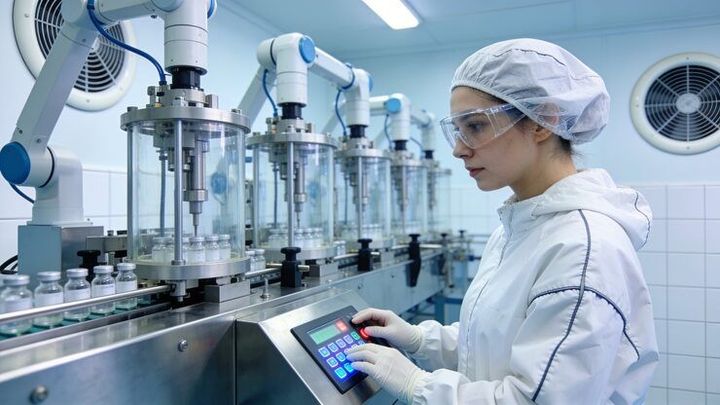
Automated Bioreactor Systems: AI Technology and Smart Manufacturing Guide
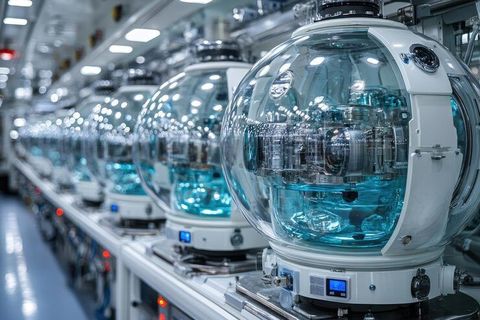
Automated bioreactor systems are advanced technologies used to grow living cells, microorganisms, and biological materials under carefully controlled conditions. They play an important role in biotechnology, pharmaceutical manufacturing, vaccine development, food science, and industrial biotechnology.
A bioreactor provides an environment where biological materials can grow, develop, or produce useful substances. These materials may include bacteria, yeast, animal cells, plant cells, or other microorganisms. Depending on the application, the system maintains important conditions such as temperature, pH, oxygen levels, pressure, and nutrient availability.
Traditional bioreactors often require operators to monitor several parameters and make adjustments manually. Although this approach remains useful in many applications, it can become challenging when processes involve long production cycles, sensitive biological materials, or multiple operating conditions.
Automated bioreactor systems address these challenges through integrated sensors, digital controllers, software platforms, and automated equipment. These technologies continuously collect information and adjust operating conditions according to predefined instructions.
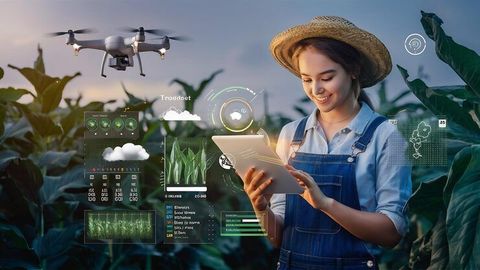
Artificial intelligence (AI) is introducing another level of development. AI-based systems can analyze historical and real-time process information, identify unusual patterns, and support better operational decisions.
The combination of bioreactor automation, artificial intelligence, and smart manufacturing is helping biotechnology facilities move toward more connected and data-driven production environments.
Importance: Why Automated Bioreactor Technology Matters Today
Biotechnology is becoming increasingly important in healthcare, agriculture, food production, and industrial research. Many biological manufacturing processes require precise environmental conditions because even small changes can affect cell growth and product characteristics.
Automated bioreactor technology helps address these challenges by improving process visibility and reducing dependence on continuous manual monitoring.
1. Improved Process Consistency
Biological processes can respond differently to temperature, oxygen availability, pH, and nutrient concentration.
Automated monitoring helps maintain these parameters within defined operating ranges. This supports more consistent production conditions across different batches.
2. Better Monitoring of Biological Processes
Modern bioreactors can use sensors to measure several important parameters, including:
Temperature and dissolved oxygen.
pH and conductivity.
Agitation speed and pressure.
Nutrient concentration.
Biomass and cell growth indicators.
Gas flow and carbon dioxide levels.
Continuous monitoring provides operators with a clearer understanding of how a biological process is developing.
3. Reduced Manual Intervention
Automated controls can perform routine adjustments based on established operating instructions. This allows technical teams to focus more attention on process evaluation, equipment maintenance, and quality management.
4. Improved Data Management
Digital systems collect operating information throughout the production cycle. This creates a useful record for reviewing process performance, investigating unexpected changes, and supporting quality documentation.
5. Support for Advanced Biotechnology
Automated bioreactors are relevant to several important applications:
Industry | Main application |
|---|---|
Pharmaceuticals | Biological medicines and therapeutic proteins |
Biotechnology | Enzymes and microbial products |
Healthcare research | Cell and gene therapy development |
Food science | Fermentation and cultured ingredients |
Agriculture | Biological fertilizers and microbial research |
Industrial manufacturing | Bio-based chemicals and materials |
These applications demonstrate why reliable process control is important for modern biotechnology.
Recent Updates: AI, Digital Twins, and Smart Biomanufacturing in 2025–2026
The biomanufacturing industry is moving toward more intelligent and connected production environments. Recent developments focus on artificial intelligence, real-time process monitoring, digital twins, and automated laboratory operations.
Several important trends are shaping this transformation.
1. Artificial Intelligence in Bioprocess Automation
AI and machine learning are increasingly being explored for analyzing complex biological production data. These technologies can identify relationships between operating conditions and biological performance.
Applications include:
Predicting changes in cell growth.
Identifying unusual process patterns.
Supporting nutrient feeding decisions.
Monitoring oxygen transfer.
Analyzing fermentation performance.
Supporting process optimization.
A February 2026 review in Current Opinion in Biotechnology examined the development of AI-supported bioprocess automation and self-driving laboratories. It highlighted the importance of combining automated decision-making with human oversight.
A digital twin is a computer-based representation of a physical manufacturing system. In bioreactor applications, it can represent equipment, biological processes, operating conditions, and production behavior.
Researchers are investigating digital twins to simulate process changes before applying them to physical equipment.
On July 16, 2026, researchers published work on operationalizing digital twins in biomanufacturing through interoperable process analytical technology. The research explored how connected process information can support predictive control and more integrated manufacturing systems.
Modern bioreactors increasingly integrate advanced sensors that provide continuous information about biological and physical conditions.
Process Analytical Technology (PAT) helps monitor important manufacturing parameters during production instead of relying exclusively on final product testing.
Examples include:
Optical sensors for biomass monitoring.
Spectroscopic technologies for chemical analysis.
Dissolved oxygen measurement systems.
Automated pH monitoring.
Digital data collection platforms.
These technologies support better process understanding and more informed operational decisions.
4. Smart and Connected Manufacturing
Smart manufacturing connects production equipment, digital control systems, laboratory information, and data analysis platforms.
This approach can help biotechnology facilities monitor different production stages through centralized dashboards.
In 2026, research on AI-driven digital twins and bioprocess automation continued to explore how predictive models could improve scale-up from laboratory experiments to industrial production.
Technology | Main purpose | Potential application |
|---|---|---|
Artificial intelligence | Analyze process data | Predictive monitoring |
Machine learning | Identify patterns | Process optimization |
Digital twins | Simulate physical systems | Production planning |
Smart sensors | Collect real-time data | Process monitoring |
Robotics | Automate physical operations | Laboratory handling |
Cloud computing | Manage digital information | Remote data access |
PAT | Monitor process quality | Manufacturing control |
These developments are promising, but fully autonomous biomanufacturing remains a developing area. Biological variability, model validation, cybersecurity, and regulatory requirements continue to influence implementation.
Laws or Policies: Regulatory Requirements for Bioreactor Manufacturing
Automated bioreactor systems operate in industries where product quality, environmental protection, and biological safety are important. Their regulatory requirements depend on the application, product type, manufacturing location, and intended use.
In India, several policies and regulatory frameworks are relevant.
1. India's BioE3 Policy
India introduced the BioE3 Policy (Biotechnology for Economy, Environment and Employment) in August 2024.
The policy supports high-performance biomanufacturing through biotechnology, engineering, and digital technology. Its priority areas include:
Bio-based chemicals and enzymes.
Functional foods and smart proteins.
Precision biotherapeutics.
Climate-resilient agriculture.
Carbon capture and utilization.
Marine and space research.
The initiative also encourages Bio-AI hubs, biofoundries, and biomanufacturing hubs. These developments are relevant to advanced bioreactor research and industrial-scale biological production.
Bioreactors used to manufacture pharmaceutical and biological products must operate within applicable quality and manufacturing requirements.
In India, the Drugs and Cosmetics Act, 1940, and Drugs Rules, 1945, provide an important regulatory foundation. Good Manufacturing Practices (GMP) requirements under Schedule M are also relevant to pharmaceutical manufacturing.
Facilities must establish suitable procedures for equipment qualification, process validation, contamination control, documentation, and quality assurance.
Biosafety and Environmental Requirements
Biological manufacturing may involve genetically modified organisms, microorganisms, or other regulated biological materials.
Depending on the activity, Indian facilities may need to follow requirements under the Environment (Protection) Act, 1986, and the Rules for the Manufacture, Use, Import, Export and Storage of Hazardous Microorganisms, Genetically Engineered Organisms or Cells, 1989.
Appropriate institutional and regulatory approvals may be necessary before conducting certain biological activities.
International Quality Frameworks
Facilities operating internationally may also consider:
WHO Good Manufacturing Practices.
International GMP requirements for pharmaceutical manufacturing.
ISO 9001 quality management principles.
ISO 14644 cleanroom standards, where applicable.
Electronic record and data-integrity requirements in regulated environments.
Regulatory obligations should be assessed according to the specific product and jurisdiction. Automation or AI does not replace the need for documented human oversight, validated processes, and appropriate quality controls.
Tools and Resources: Technologies Supporting Smart Bioreactors
Several categories of digital and engineering tools help researchers and manufacturing teams manage automated bioreactor operations.
1. Bioprocess Simulation Software
Simulation platforms help engineers understand how temperature, oxygen transfer, agitation, and nutrient feeding influence biological processes.
They can support equipment design, process development, and scale-up planning.
2. AI and Machine Learning Platforms
Machine learning tools analyze historical and real-time process information.
Common applications include:
Predicting biological growth patterns.
Identifying process deviations.
Evaluating fermentation data.
Supporting operating-condition optimization.
3. Process Monitoring Dashboards
Digital dashboards display information collected from sensors and control systems. Operators can review important parameters and identify unusual changes during production.
4. Laboratory Information Management Systems
Laboratory information management systems (LIMS) help organize experimental records, sample information, test results, and research documentation.
5. Digital Twin and Modeling Tools
Digital modeling environments help researchers simulate biological processes and evaluate different operating conditions.
6. Equipment Maintenance and Calibration Tools
Calibration records, maintenance schedules, and equipment performance logs help maintain reliable operation.
A practical implementation should include suitable training, data security, equipment validation, and clearly defined operating procedures.
Frequently Asked Questions (FAQs)
1. What are automated bioreactor systems?
Automated bioreactor systems are biological production units that use sensors, digital controllers, and software to monitor and regulate important process conditions. They support controlled biological activities such as fermentation, cell cultivation, and microbial production.
2. How does artificial intelligence improve bioreactor performance?
Artificial intelligence analyzes process information to identify patterns, predict potential changes, and support operational decisions. It can help monitor cell growth, oxygen levels, nutrient requirements, and fermentation conditions.
3. What is a digital twin in bioreactor technology?
A digital twin is a virtual representation of a physical bioreactor or biological process. It allows researchers to simulate operating conditions, study process behavior, and evaluate possible adjustments before implementing them in actual equipment.
4. Which industries use automated bioreactor systems?
These systems are used in several industries, including:
Pharmaceutical and biotechnology manufacturing.
Food and beverage fermentation.
Agricultural biotechnology.
Industrial enzyme production.
Biofuel and renewable chemical production.
Medical and biological research.
5. What is the future of AI-powered bioreactor technology?
Future developments may include more accurate predictive models, advanced sensor integration, intelligent process control, automated laboratory operations, and connected manufacturing facilities. Human supervision and regulatory validation will remain important.
Conclusion
Automated bioreactor systems are becoming an important part of modern biotechnology and smart manufacturing. Their combination of advanced sensors, digital controllers, artificial intelligence, and process monitoring helps researchers understand and manage complex biological production activities.