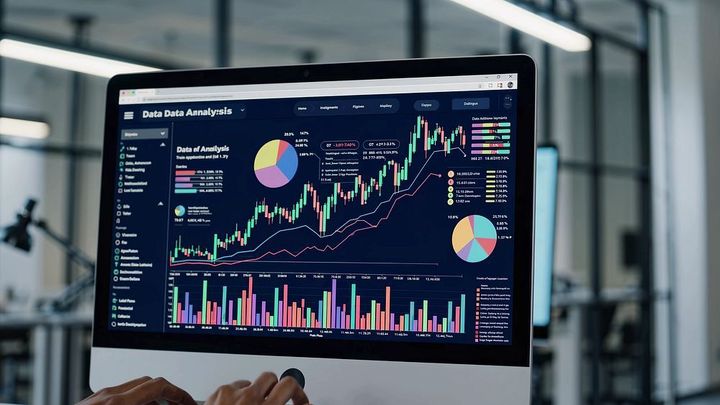
AI Forecasting Trends Guide: Basics, Methods, and Practical Insights
AI forecasting refers to the use of artificial intelligence and machine learning techniques to predict future outcomes based on historical and real-time data. It exists to improve how organizations and researchers anticipate trends, risks, and opportunities in complex environments where traditional forecasting methods struggle.
Conventional forecasting often relies on linear assumptions and limited variables. AI forecasting expands this by learning patterns from large datasets, identifying non-linear relationships, and adapting as new information becomes available. This approach is commonly applied to time series forecasting, demand prediction, financial trend analysis, climate modeling, and operational planning.
At its core, AI forecasting combines statistical foundations with computational intelligence. Instead of relying on fixed formulas, models evolve through training, validation, and continuous updates. This makes forecasting more responsive to changing conditions.
Why AI Forecasting Matters Today
AI forecasting has become increasingly important due to the scale and speed of modern data generation. Digital systems, connected devices, and online platforms produce vast amounts of information that manual or rule-based forecasting cannot efficiently process.
Key reasons this topic matters include:
-
Improved decision accuracy through data-driven insights
-
Better handling of uncertainty and variability
-
Faster scenario analysis and risk identification
-
Support for long-term planning across industries
Stakeholders affected by AI forecasting include analysts, planners, researchers, policymakers, and organizations managing complex systems. The problems it helps address range from inaccurate projections to delayed responses caused by outdated forecasting models.
By reducing human bias and processing more variables simultaneously, AI forecasting supports more consistent and transparent predictions.
Recent Developments and Emerging Trends
Over the past year, AI forecasting has continued to evolve, with several notable developments observed from mid-2025 to early-2026.
One major trend is the increased use of foundation models for forecasting tasks. Large pre-trained models are now adapted for time series data, enabling stronger performance even with limited historical records.
Another development is the integration of probabilistic forecasting, which focuses on prediction ranges instead of single outcomes. This helps users understand uncertainty and risk levels more clearly.
There has also been growth in real-time forecasting systems, where models update predictions continuously as new data streams arrive. This is particularly relevant in fast-changing environments.
Explainable AI has gained attention as well. Forecasting models are increasingly designed to provide interpretable outputs, allowing users to understand why a prediction was generated rather than accepting it as a black box.
Regulatory and Policy Considerations
AI forecasting is influenced by broader artificial intelligence governance frameworks and data protection rules. While forecasting itself is a technical process, it depends heavily on data access, quality, and ethical use.
Common policy areas affecting AI forecasting include:
-
Data privacy and anonymization requirements
-
Transparency and explainability expectations
-
Risk classification for automated decision systems
-
Accountability for model-driven outcomes
Public programs in multiple regions encourage responsible AI development by promoting fairness, auditability, and documentation of model behavior. Forecasting systems used in sensitive contexts are often expected to undergo validation, bias testing, and ongoing monitoring.
As policies continue to evolve, AI forecasting practices increasingly emphasize governance alongside technical performance.
Tools and Resources for AI Forecasting
A wide range of tools and platforms support AI forecasting workflows, from data preparation to model evaluation. These resources help users apply forecasting methods consistently and responsibly.
Common categories include:
-
Machine learning libraries for regression, neural networks, and ensemble models
-
Time series frameworks focused on seasonality and trend decomposition
-
Visualization tools for forecast comparison and confidence intervals
-
Evaluation metrics calculators for accuracy and error analysis
-
Open research datasets for benchmarking and experimentation
Below is an example table showing commonly used forecasting model types and their characteristics:
| Model Type | Data Handling | Strengths | Typical Use Cases |
|---|---|---|---|
| ARIMA-based models | Structured time series | Interpretable, stable | Seasonal trend analysis |
| Tree-based models | Mixed data types | Handles non-linearity | Demand forecasting |
| Neural networks | Large datasets | Pattern recognition | Complex time series |
| Hybrid models | Combined inputs | Balanced performance | Long-horizon forecasts |
These resources support learning, testing, and refinement without requiring deep mathematical specialization.
Common AI Forecasting Methods Explained
AI forecasting methods vary based on data complexity, prediction horizon, and interpretability needs.
Widely used approaches include:
-
Supervised learning models trained on labeled historical data
-
Deep learning architectures such as recurrent and transformer-based networks
-
Ensemble techniques that combine multiple models to improve robustness
-
Probabilistic models that estimate uncertainty ranges
Each method involves trade-offs between accuracy, transparency, and computational effort. Selecting the right approach depends on the forecasting context and available data.
Example Forecasting Output Visualization
The table below illustrates a simplified forecast comparison across time periods:
| Time Period | Actual Value | Forecast Estimate | Confidence Range |
|---|---|---|---|
| Q1 | 120 | 118 | 110–126 |
| Q2 | 135 | 138 | 130–146 |
| Q3 | 150 | 147 | 140–155 |
| Q4 | 165 | 168 | 158–178 |
Such representations help users interpret predictions without relying on complex charts.
Frequently Asked Questions
What is the difference between AI forecasting and traditional forecasting?
AI forecasting adapts to new data and captures complex patterns, while traditional forecasting relies on fixed statistical assumptions.
Is AI forecasting always more accurate?
Accuracy depends on data quality, model selection, and evaluation. AI methods can improve results but are not guaranteed to outperform simpler models in all cases.
How much data is needed for AI forecasting?
Some models require large datasets, while others perform well with limited data when combined with domain knowledge.
Can AI forecasting explain its predictions?
Many modern systems include explainability features that highlight key influencing factors.
What are common risks in AI forecasting?
Risks include biased data, overfitting, and lack of transparency if models are not properly governed.
Key Takeaways
AI forecasting represents a significant shift in how future outcomes are analyzed and understood. By combining data science, machine learning, and statistical reasoning, it enables more adaptive and scalable prediction methods.
As tools become more accessible and governance frameworks mature, AI forecasting continues to move toward greater transparency, reliability, and practical relevance. Understanding its basics, methods, and trends helps users interpret predictions responsibly and apply them with confidence in diverse decision-making contexts.