Table of Contents

Tata Tiago EV 2026 Overview: Features, Range, Battery and Charging Information

Tata Tiago EV 2026 Overview: Features, Range, Battery and Charging Information

The Tata Tiago EV 2026 is an updated electric hatchback introduced for the Indian passenger vehicle market. It is part of Tata Motors’ compact car lineup and is positioned as an electric version of the Tiago hatchback. The model is designed for users who want to understand electric mobility in a smaller vehicle format, especially for daily travel, city routes and regular short-distance movement.

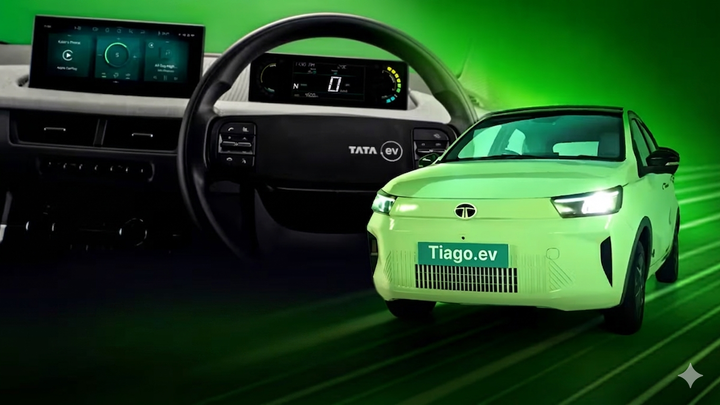
Tata Motors launched the next-generation Tiago and Tiago.ev in India on May 28, 2026. The updated Tiago.ev starts at an introductory ex-showroom amount of ₹6.99 lakh, according to launch reports. The model is available with two battery pack options and multiple variants, including Smart, Pure+ and Creative+.

The Tiago EV exists because the Indian market has a growing need for compact electric vehicles that are easier to drive in traffic, simpler to park and practical for daily use. A hatchback EV is different from larger electric SUVs because its main focus is urban mobility, predictable travel distance and lower mechanical complexity.

The 2026 update includes revised exterior styling, updated interior layout, new technology features, added safety equipment, regenerative braking and reported battery warranty changes. For general readers, the most important areas to understand are battery capacity, claimed range, charging method, safety equipment, warranty terms and local charging infrastructure.

Why Tata Tiago EV 2026 Matters

Electric vehicles are becoming more relevant in India due to rising fuel concerns, urban pollution, public charging expansion and wider interest in cleaner mobility. A compact electric hatchback like the Tata Tiago EV affects several groups of users.

It may be relevant for:

  • Daily city commuters
  • Families needing a compact automatic hatchback
  • Users with access to home charging
  • People comparing petrol, CNG and electric mobility
  • Fleet users studying hatchback EVs
  • First-time EV users learning about battery and charging behavior

The main value of a compact EV is not only in the vehicle itself but also in how it fits into everyday travel. For users who drive predictable distances each day, an electric hatchback can be easier to plan than a vehicle used mainly for long highway travel.

A key topic is real-world range. Claimed range figures are measured under standard test conditions. Actual range can change due to traffic, air-conditioning use, driving speed, road gradient, passenger load, tyre pressure and battery condition. This is why users should treat claimed range as a reference point rather than a fixed number.

FactorWhy It Matters
Battery packDetermines claimed range and charging frequency
Charging accessAffects daily usability
Vehicle insuranceImportant for battery, motor and electronics coverage
Safety featuresHelps evaluate protection systems
Warranty termsImportant for long-term battery understanding
Public chargingUseful during longer routes

A compact EV also needs careful charging planning. Users with private parking and a safe electrical setup may find home charging more convenient. Users without fixed parking may depend more on public EV charging stations.

Recent Updates

The 2026 Tata Tiago EV has received several changes compared with the earlier version. The most important update is the May 28, 2026 launch of the next-generation Tiago and Tiago.ev in India. Launch reports mention refreshed styling, updated technology features and multiple powertrain options under the Tiago family, including petrol, CNG and electric.

The updated Tiago EV is listed with an introductory ex-showroom amount starting at ₹6.99 lakh. Reported variant details are as follows:

VariantBattery PackEx-Showroom Amount
Smart19 kWh₹6.99 lakh
Pure+19 kWh₹8.49 lakh
Pure+24 kWh₹9.49 lakh
Creative+24 kWh₹9.99 lakh

Some reports also mention a Battery-as-a-Service structure starting from ₹4.69 lakh plus ₹2.6 per kilometre. Since battery subscription terms can involve usage conditions, eligibility rules and documentation, readers should verify current terms from official Tata Motors channels before relying on this structure.

The updated model also brings design and cabin changes. The exterior includes a revised front section, LED lighting elements, a closed-off grille design, updated bumpers and revised wheels. The rear section includes connected LED tail-lamps and an updated bumper.

Reported colour options include:

  • Dehradun Dew
  • Sobo Surge
  • Pangong Pulse
  • Matheran Monsoon
  • Pure Grey
  • Pristine White

Colour availability may differ by variant and region.

Exterior and Interior Overview

The Tata Tiago EV 2026 follows a compact hatchback design. The front section has been updated with sleeker lighting elements, LED daytime running lamps and a body-coloured closed grille. This design approach is common in electric vehicles because they do not require the same front air intake layout as combustion-engine cars.

The side profile remains compact and practical. Depending on the variant, the car may include revised 15-inch wheels, a dual-tone roof, shark-fin antenna and chrome-finished door handles. These elements are mainly visual and may vary across variants.

Inside, the Tiago EV 2026 gets a redesigned dual-tone dashboard. The cabin includes a 10.25-inch touchscreen infotainment system and a part-digital TFT instrument cluster. Reports also mention that Tata has updated the vehicle’s electrical and electronics architecture to support newer onboard functions.

Reported cabin and convenience features include:

  • 10.25-inch touchscreen infotainment system
  • Wireless Android Auto and Apple CarPlay
  • Connected car technology with over 40 functions
  • Automatic climate control
  • Cruise control
  • Rear AC vents
  • Cooled glovebox
  • Auto-fold outside rear-view mirrors
  • Height-adjustable driver seat
  • 4-speaker audio system
  • Rotary drive selector

These features should be checked variant-wise because not every feature may be available across all versions.

Battery, Range and Performance

The 2026 Tata Tiago EV continues with two battery pack options. The smaller pack is around 19.2 kWh, while the larger pack is 24 kWh. The smaller battery is aimed more at regular city use, while the larger battery provides a higher claimed range.

Battery PackPowerTorqueClaimed MIDC Range
19.2 kWh62 hp110 NmAround 226 km
24 kWh75 hp114 NmAround 285 km

The 19.2 kWh version is reported with a claimed MIDC range of around 226 km. The 24 kWh version is reported with a claimed MIDC range of around 285 km. The larger battery version is also reported to complete 0–60 km/h in around 5.7 seconds.

The updated Tiago EV includes four levels of regenerative braking. Regenerative braking helps recover some energy when the vehicle slows down. The actual benefit depends on traffic conditions, driving behavior and selected regen level.

A simple range interpretation table can help general readers:

Usage PatternRange Impact
Smooth city drivingBetter range consistency
Heavy traffic with ACModerate range reduction
High-speed highway drivingFaster battery use
Frequent hard accelerationLower efficiency
Correct tyre pressureBetter efficiency
Higher passenger loadSlight range reduction

Charging Information

Charging is one of the most important parts of EV understanding. The Tata Tiago EV supports multiple charging methods, including AC charging and DC fast charging where compatible infrastructure is available.

Charging TypeTypical Use
Standard AC chargingRegular home or workplace charging
Faster AC wallbox chargingMore practical overnight charging
DC fast chargingUseful for quicker top-ups during longer routes

Charging time depends on charger capacity, battery size, electricity supply, temperature, battery state and charging equipment. Users should ensure that home charging is installed with proper wiring, earthing and compatible equipment.

Public EV charging stations are also becoming more important in India. The PM E-DRIVE scheme includes an outlay of ₹2,000 crore for public EV charging infrastructure and aims to support charging points for electric four-wheelers, electric buses, two-wheelers and three-wheelers.

For compact EV users, public charging is useful but home charging remains an important convenience factor. Before depending on public charging, users should check charger location, connector type, payment method, operating status and parking access.

Safety and Warranty Information

Safety is a major part of evaluating any passenger vehicle. The 2026 Tata Tiago EV is reported to include 6 airbags as standard. Other reported safety features include electronic stability-related systems, traction support and braking assistance.

Reported safety features include:

  • 6 airbags
  • Electronic Stability Program
  • Traction control
  • Hill-hold assist
  • Tyre Pressure Monitoring System
  • ABS with EBD
  • Torque vectoring by braking
  • Strengthened body structure

Select variants may also include:

  • 360-degree camera
  • Blind-view monitor
  • Automatic headlamps
  • Rain-sensing wipers
  • Follow-me-home headlamps

For vehicle safety evaluation, users may also refer to Bharat NCAP where applicable. Bharat NCAP evaluates eligible passenger vehicles for adult occupant protection, child occupant protection and safety assist technologies.

Battery warranty is another important part of EV evaluation. Reports mention that the 24 kWh version may include lifetime unlimited-kilometre high-voltage battery warranty for the first registered owner. The smaller 19.2 kWh version is reported with an 8-year or 1.6 lakh km battery warranty.

Warranty details can include conditions, exclusions, ownership clauses and documentation requirements. Users should review the latest official warranty document before making any final assessment.

Laws, Policies and EV Programs in India

Electric vehicles in India are affected by government programs, vehicle safety standards, state-level registration rules, charging infrastructure policy and insurance requirements.

The PM E-DRIVE scheme was notified on September 29, 2024 and implemented from October 1, 2024. The scheme supports electric mobility through incentives and infrastructure development across several vehicle categories.

For a hatchback EV such as the Tata Tiago EV, the most relevant policy areas include:

  • Public EV charging station development
  • State-level registration and road tax rules
  • Battery and electrical safety standards
  • Vehicle insurance documentation
  • Safety rating frameworks
  • Local transport and parking rules

State-level rules can vary. Some states may have different registration charges, road tax structures or EV-related programs. Readers should check the latest state transport department information for local rules.

Insurance is also important because electric vehicles include battery packs, electric motors, high-voltage components and software-based systems. While choosing vehicle insurance, users should understand battery coverage, depreciation terms, roadside assistance, electrical component coverage and claim conditions.

Tools and Resources

Several tools and resources can help users understand the Tata Tiago EV 2026 more clearly.

  • Tata Motors EV website for specifications, variant information and warranty documents
  • Bharat NCAP website for safety rating information
  • PM E-DRIVE portal for national EV program details
  • EV charging apps for locating nearby charging stations
  • Vehicle insurance comparison platforms for policy review
  • Electricity bill calculators for estimating charging electricity use
  • Route planning apps for longer-distance travel planning
  • Battery warranty checklist for understanding coverage terms
  • Home charging checklist for parking, wiring and earthing review

A simple EV planning checklist:

Checklist ItemWhy It Helps
Daily travel distanceHelps estimate charging frequency
Parking accessImportant for home charging
Electricity connectionSupports safe charging setup
Nearby charging stationsUseful for backup planning
Insurance coverageHelps understand protection terms
Warranty documentClarifies battery coverage

Frequently Asked Questions

What is the Tata Tiago EV 2026?
The Tata Tiago EV 2026 is an updated compact electric hatchback for the Indian market. It is designed for city-focused electric mobility and uses a battery-powered drivetrain.

What battery options are available?
The model is reported with two battery pack options: around 19.2 kWh and 24 kWh. The smaller battery is linked with a claimed MIDC range of around 226 km, while the larger battery is linked with a claimed MIDC range of around 285 km.

Does the Tata Tiago EV 2026 support fast charging?
The Tiago EV supports multiple charging methods, including AC charging and DC fast charging where compatible infrastructure is available. Charging time depends on battery size, charger type and charging conditions.

What safety features are reported?
Reported safety features include 6 airbags, Electronic Stability Program, traction control, hill-hold assist, TPMS, ABS with EBD and torque vectoring by braking. Select variants may also include a 360-degree camera and blind-view monitor.

Is claimed range the same as real-world range?
No. Claimed range is measured under standard test conditions. Real-world range can change due to traffic, driving speed, air-conditioning use, passenger load, road condition, tyre pressure and battery condition.

Conclusion

The Tata Tiago EV 2026 is an updated compact electric hatchback aimed at India’s growing electric mobility market. It brings revised styling, updated cabin features, two battery options, connected technology, additional safety features and multiple charging possibilities.

The most important points for readers are battery capacity, claimed MIDC range, charging access, warranty terms, vehicle insurance coverage, safety features and variant-wise equipment. Public charging expansion under India’s EV programs may also improve confidence over time, although home charging access remains a key practical factor for many users.

The Tata Tiago EV 2026 should be evaluated using official specifications, warranty documents, local registration rules and actual charging access. A neutral review of these details can help users understand whether a compact electric hatchback fits their daily mobility pattern.


author-image

Saurabh Chawla

We are a performance-driven media buying team focused on scaling brands through smart, data-backed advertising strategies

May 28, 2026 . 8 min read