Learn CRM Platforms Fast: Informative Overview, Explanation, Tips, and Smart Usage Advice
Customer Relationship Management (CRM) platforms are digital systems designed to organize interactions between an organization and the people it serves. They emerged as businesses shifted from paper records and scattered spreadsheets toward centralized, data-driven communication.
At their core, CRM platforms collect and structure information such as contact details, communication history, preferences, and activity timelines. This structured data enables consistent communication, coordinated teamwork, and informed decision-making.
Early CRM tools focused mainly on contact storage. Modern platforms integrate analytics, automation, and multi-channel communication into a single environment. Examples include Salesforce, HubSpot CRM, Microsoft Dynamics 365, and Zoho CRM.
CRM platforms exist because organizations increasingly depend on structured data to manage relationships at scale. As communication channels expanded to email, messaging apps, websites, and social platforms, a unified system became necessary to maintain continuity and accuracy.
Importance — Why CRM Platforms Matter Today
CRM platforms influence a wide range of sectors including retail, healthcare, education, financial services, and public administration. Their importance stems from three major shifts: digital communication growth, data-driven decision making, and rising expectations for personalized interaction.
Organizations use CRM platforms to address common challenges:
• fragmented customer data
• inconsistent communication across teams
• difficulty tracking interactions over time
• limited visibility into performance patterns
• manual processes that slow response times
A centralized CRM environment improves operational clarity. Teams gain access to the same information, which reduces duplication and improves coordination.
The impact extends beyond large organizations. Small teams benefit from structured workflows, while large enterprises rely on CRM platforms to manage millions of records securely.
The table below shows how CRM capabilities align with organizational needs.
| Organizational Need | CRM Capability | Practical Outcome |
|---|---|---|
| Data organization | Central database | Consistent records |
| Communication tracking | Interaction timeline | Context-aware responses |
| Performance analysis | Reporting dashboards | Evidence-based planning |
| Workflow efficiency | Automation rules | Reduced manual effort |
| Collaboration | Shared access | Coordinated teamwork |
The importance of CRM platforms has grown alongside privacy awareness and digital transformation. As data volume increases, structured management becomes essential rather than optional.
Recent Updates — Trends and Developments in 2025
Over the past year, CRM platforms have continued evolving toward intelligent automation and deeper integration with communication channels.
In early 2025, several major vendors expanded built-in artificial intelligence features that assist with data organization, predictive insights, and automated summaries of interactions. These updates aim to reduce manual data entry and improve analysis accuracy.
Another trend involves composable architecture. Platforms increasingly allow organizations to assemble customized workflows using modular components rather than relying on rigid structures.
Cross-platform data synchronization has also improved. Modern CRM systems now integrate more seamlessly with analytics platforms, communication tools, and enterprise resource planning systems.
A simplified trend comparison is shown below.
| Trend | Direction in 2025 | Practical Effect |
|---|---|---|
| AI-assisted data analysis | Expanding rapidly | Faster insight generation |
| Automation workflows | Becoming standard | Streamlined operations |
| Data privacy controls | Increasingly granular | Stronger compliance support |
| Cloud-based access | Nearly universal | Remote accessibility |
| Integration ecosystems | Broadening | Unified digital environment |
Another notable development is the growing emphasis on ethical data usage. Vendors now provide clearer data governance tools to support regulatory alignment and responsible data handling.
Laws and Policies — Regulatory Environment
CRM platforms operate within legal frameworks that govern data collection, storage, and usage. Regulations vary by country, but most share common principles: transparency, data protection, and user control.
In the European Union, privacy laws require organizations to document how personal data is processed and to provide individuals with access and correction rights.
In the United States, several state-level data protection laws expanded between 2023 and 2025, strengthening consumer rights related to data visibility and deletion.
Key compliance considerations for CRM usage include:
• obtaining valid consent for data collection
• maintaining accurate records
• implementing security safeguards
• enabling data access and correction
• documenting data processing purposes
Government programs in many countries also encourage digital record-keeping standards, especially in healthcare and financial sectors. These programs often define minimum security practices and reporting requirements.
Compliance features built into CRM platforms typically include:
• access control management
• audit trails
• data retention settings
• encryption support
• activity monitoring
Organizations must configure these features according to applicable legal requirements in their jurisdiction.
Tools and Resources — Practical Platforms and Utilities
A wide range of tools support CRM implementation and usage. These resources help with planning, data organization, analytics, and workflow design.
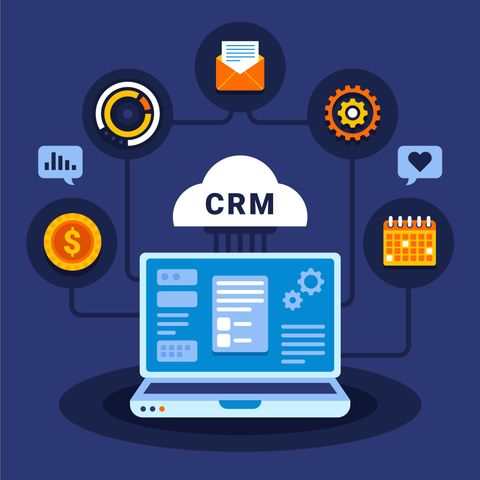
Common CRM platform capabilities include:
• contact management
• communication tracking
• reporting dashboards
• workflow automation
• integration connectors
Examples of widely recognized CRM platforms:
• Salesforce — enterprise-scale platform with extensive customization
• HubSpot CRM — integrated marketing and communication tracking
• Microsoft Dynamics 365 — ecosystem integration with productivity tools
• Zoho CRM — modular structure for varied organizational sizes
Supporting resources often used alongside CRM platforms:
• data visualization dashboards
• workflow mapping templates
• customer journey mapping frameworks
• data governance checklists
• integration documentation portals
A simplified CRM data flow model is illustrated below.
Interaction Source → Data Capture → Central Database → Analysis → Action → Feedback Loop
This cycle highlights how CRM platforms convert raw interactions into structured insight and operational responses.
FAQs — Common Questions About CRM Platforms
What types of data are typically stored in a CRM platform?
CRM systems usually store contact details, interaction history, communication preferences, activity records, and segmentation categories. Some platforms also include document storage and analytics outputs.
Are CRM platforms only for large organizations?
No. CRM platforms are used by organizations of many sizes. The core concept—structured relationship data management—applies across sectors and scales.
How do CRM platforms improve decision-making?
They provide organized data, historical interaction records, and performance metrics. This information supports analysis of patterns and outcomes over time.
Do CRM platforms require technical expertise to operate?
Modern platforms emphasize usability with graphical interfaces and configurable workflows. However, advanced customization may require technical knowledge.
How do CRM platforms support compliance?
They include features such as access controls, audit logs, and data retention settings that help organizations align with privacy regulations.
Conclusion
CRM platforms have evolved from simple contact databases into comprehensive relationship management systems. Their development reflects broader changes in digital communication, data governance, and organizational coordination.
Today, CRM platforms function as central hubs for interaction data, analytics, and workflow management. They help organizations maintain consistent communication, interpret patterns, and operate within regulatory frameworks.
Recent developments emphasize automation, artificial intelligence integration, and data governance capabilities. These changes signal a shift toward smarter and more responsible data management practices.
Understanding CRM platforms involves more than learning software features. It requires awareness of data organization principles, regulatory responsibilities, and structured decision-making processes.
Disclaimer
This article provides general informational content about CRM platforms for educational purposes. It does not constitute legal, technical, or regulatory guidance. Readers should consult qualified professionals and official regulatory sources for requirements applicable to their jurisdiction.