Learn About Jaw Crushers: Explanation, Guide, Insights, Facts, Knowledge, Help, and Resources
Jaw crushers are mechanical machines designed to reduce large rocks, minerals, and construction materials into smaller pieces. They are among the most commonly used crushing machines in mining, aggregate production, quarrying, recycling, and infrastructure development.
The basic design includes two heavy-duty plates known as jaws. One jaw remains fixed while the other moves back and forth. As material enters the crushing chamber, pressure generated between the jaws breaks the material into smaller fragments.
The need for jaw crushers emerged from industries that required efficient methods of processing raw materials. Large stones and mineral deposits are difficult to transport, store, and use directly. Crushing these materials into manageable sizes improves handling and supports various industrial processes.
Today, jaw crushers are considered a foundational component of many material processing systems because they often perform the first stage of size reduction.
Common Applications of Jaw Crushers
Jaw crushers are frequently used in:
- Mining operations
- Aggregate production facilities
- Quarry sites
- Construction material processing
- Recycling of concrete and demolition waste
- Infrastructure development projects
- Road and railway construction
Importance of Jaw Crushers in Modern Industry
Modern infrastructure projects depend heavily on processed aggregates and minerals. Jaw crushers play an important role in preparing these materials for further use.
Their significance extends across several sectors.
| Industry | Primary Use |
|---|---|
| Mining | Breaking ore and mineral deposits |
| Construction | Producing aggregate materials |
| Recycling | Processing concrete and masonry waste |
| Infrastructure | Supporting road and railway projects |
| Manufacturing | Preparing raw materials for production |
Jaw crushers help solve several operational challenges:
- Reducing oversized material into manageable sizes
- Improving transportation efficiency
- Supporting downstream processing equipment
- Enhancing material consistency
- Increasing productivity in extraction operations
As urban development and infrastructure expansion continue globally, the demand for effective material processing systems remains important.
How a Jaw Crusher Works
The working principle is relatively simple.
Material enters the top opening of the crusher. The movable jaw moves toward the fixed jaw, compressing the material. This pressure causes the material to fracture. The crushed material then exits through the bottom opening, known as the discharge gap.
The process repeats continuously until the material reaches the desired size.
A simplified process flow is shown below:
| Processing Stage | Action |
|---|---|
| Material Feed | Large rocks enter crusher |
| Compression | Jaws apply force |
| Fracturing | Material breaks apart |
| Size Reduction | Particles become smaller |
| Discharge | Crushed material exits |
Types of Jaw Crushers
Different applications may require different jaw crusher configurations.
Single-Toggle Jaw Crushers
These use one toggle plate and are known for efficient operation and relatively simple mechanical design.
Double-Toggle Jaw Crushers
These use two toggle plates and are often selected for handling particularly hard materials.
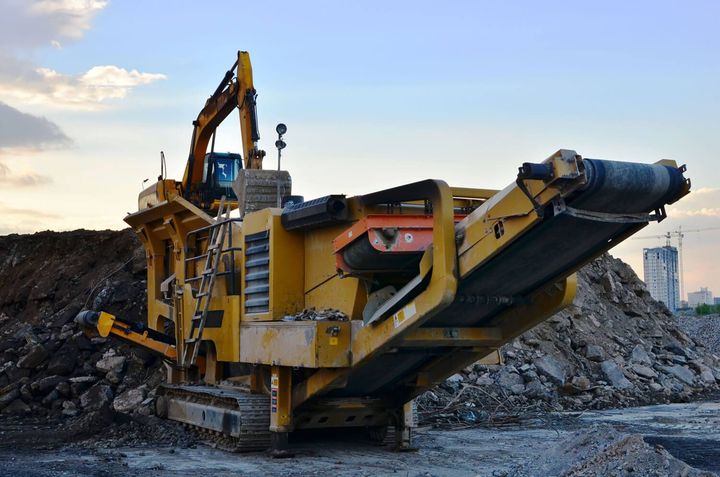
Mobile Jaw Crushers
Mounted on tracks or wheels, these units can be relocated to different work sites.
Stationary Jaw Crushers
Installed permanently at processing facilities, these systems often support large-scale production operations.
Recent Updates and Industry Trends
The jaw crusher industry has experienced several notable developments during 2025 and 2026.
Manufacturers have increasingly integrated digital monitoring systems into crushing equipment. These technologies help operators track machine performance, maintenance schedules, and operational efficiency in real time.
Another important trend is the growing focus on energy efficiency. Many newly introduced crushing systems emphasize reduced energy consumption while maintaining processing performance.
Automation also continues to expand. Modern control systems can automatically adjust operational settings based on material characteristics and production requirements.
Recent industry discussions throughout 2025 highlighted:
- Increased adoption of predictive maintenance systems
- Greater use of sensor-based monitoring
- Expansion of mobile crushing technologies
- Improved dust suppression solutions
- Enhanced operator safety features
- Development of environmentally focused processing methods
Industry Trends Overview
| Trend | Industry Impact |
|---|---|
| Automation | Improved operational consistency |
| Digital Monitoring | Better equipment tracking |
| Predictive Maintenance | Reduced downtime |
| Energy Efficiency | Lower resource consumption |
| Mobile Equipment | Greater flexibility |
| Safety Enhancements | Improved workplace protection |
Jaw Crusher Adoption Trend
Technology Adoption Growth

Digital Monitoring      ██████████
Automation Systems      █████████
Predictive Maintenance  ████████
Mobile Crushing Units   ███████
Safety Technologies     █████████
The graph illustrates general industry adoption trends observed across modern crushing operations.
Laws, Regulations, and Policy Considerations
Jaw crushers operate within broader industrial, environmental, and workplace safety frameworks.
Requirements often vary depending on location and industry sector. However, several common regulatory areas influence crusher operations.
Environmental Regulations
Many jurisdictions require facilities to manage:
- Dust emissions
- Noise levels
- Waste materials
- Air quality standards
- Water management practices
Workplace Safety Standards
Industrial safety authorities often establish rules related to:
- Equipment guarding
- Lockout and tagout procedures
- Worker training
- Personal protective equipment
- Emergency response planning
Mining and Resource Management Policies
Mining regulators may require compliance with extraction permits, environmental assessments, and operational reporting obligations.
Infrastructure and Construction Standards
Projects involving crushed aggregates frequently follow engineering specifications that define material quality, particle size distribution, and performance requirements.
Organizations operating jaw crushers typically maintain compliance programs to address these legal and regulatory expectations.
Key Components Found in Jaw Crushers
Understanding major components can help readers better understand machine operation.
Fixed Jaw Plate
Provides a stationary surface against which material is crushed.
Movable Jaw Plate
Moves toward and away from the fixed jaw to create crushing action.
Flywheel
Stores rotational energy and helps maintain smooth operation.
Toggle Plate
Transfers mechanical force and supports movement within the crusher.
Frame
Provides structural support for the entire machine.
Discharge Opening
Controls the final size of processed material.
Tools and Resources for Learning About Jaw Crushers
Several educational and technical resources can help individuals better understand crushing equipment and material processing.
Engineering Software
- CAD design software
- Material flow simulation tools
- Process modeling platforms
Maintenance Tracking Applications
- Equipment monitoring systems
- Asset management platforms
- Inspection scheduling tools
Industry Publications
- Mining engineering journals
- Construction equipment magazines
- Aggregate industry reports
- Technical research papers
Training Resources
- Equipment operation manuals
- Safety training materials
- Technical webinars
- Engineering certification programs
Useful Calculators
- Material reduction ratio calculators
- Production capacity estimators
- Equipment utilization calculators
- Maintenance planning tools
Educational Topics Worth Exploring
Individuals interested in jaw crushers often benefit from learning about:
- Aggregate processing
- Mineral extraction systems
- Material science
- Industrial automation
- Mechanical engineering
- Equipment maintenance strategies
- Workplace safety management
- Sustainable mining practices
Frequently Asked Questions
What is a jaw crusher used for?
A jaw crusher is used to reduce large rocks, minerals, concrete, and other materials into smaller sizes suitable for processing, transportation, or industrial applications.
How does a jaw crusher break material?
The machine uses compressive force between a fixed jaw and a moving jaw. The pressure generated between these surfaces causes the material to fracture and break apart.
What industries commonly use jaw crushers?
Mining, quarrying, construction, recycling, infrastructure development, and aggregate production industries commonly use jaw crushers.
What is the difference between mobile and stationary jaw crushers?
Mobile jaw crushers can be transported between locations, while stationary jaw crushers remain permanently installed at a processing facility.
Why are modern jaw crushers incorporating automation?
Automation helps improve operational efficiency, monitor equipment performance, support predictive maintenance, enhance safety, and reduce unplanned downtime.
Are jaw crushers affected by environmental regulations?
Yes. Operators often need to comply with regulations related to dust control, noise management, workplace safety, environmental protection, and industrial operations.
Conclusion
Jaw crushers remain one of the most important machines in material processing industries. Their ability to reduce large rocks and minerals into manageable sizes supports mining, construction, recycling, and infrastructure development activities worldwide.
Advancements in automation, digital monitoring, predictive maintenance, and energy-efficient technologies continue to shape the future of crushing equipment. At the same time, environmental regulations and workplace safety standards influence how these machines are operated and maintained.
Understanding how jaw crushers function, where they are used, and which resources are available for further learning can help readers develop a stronger understanding of modern industrial material processing systems. Whether viewed from an engineering, operational, or educational perspective, jaw crushers continue to play a critical role in transforming raw materials into usable resources for countless industries.