Labeling Machines Guide: Automation, Accuracy, and Efficiency
Labeling is an important part of modern packaging and product identification. A label can communicate information such as product name, quantity, ingredients, batch details, manufacturing information, usage instructions, barcodes, and other required declarations. As production volumes have increased, many industries have moved from manual labeling toward automated and semi-automated systems.
A labeling machine is equipment designed to apply labels to products, containers, packages, cartons, bottles, jars, or other surfaces. Depending on the machine design, labels may be applied to one side, multiple sides, the top, bottom, or around the entire circumference of a container.
Modern labeling equipment combines mechanical movement, sensors, control systems, conveyors, and labeling heads. These components work together to position products and apply labels with consistent placement.
What Are Labeling Machines?
Labeling machines are packaging machines that automate the process of placing adhesive or pressure-sensitive labels onto products or packaging materials. They can be configured for different container shapes, label materials, production speeds, and packaging layouts.
Common types include:
- Automatic labeling machines
- Semi-automatic labeling machines
- Bottle labeling machines
- Wrap-around labeling machines
- Front-and-back labeling machines
- Top labeling machines
- Side labeling machines
- Carton labeling machines
- Vial and container labeling machines
- Print-and-apply labeling systems
The appropriate machine depends on the product design, packaging material, label dimensions, required accuracy, and production workflow.
How Labeling Machines Work
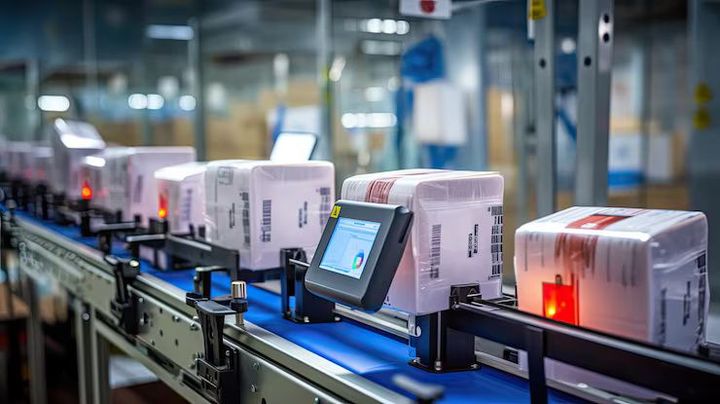
A typical automated labeling process begins when products enter the machine through a conveyor or feeding mechanism. Sensors detect the product and communicate its position to the control system.
The machine then advances a label from a roll or dispensing unit. A labeling head places the label onto the selected surface while rollers, belts, or other mechanisms help maintain contact.
A basic process usually includes:
- Product feeding
- Product detection
- Label positioning
- Label dispensing
- Label application
- Product stabilization
- Inspection or verification
- Product transfer
More advanced systems can integrate printing, barcode reading, vision inspection, and production data management.
Why Labeling Machines Matter Today
Modern manufacturing depends on consistency. When thousands of packages move through a production line, manually applying every label can create differences in position, alignment, and application pressure.
Automated labeling helps address these challenges by providing repeatable application. It can also integrate with other packaging equipment, creating a smoother production workflow.
Labeling accuracy is particularly important where packaging contains regulatory information. Incorrect placement, missing information, or unreadable codes can create quality and compliance concerns.
The technology affects many industries, including:
- Food and beverage manufacturing
- Pharmaceutical packaging
- Cosmetics and personal care
- Chemical products
- Household products
- Consumer goods
- Electronics
- Logistics and warehousing
- Agricultural products
For these industries, labeling is not simply a visual activity. It can support identification, traceability, inventory management, product information, and quality control.
Key Benefits of Automated Labeling
Automation can improve several aspects of packaging operations when properly designed and maintained.
Consistent Label Placement:
Automated systems can maintain repeatable label positioning across large production batches.
Improved Production Efficiency:
Machines can continuously process products within defined operating parameters, reducing dependence on manual application.
Better Product Identification:
Labels can contain barcodes, QR codes, batch information, dates, and other identifiers that support tracking.
Reduced Manual Variation:
Human operators may naturally place labels at slightly different positions. Automated equipment helps minimize such variation.
Integration With Production Lines:
Labeling equipment can connect with conveyors, filling machines, packaging machines, printers, scanners, and inspection systems.
Quality Monitoring:
Sensors and vision systems can detect missing, misplaced, or incorrectly positioned labels in suitable configurations.
Types of Labeling Machines
Different packaging applications require different machine designs.
Pressure-Sensitive Labeling Machines:
These machines apply labels with an adhesive surface. They are widely used for bottles, jars, containers, cartons, and other packages.
Wrap-Around Labeling Machines:
These systems apply labels around cylindrical or similarly shaped containers. They are commonly used where the label needs to cover a large portion of the container circumference.
Front-and-Back Labeling Machines:
These machines apply separate labels to two designated surfaces. They are useful for containers requiring product information on both sides.
Top Labeling Machines:
These systems apply labels to the upper surface of products, trays, boxes, or containers.
Print-and-Apply Systems:
These systems combine label printing and application. They can be useful where variable information, such as batch codes or shipment identifiers, must be generated during production.
Choosing the Right Labeling Technology
Selecting labeling equipment requires consideration of the entire packaging process rather than only the machine itself.
Important factors include:
- Product dimensions and shape
- Container material
- Label size and material
- Label adhesive characteristics
- Required application position
- Production volume
- Conveyor configuration
- Product spacing
- Inspection requirements
- Integration with existing equipment
- Changeover requirements
- Operator controls
- Maintenance requirements
A clear understanding of these factors helps manufacturers select equipment that matches their production environment.
Recent Developments and Trends
The labeling and packaging sector has continued to evolve through automation, digital printing, data integration, and inspection technologies.
In March 2026, industry reporting described 2025 as a significant period of transformation for India's label and flexible packaging sector, with stronger integration between printing and packaging technologies.
Another important development is the increasing use of digital identification. Depending on the applicable product requirements, barcode and QR-based representations can support identification and traceability. BIS guidance has recognized digital representations such as barcodes and QR codes for certain labeling and marking situations where permitted by product-specific requirements.
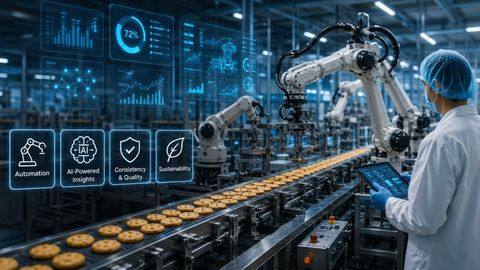
Automation is also becoming more connected. Modern systems may use programmable controllers, sensors, machine vision, digital displays, and production data to monitor packaging processes.
Predictive maintenance concepts are another emerging area. By monitoring machine conditions, manufacturers can identify unusual operating patterns before they develop into larger production interruptions.
Laws and Policies in India
In India, labeling requirements can depend on the product category and intended market. The Legal Metrology (Packaged Commodities) Rules, 2011 establish requirements for declarations on many pre-packaged commodities.
The Department of Consumer Affairs has identified information such as manufacturer, packer or importer details, country of origin, generic name, net quantity, manufacturing information, maximum retail price, unit sale price, relevant date information, and consumer-related details among declarations covered by the rules.
In February 2025, the Department of Consumer Affairs published a draft amendment concerning Legal Metrology (Packaged Commodities) Rules for stakeholder comments, demonstrating continued regulatory attention to packaged-product labeling.
BIS requirements may also apply to particular products and machinery. BIS currently lists machinery for filling, closing, sealing, labeling bottles, packing, and wrapping within its Scheme X machinery categories. Applicability depends on the relevant requirements and product classification.
Manufacturers should therefore verify the latest applicable Indian Standards, Legal Metrology requirements, and sector-specific rules before finalizing a labeling system.
Tools and Resources for Labeling Operations
Several general tools can support labeling planning and quality management.
Label Design Software:
Used to prepare layouts, barcodes, product information, and variable data.
Barcode Verification Tools:
Used to check barcode readability and printing quality.
QR Code Generators:
Useful for creating machine-readable product identification where appropriate.
Measurement Tools:
Digital calipers, rulers, and alignment guides can help verify label dimensions and placement.
Vision Inspection Systems:
Cameras and software can inspect label position, presence, orientation, and selected printed information.
Production Monitoring Dashboards:
Digital dashboards can help track production quantities, machine status, error events, and inspection results.
Compliance Checklists:
Templates can help packaging teams verify required declarations before labels enter production.
BIS also provides a “Know Your Standard” platform that allows users to search Indian Standards and related information by standard number or keyword. The platform was updated in May 2026.
Maintenance and Quality Considerations
Regular maintenance is essential for stable labeling performance. Dust, adhesive buildup, worn rollers, incorrect sensor positioning, and improper label tension can affect application accuracy.
A practical maintenance routine may include:
- Cleaning sensors and label-contact components
- Checking conveyor alignment
- Inspecting rollers and belts
- Verifying sensor operation
- Checking label tension
- Reviewing application accuracy
- Inspecting electrical connections
- Recording recurring faults
- Checking emergency safety systems
Operators should also receive appropriate training on machine controls, safe operation, product changeovers, and routine inspections.
Frequently Asked Questions
What is a labeling machine?
A labeling machine is packaging equipment that automatically or semi-automatically applies labels to products, containers, cartons, bottles, or other packaging surfaces.
Which industries use labeling machines?
Labeling machines are used across food and beverage, pharmaceutical, cosmetics, chemical, household, electronics, logistics, agricultural, and consumer-product industries.
Can labeling machines apply different label formats?
Yes. Depending on the machine design, systems can apply front, back, top, side, wrap-around, or other label formats. The machine must b