Industrial Paper Bag Making Machines Explained: Process, Types & Industry Uses
Industrial paper bag making machines are automated systems designed to produce paper bags in large quantities with consistent shape, size, and quality. These machines exist to support the growing demand for sustainable packaging alternatives to plastic materials.
The concept emerged as industries began shifting toward eco-conscious packaging solutions. Paper bags became widely accepted due to their biodegradability and recyclability. To meet large-scale demand, manual production methods were replaced with automated machinery capable of producing thousands of bags per hour.
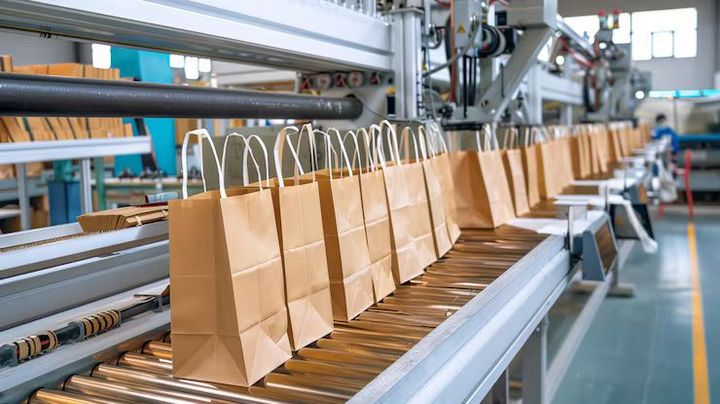
These machines typically use kraft paper or recycled paper rolls as raw material. The process includes feeding, folding, gluing, cutting, shaping, and finishing the paper into ready-to-use bags. The technology behind these machines continues to evolve, focusing on precision, speed, and material efficiency.
Importance
Industrial paper bag making machines play a significant role in modern packaging systems. They support industries such as food packaging, retail, pharmaceuticals, textiles, and agriculture.
Their importance is closely linked to environmental concerns. As awareness about plastic pollution increases, businesses are shifting toward paper-based packaging solutions. These machines help meet that demand efficiently.
Key reasons why they matter today:
- Support large-scale sustainable packaging production
- Reduce dependency on non-biodegradable materials
- Improve production speed and consistency
- Help standardize packaging quality across industries
- Enable recycling-based manufacturing systems
They also help reduce manual labor dependency, allowing industries to focus on automation and process optimization. This leads to improved production planning and reduced operational inefficiencies.
Recent Updates
In the past year, industrial packaging machinery has seen notable improvements driven by sustainability goals and automation technologies.
Some key trends include:
Increased Automation Integration
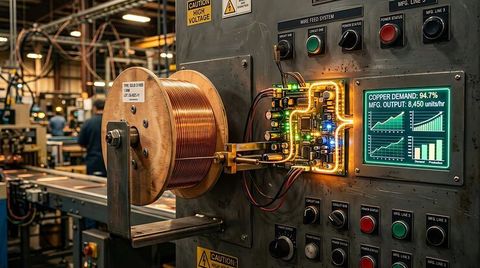
Modern machines now include smart sensors and digital control panels that monitor paper alignment, glue application, and cutting precision. This reduces production errors and material waste.
Energy-Efficient Systems
Manufacturers are focusing on reducing electricity consumption. New models introduced around late 2025 emphasize low-energy motors and optimized mechanical movement systems.
Improved Material Compatibility
Machines are now compatible with a wider range of paper grades, including recycled and reinforced kraft paper, improving flexibility for different industries.
Digital Monitoring Systems
Remote monitoring features introduced in 2025 allow operators to track machine performance, maintenance needs, and production output in real time.
Sustainability Trends
There is a growing shift toward zero-waste production systems where scrap paper is minimized and reused within the manufacturing cycle.
These updates reflect a broader global trend toward eco-friendly industrial production methods.
Laws or Policies
Industrial paper bag production is influenced by environmental and manufacturing regulations that promote sustainable packaging practices.
In many countries, including India, regulatory frameworks focus on reducing plastic usage and encouraging biodegradable alternatives.
Key regulatory aspects include:
- Restrictions on single-use plastics in packaging applications
- Promotion of biodegradable and recyclable materials
- Industrial waste management guidelines for paper manufacturing units
- Energy efficiency standards for industrial machinery
- Environmental compliance requirements for manufacturing facilities
Government initiatives often support eco-friendly packaging industries through awareness programs and sustainability goals. Manufacturing units are also expected to follow pollution control guidelines related to paper processing and adhesive usage.
These regulations ensure that production systems remain environmentally responsible while meeting industrial demand.
Tools and Resources
Industrial paper bag manufacturing involves several tools and supporting systems that improve production quality and efficiency.
Commonly used resources include:
- Automated feeding systems for continuous paper input
- Digital control panels for machine operation monitoring
- Cutting and folding mechanisms for precision shaping
- Adhesive application units for uniform sealing
- Quality inspection systems for defect detection
- Material testing tools for paper strength evaluation
- Production planning dashboards for workflow optimization
Supporting resources:
- Industrial design templates for bag dimensions and structures
- Workflow simulation tools for production line planning
- Maintenance checklists for machine upkeep
- Material efficiency calculators for reducing waste
- Training modules for machine operation and safety
These tools help ensure smooth production cycles and consistent output quality.
Types of Industrial Paper Bag Making Machines
Different machines are used depending on the type of bag being produced.
Flat and Satchel Bag Machines
These machines produce simple flat or gusseted paper bags commonly used in grocery and food packaging.
Square Bottom Bag Machines
Designed for stronger packaging needs, these machines create bags with stable bases suitable for heavier items.
Fully Automatic Machines
These systems handle the entire production process with minimal human intervention, ensuring high-speed output and uniform quality.
Semi-Automatic Machines
These require partial manual input but still automate most production steps, balancing control and efficiency.
Specialty Bag Machines
Used for customized packaging designs such as branded retail bags or industrial-grade packaging.
Each type serves different industry requirements depending on strength, design, and production volume needs.
Working Process Overview
The working cycle of these machines follows a structured flow:
Paper Feeding
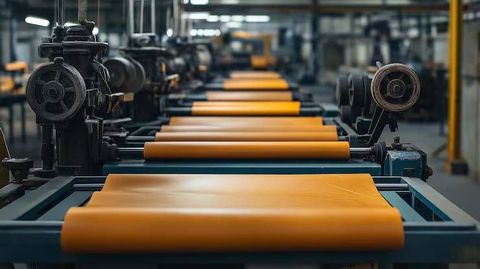
Large paper rolls are fed into the machine through controlled rollers.
Printing (Optional Stage)
Some systems include printing units to add branding or labels.
Folding and Tube Formation
The paper is folded into a cylindrical or tubular shape.
Cutting
The continuous tube is cut into specified lengths.
Bottom Formation
The bottom of the bag is folded and sealed using adhesive systems.
Final Shaping
The bag is shaped and flattened for stacking and packaging.
This systematic process ensures consistency and high-speed production.
Simple Production Flow Table
| Stage | Function |
|---|---|
| Feeding | Supplies paper rolls |
| Folding | Forms structure |
| Cutting | Defines size |
| Sealing | Strengthens base |
| Finishing | Prepares final shape |
FAQs
What materials are used in paper bag machines?
Most machines use kraft paper or recycled paper, chosen for strength and eco-friendly properties.
Are these machines fully automated?
Some models are fully automated, while others operate with partial manual control depending on production needs.
Why are paper bag machines important today?
They support sustainable packaging by reducing reliance on plastic-based materials and improving eco-friendly production.
What industries use paper bag machines?
They are widely used in food packaging, retail, agriculture, pharmaceuticals, and textile industries.
Do these machines require regular maintenance?
Yes, routine maintenance is necessary to ensure smooth operation, accuracy, and long machine lifespan.
Conclusion
Industrial paper bag making machines represent an important advancement in modern packaging systems. They combine automation, material efficiency, and sustainability to meet growing industrial demand for eco-friendly solutions.