Industrial Motion Sensor Insights for Smart Manufacturing
Industrial motion sensors are devices designed to detect movement within industrial environments. They play a critical role in automation, safety, monitoring, and operational efficiency across factories, warehouses, processing plants, and logistics facilities.
Unlike residential motion detectors, industrial motion sensors are engineered to operate reliably in challenging conditions such as dust, vibration, temperature fluctuations, humidity, and electromagnetic interference. These sensors help organizations monitor equipment, detect personnel movement, automate processes, and improve workplace safety.
As industrial automation continues to expand through Industry 4.0 initiatives, motion sensing technology has become an essential component of intelligent manufacturing and connected industrial systems.
How Industrial Motion Sensors Work
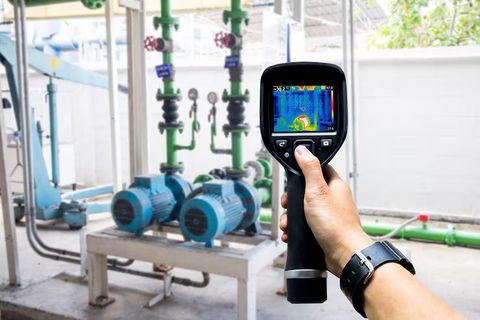
Industrial motion sensors detect movement by monitoring changes in the surrounding environment. Different sensing technologies identify motion using heat, radio waves, light, sound, or physical displacement.
When motion is detected, the sensor sends a signal to a control system, programmable logic controller (PLC), industrial computer, or monitoring platform. The connected system can then trigger actions such as:
- Activating machinery
- Turning lighting systems on or off
- Generating safety alerts
- Recording operational events
- Controlling robotic systems
- Monitoring restricted zones
The operating principle depends on the sensor technology used. For example, passive infrared sensors detect heat variations, while microwave sensors detect movement through reflected radio waves.
Major Types of Industrial Motion Sensors
| Sensor Type | Detection Method | Typical Applications | Key Advantage |
|---|---|---|---|
| Passive Infrared (PIR) | Heat radiation changes | Lighting control, occupancy detection | Energy efficient |
| Microwave Sensor | Radio wave reflection | Security monitoring, large areas | Long detection range |
| Ultrasonic Sensor | Sound wave reflection | Object detection, automation | High sensitivity |
| Radar Sensor | Electromagnetic wave analysis | Vehicle detection, industrial monitoring | Accurate tracking |
| Photoelectric Sensor | Light interruption or reflection | Conveyor systems, packaging lines | Fast response |
| Vibration Sensor | Mechanical movement detection | Equipment monitoring | Predictive maintenance |
| LiDAR Sensor | Laser-based distance measurement | Robotics, navigation | High precision |
Key Components of an Industrial Motion Sensor
Sensing Element
The sensing element detects movement based on the selected technology. It acts as the primary detection mechanism.
Signal Processing Unit
This component analyzes raw sensor data and determines whether motion has occurred.
Communication Interface
Industrial sensors often communicate through:
- Ethernet/IP
- Modbus
- PROFINET
- CAN Bus
- Wireless industrial protocols
Power Supply
Sensors may operate using:
- 24V DC industrial power
- Battery systems
- Energy-harvesting technologies
Protective Housing
Industrial-grade enclosures protect internal components from:
- Dust
- Water
- Chemicals
- Mechanical impact
Importance of Industrial Motion Sensors
Industrial environments demand continuous monitoring and operational reliability. Motion sensors contribute significantly to these objectives.
Enhanced Workplace Safety
Motion detection can identify worker presence near hazardous equipment and trigger safety protocols.
Improved Automation
Sensors enable machines and control systems to respond automatically to movement and operational events.
Energy Optimization
Lighting, ventilation, and machinery can operate only when motion is detected, reducing unnecessary energy consumption.
Increased Productivity
Automated detection eliminates the need for manual monitoring and accelerates industrial processes.
Asset Protection
Motion sensors support security systems by detecting unauthorized access to restricted areas.
Common Industrial Applications
Industrial motion sensors are widely used across multiple sectors.
Manufacturing Facilities
Applications include:
- Robotic cell monitoring
- Production line automation
- Equipment positioning
- Worker safety systems
Warehouses and Distribution Centers
Motion sensors help manage:
- Automated storage systems
- Smart lighting
- Inventory movement tracking
- Vehicle detection
Oil and Gas Operations
Industrial sites use motion sensors for:
- Perimeter monitoring
- Equipment surveillance
- Hazard detection
Food Processing Plants
Motion detection assists with:
- Conveyor operation
- Packaging automation
- Personnel tracking in restricted areas
Transportation and Logistics
Applications include:
- Loading dock monitoring
- Fleet management systems
- Automated gate control
Smart Industrial Buildings
Modern facilities integrate motion sensors into:
- Building management systems
- Energy management platforms
- Occupancy monitoring solutions
Problems Industrial Motion Sensors Help Solve
Industrial operations face numerous challenges that motion sensing technology can address.
Safety Risks
Motion sensors reduce workplace incidents by detecting personnel near dangerous machinery.
Operational Inefficiencies
Automated motion detection minimizes delays caused by manual observation and intervention.
Equipment Downtime
Motion and vibration sensing technologies support predictive maintenance programs.
Security Threats
Unauthorized movement within sensitive areas can be detected quickly.
Energy Waste
Automated activation and deactivation of systems help reduce unnecessary power consumption.
Features to Consider in Industrial Motion Sensors
Detection Range
The effective monitoring distance varies depending on the sensor technology and application.
Environmental Protection
Industrial installations often require sensors with high ingress protection ratings such as IP65, IP66, or IP67.
Response Time
Fast detection is essential for automation and safety-critical applications.
Communication Compatibility
Sensors should integrate with existing industrial control systems and networks.
Reliability
Industrial environments require durable sensors capable of continuous operation.
Scalability
Modern facilities often deploy large sensor networks that support future expansion.
Recent Trends and Developments (2025–2026)
The industrial motion sensing market has evolved rapidly due to advancements in automation, artificial intelligence, and industrial connectivity.
AI-Enhanced Motion Detection (2025)
Manufacturers increasingly integrate artificial intelligence algorithms into sensor platforms. These systems can distinguish between human movement, machine activity, and environmental interference, improving detection accuracy.
Edge Computing Integration (2025)
Motion sensors are increasingly equipped with edge processing capabilities. Data can be analyzed locally without relying entirely on centralized systems, reducing latency.
Radar-Based Industrial Sensors (2025–2026)
Advanced radar technology continues gaining adoption due to its ability to operate effectively in dust, smoke, fog, and challenging industrial conditions.
Smart Factory Expansion (2025–2026)
Industry 4.0 initiatives continue driving deployment of interconnected sensor networks that provide real-time operational visibility.
Digital Twin Connectivity (2026)
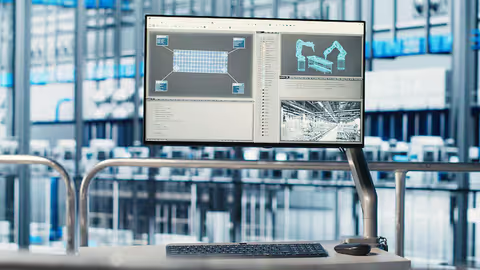
Motion sensors are increasingly integrated into digital twin systems, allowing virtual monitoring and simulation of industrial processes.
Standards, Regulations, and Compliance Considerations
Industrial motion sensors may need to comply with various international standards depending on their deployment environment.
IEC Standards
The International Electrotechnical Commission (IEC) publishes standards related to industrial electronic equipment, safety, and electromagnetic compatibility.
ISO Standards
The International Organization for Standardization provides guidance covering quality management, automation systems, and industrial safety.
Occupational Safety Requirements
Many regions require employers to implement workplace safety measures that include motion detection and monitoring technologies where appropriate.
Electromagnetic Compatibility Requirements
Industrial electronic devices often must meet electromagnetic compatibility requirements to prevent interference with other equipment.
Environmental Protection Ratings
Ingress Protection (IP) ratings indicate resistance to dust and water exposure, which is particularly important in industrial settings.
Useful Tools, Platforms, and Learning Resources
Industrial Automation Platforms
- Siemens TIA Portal
- Rockwell Automation Studio 5000
- Schneider Electric EcoStruxure
- Mitsubishi Electric GX Works
Motion Sensor Development Platforms
- Arduino Industrial Solutions
- Raspberry Pi Industrial Systems
- Industrial IoT Gateway Platforms
Learning Resources
- ISA (International Society of Automation)
- IEC Technical Publications
- Industrial automation training programs
- Engineering textbooks on sensors and instrumentation
- Manufacturing technology research journals
FAQs
What is an industrial motion sensor?
An industrial motion sensor is a device that detects movement within industrial environments and provides signals for automation, safety, monitoring, or security applications.
Which motion sensor is commonly used in factories?
Photoelectric, radar, ultrasonic, microwave, and PIR sensors are among the most widely used technologies in industrial facilities, depending on the application requirements.
Can industrial motion sensors support predictive maintenance?
Yes. Motion and vibration-based sensors can monitor equipment behavior and identify abnormal movement patterns that may indicate developing mechanical issues.
Are industrial motion sensors suitable for harsh environments?
Many industrial-grade sensors are designed for challenging conditions and include protective enclosures with high environmental protection ratings.
How do motion sensors contribute to Industry 4.0?
Motion sensors provide real-time operational data that supports automation, analytics, machine communication, predictive maintenance, and smart manufacturing initiatives.
Conclusion
Industrial motion sensors have become a fundamental technology in modern industrial operations. By detecting movement accurately and reliably, these devices enhance safety, improve automation, reduce energy consumption, and support data-driven decision-making. From manufacturing facilities and logistics centers to smart industrial buildings and critical infrastructure, motion sensing technology helps organizations operate more efficiently and safely.
As advancements in artificial intelligence, radar sensing, edge computing, and digital twin technologies continue through 2025 and 2026, industrial motion sensors are expected to play an even greater role in the future of connected and intelligent industrial environments.