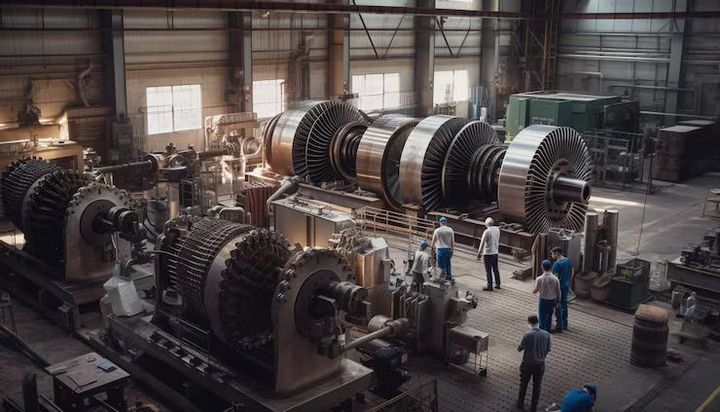
Industrial Machinery and Equipment: Guide to Types, Functions, and Applications
Industrial machinery and equipment play a major role in modern manufacturing, construction, energy production, and industrial operations.
These machines help organizations handle large-scale production, improve efficiency, and maintain consistent output across various industries.
From automated assembly lines to heavy-duty processing equipment, industrial machinery supports countless activities that people rely on every day. Whether producing consumer goods, processing raw materials, or supporting infrastructure projects, machinery helps industries operate effectively and meet growing demands.
Understanding industrial machinery and equipment is important because these systems influence productivity, operational efficiency, workplace safety, and industrial growth.
Understanding the Concept
Industrial machinery and equipment refer to mechanical and automated systems designed to perform specific industrial tasks. These machines are built to handle operations that would be difficult, time-consuming, or impractical through manual labor alone.
Industrial equipment can process materials, move products, assemble components, package goods, generate power, and perform many other essential functions. Depending on the industry, machinery may range from simple mechanical devices to highly advanced automated systems.
Many industries depend on industrial automation, manufacturing equipment, CNC machines, robotics systems, material handling equipment, and production machinery to maintain reliable operations. These technologies help improve precision, reduce errors, and increase production capacity.
Industrial machinery is commonly used in sectors such as:
- Manufacturing
- Construction
- Mining
- Agriculture
- Energy production
- Food processing
- Transportation
- Warehousing
Each industry utilizes specialized equipment designed to meet its unique operational requirements.
Key Types or Categories
Industrial machinery and equipment can be grouped into several major categories based on their primary functions.
Manufacturing Equipment
Manufacturing equipment is used to create products and components from raw materials.
Examples include:
- CNC machines
- Milling machines
- Lathes
- Drilling machines
- Cutting equipment
These machines help achieve high precision and consistent production quality.
Material Handling Equipment
Material handling equipment moves products and materials throughout industrial facilities.
Common examples include:
- Conveyors
- Forklifts
- Cranes
- Pallet systems
- Automated guided vehicles
These systems improve workflow efficiency and reduce manual handling.
Industrial Automation Systems
Industrial automation systems use sensors, controllers, and robotics to automate production processes.
Automation equipment may include:
- Robotic arms
- Automated assembly lines
- Process control systems
- Machine monitoring systems
Automation helps improve productivity while maintaining consistent output.
Processing Equipment
Processing equipment transforms raw materials into finished or semi-finished products.
Examples include:
- Mixing equipment
- Grinding machines
- Industrial ovens
- Compressors
- Separation systems
These machines are commonly found in manufacturing and processing facilities.
Power Generation Equipment
Power generation equipment supports industrial energy requirements.
Examples include:
- Industrial generators
- Turbines
- Power distribution systems
- Energy storage units
Reliable energy systems help ensure continuous industrial operations.
Important Subsections
CNC Machines
Computer Numerical Control, commonly known as CNC, refers to machines controlled through programmed instructions.
Benefits include:
- High accuracy
- Consistent production
- Reduced material waste
- Improved manufacturing efficiency
CNC equipment is widely used in automotive, aerospace, and precision manufacturing industries.
Industrial Robotics
Industrial robots perform repetitive tasks with speed and precision.
Typical robotic functions include:
- Welding
- Assembly
- Packaging
- Inspection
- Material movement
Robotics technology continues expanding across industrial environments due to increasing demand for automation.
Hydraulic Systems
Hydraulic systems use fluid pressure to generate powerful mechanical movement.
These systems are commonly found in:
- Construction machinery
- Heavy lifting equipment
- Manufacturing machines
- Industrial presses
Hydraulic equipment provides strong force while maintaining operational control.
Pneumatic Equipment
Pneumatic systems use compressed air to perform mechanical tasks.
Applications include:
- Production lines
- Packaging equipment
- Industrial tools
- Material handling systems
These systems are valued for their reliability and simplicity.
How It Works
Industrial machinery operates through a series of coordinated processes designed to perform specific tasks efficiently.
Step 1: Input Materials
Raw materials enter the production process.
Examples include:
- Metal sheets
- Plastic components
- Agricultural products
- Construction materials
The machinery receives these materials for processing.
Step 2: Processing Operations
The equipment performs its assigned function.
Depending on the machine, this may involve:
- Cutting
- Shaping
- Mixing
- Heating
- Assembling
- Packaging
Each operation follows predetermined specifications.
Step 3: Monitoring and Control
Sensors and monitoring systems track machine performance.
Operators monitor:
- Speed
- Temperature
- Pressure
- Output quality
This helps maintain efficient and safe operation.
Step 4: Product Output
The machinery produces finished or partially finished products.
These products may then move to additional processing stages or final distribution channels.
Step 5: Maintenance and Inspection
Regular inspections help ensure reliable performance.
Maintenance activities may include:
- Cleaning
- Lubrication
- Component replacement
- Performance testing
Proper maintenance extends equipment lifespan and improves operational reliability.
Benefits and Advantages
Industrial machinery and equipment provide many important advantages across different industries.
Increased Productivity
Machines can perform tasks continuously and efficiently, helping industries increase production output.
Improved Precision
Modern manufacturing equipment delivers consistent accuracy that is difficult to achieve through manual processes alone.
Enhanced Workplace Safety
Many machines perform hazardous or physically demanding tasks, reducing worker exposure to potential risks.
Better Resource Utilization
Advanced equipment helps minimize material waste and improve production efficiency.
Consistent Quality
Automated systems help maintain uniform standards across large production volumes.
Support for Industrial Growth
As demand increases, industrial machinery helps organizations expand production capacity while maintaining operational efficiency.
Real-World Examples or Applications
Industrial machinery is used in many everyday industries and applications.
Automotive Manufacturing
Automotive factories use:
- Robotic welding systems
- CNC machinery
- Automated assembly lines
- Quality inspection equipment
These technologies help produce vehicles with precision and consistency.
Food Processing Facilities
Food processing operations use:
- Mixing equipment
- Packaging machinery
- Conveyors
- Temperature control systems
These machines help process and package products efficiently.
Construction Industry
Construction projects rely on:
- Excavators
- Cranes
- Concrete mixers
- Hydraulic equipment
These machines support large-scale infrastructure development.
Warehousing and Logistics
Warehouses use material handling equipment to move inventory efficiently.
Examples include:
- Conveyor systems
- Forklifts
- Automated storage systems
- Sorting equipment
These systems help improve operational flow and inventory management.
Energy Production
Power generation facilities utilize:
- Turbines
- Generators
- Industrial pumps
- Monitoring systems
Reliable equipment helps support energy production and distribution.
Important Factors to Understand
Several factors should be considered when evaluating industrial machinery and equipment.
Equipment Capacity
Machines should match production requirements and operational goals.
Equipment that is too small may limit output, while oversized machinery may reduce efficiency.
Energy Efficiency
Energy-efficient machinery can help reduce operational expenses and support sustainability objectives.
Maintenance Requirements
Different equipment types require varying levels of maintenance.
Understanding maintenance needs helps improve long-term reliability.
Safety Features
Modern industrial equipment often includes:
- Emergency stop systems
- Protective guards
- Monitoring sensors
- Warning indicators
These features contribute to safer working environments.
Integration Capabilities
Many industries utilize interconnected systems that communicate with one another.
Equipment compatibility is important for smooth operations and future expansion.
Future Trends and Industry Insights
Industrial machinery continues evolving as technology advances.
Smart Manufacturing
Smart manufacturing combines connected devices, sensors, and data analysis to improve operational efficiency.
Machines can provide real-time performance information and support predictive maintenance strategies.
Advanced Industrial Automation
Automation continues expanding across manufacturing and industrial sectors.
Future facilities may utilize greater levels of autonomous operation and machine coordination.
Artificial Intelligence Integration
Artificial intelligence is helping industrial systems analyze production data and improve operational decision-making.
These capabilities may help identify inefficiencies and optimize performance.
Sustainable Industrial Equipment
Environmental considerations are encouraging the development of energy-efficient machinery and cleaner industrial processes.
Many industries are focusing on reducing energy consumption and improving resource utilization.
Robotics Expansion
Industrial robotics will likely continue growing in areas such as:
- Manufacturing
- Warehousing
- Logistics
- Material handling
Improved robotic capabilities may further increase productivity and operational flexibility.
Conclusion
Industrial machinery and equipment form the foundation of modern industrial operations. From manufacturing equipment and industrial automation systems to material handling equipment and power generation machinery, these technologies support productivity, efficiency, and quality across numerous industries.
Understanding the different types, functions, and applications of industrial machinery helps explain how modern industries operate and continue evolving. As automation, robotics, artificial intelligence, and smart manufacturing technologies advance, industrial equipment will remain a key driver of innovation and industrial growth.
Organizations that effectively utilize advanced machinery can improve efficiency, maintain quality standards, and support long-term operational success in an increasingly competitive industrial landscape.