Industrial Dust Collectors Guide for Efficient Air Filtration
Industrial dust collectors are air-cleaning systems designed to capture dust, particles, fumes, and other airborne contaminants generated during manufacturing and processing activities. They are commonly used in industries such as metalworking, woodworking, cement production, food processing, pharmaceuticals, chemicals, mining, and construction-material manufacturing.
Industrial processes can generate airborne particles when materials are cut, drilled, crushed, mixed, polished, transported, or processed. If these particles remain suspended in workplace air, they can affect visibility, equipment cleanliness, product quality, and indoor environmental conditions.
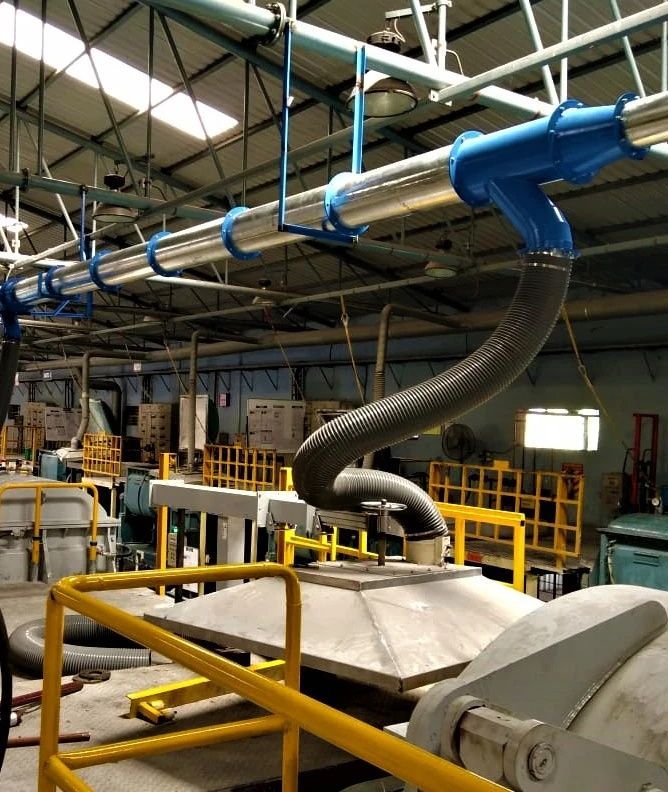
An industrial dust collection system typically uses a combination of ducts, hoods, filters, fans, collection chambers, and control equipment. The system draws contaminated air toward a collection point, separates particulate matter from the air stream, and directs the filtered air according to the system design.
Common industrial dust collector technologies include:
- Cartridge dust collectors
- Baghouse dust collectors
- Cyclone separators
- Wet dust collectors
- Electrostatic precipitators
- Portable extraction units
- Centralized dust collection systems
The correct design depends on factors such as particle size, airflow requirements, material characteristics, temperature, humidity, process conditions, and the concentration of airborne particles.
Efficient air filtration is important because industrial environments can produce both visible and microscopic particles. A properly designed system helps manage airborne contaminants while supporting cleaner work areas and more consistent production conditions.
Why Industrial Dust Collectors Matter Today
Industrial dust collectors have become increasingly important as manufacturers focus on workplace air quality, environmental responsibility, equipment reliability, and process efficiency.
Airborne dust can settle on machinery, electrical components, sensors, finished products, and ventilation equipment. Over time, excessive accumulation may interfere with equipment operation and increase maintenance requirements.
For workers, controlling airborne particulate matter is an important part of occupational exposure management. Certain industrial dusts can create significant health and safety concerns, depending on their chemical composition, particle size, concentration, and duration of exposure.
Dust collection also supports manufacturing quality. In processes where surface cleanliness is important, uncontrolled particles can become contaminants. Better particulate control can therefore contribute to more stable production environments.
Industrial dust collectors are particularly relevant for:
- Manufacturing plants
- Metal fabrication facilities
- Woodworking operations
- Cement and concrete plants
- Food and grain processing facilities
- Pharmaceutical production areas
- Chemical processing facilities
- Mining and mineral processing plants
- Plastic and composite manufacturing
- Construction-material production
Energy efficiency is another important consideration. Modern dust collection designs increasingly focus on maintaining appropriate airflow while reducing unnecessary pressure losses. Variable-speed fan controls, filter monitoring, automatic cleaning systems, and optimized duct layouts can help improve system performance.
The relationship between major design factors can be summarized as follows:
| Design Factor | Main Purpose | Typical Consideration |
|---|---|---|
| Airflow | Capture airborne particles | Process requirements |
| Filter media | Separate particles | Particle characteristics |
| Fan capacity | Move contaminated air | Pressure and airflow |
| Duct design | Transport particles | Velocity and layout |
| Filter cleaning | Maintain filtration | Dust loading |
| Monitoring | Track performance | Pressure and airflow data |
A balanced system considers these elements together rather than selecting a filter or fan independently.
Recent Developments and Technology Trends
During 2025 and 2026, industrial air filtration technology has continued moving toward automation, energy monitoring, improved filtration media, and condition-based maintenance.
One notable trend is the increased use of intelligent monitoring. Pressure sensors and digital controls can track filter loading and airflow conditions. Operators can use this information to identify performance changes before they become major operational problems.
Another development is the use of advanced filter media. Newer cartridge and bag filtration materials can provide high particle capture efficiency while maintaining suitable airflow characteristics. Selection still depends on the specific dust and operating environment.
Variable-frequency drives are also increasingly relevant to industrial ventilation systems. Instead of operating a fan at one fixed speed, control systems can adjust fan operation according to changing process requirements. This approach can help manage airflow more precisely.
Remote monitoring is another growing area. Industrial facilities may integrate dust collection information with broader facility-management or industrial automation systems. Data such as differential pressure, fan status, filter condition, and operating hours can support maintenance planning.
Explosion-risk management has also received continued attention in industries handling combustible dust. Facilities processing materials such as wood, certain metals, grains, plastics, and other combustible substances need appropriate risk assessment and engineering controls.
Current technology trends include:
- Smart filter monitoring
- Automated filter cleaning
- Variable-speed fan control
- High-efficiency filtration media
- Differential-pressure measurement
- Condition-based maintenance
- Digital equipment monitoring
- Improved dust containment
- Explosion-risk assessment
- Energy-performance monitoring
These developments do not eliminate the need for professional engineering assessment. Dust characteristics and industrial processes vary significantly, so system selection should be based on actual operating conditions.
Laws, Standards, and Industrial Policies
Dust collection requirements vary by country, industry, material, and workplace conditions. Regulations generally focus on worker exposure, environmental emissions, equipment safety, and control of hazardous or combustible dust.
In India, industrial workplaces can be affected by occupational safety requirements under the Occupational Safety, Health and Working Conditions Code, 2020, along with applicable rules and state-level requirements. Environmental requirements may also apply when industrial facilities release particulate emissions to the surrounding environment.
Indian facilities may also need to consider requirements established by pollution-control authorities and applicable environmental standards. Specific obligations depend on the industry, plant configuration, location, and type of emission.
International facilities may refer to frameworks from occupational and environmental authorities such as workplace exposure standards, particulate emission requirements, and combustible-dust safety guidance.
Important policy considerations can include:
- Workplace exposure limits
- Industrial ventilation requirements
- Particulate emission controls
- Hazardous material management
- Combustible-dust risk assessment
- Electrical and equipment safety
- Waste handling requirements
- Environmental monitoring
- Periodic inspection and documentation
Regulatory requirements can change over time. Facility managers should therefore verify current national, regional, and industry-specific requirements before designing or modifying a dust collection system.
Tools and Resources for Dust Collection Planning
Several general tools can help engineers, facility managers, maintenance teams, and learners understand dust collection requirements.
Airflow calculators can help estimate the airflow needed for specific extraction points. Pressure-loss calculators can assist with understanding how ducts, filters, bends, and other components affect system resistance.
Useful resources include:
- Airflow and ventilation calculators
- Pressure-drop calculation worksheets
- Filter selection guides
- Dust characterization worksheets
- Preventive maintenance checklists
- Indoor air-quality monitoring instruments
- Differential-pressure gauges
- Particle measurement equipment
- Engineering design templates
- Occupational exposure guidance
- Industrial ventilation reference manuals
A basic planning worksheet can record the process generating dust, dust characteristics, required capture point, estimated airflow, filter type, operating temperature, moisture conditions, and maintenance requirements.
Monitoring instruments can also help identify changes in system performance. For example, an increasing pressure difference across a filter may indicate growing dust loading. However, readings should always be interpreted according to the equipment manufacturer's operating range and the overall system design.
Frequently Asked Questions
What is an industrial dust collector?
An industrial dust collector is an engineered air-filtration system that captures and separates airborne particulate matter generated by industrial processes. Different technologies are used depending on particle characteristics and operating conditions.
How does a dust collector work?
Contaminated air is drawn from a process area through a collection point and duct system. The air then passes through a separation stage, such as a cartridge, bag filter, cyclone, or wet collection system. Particles are retained or separated while the treated air continues through the system.
Which type of dust collector is suitable for an industrial plant?
There is no single collector suitable for every application. Selection depends on dust type, particle size, airflow, temperature, moisture, concentration, process conditions, and safety requirements. Engineering assessment is important before choosing equipment.
Why is filter monitoring important?
Filter monitoring helps identify changes in pressure, airflow, and loading. Tracking these conditions can support timely maintenance and help operators identify abnormal system performance.
Can dust collectors improve workplace air quality?
A correctly designed and maintained dust collection system can help control airborne particulate matter at its source. Performance depends on system design, installation, operation, maintenance, and the characteristics of the material being processed.
Conclusion
Industrial dust collectors play an important role in controlling airborne particulate matter across manufacturing and processing environments. Their purpose extends beyond basic filtration because effective dust management can support workplace conditions, equipment cleanliness, production quality, and environmental control.