Industrial Automation Equipment Overview and Emerging Technology Trends
Industrial automation equipment refers to machines, devices, control systems, and software technologies used to automate industrial processes with minimal human intervention. These systems help manufacturing facilities, processing plants, warehouses, and utility operations perform tasks more accurately, consistently, and efficiently.
Automation equipment is designed to monitor, control, and optimize production activities. By integrating sensors, controllers, robotics, and communication networks, organizations can improve productivity while reducing operational errors and downtime.
As industries continue adopting digital transformation strategies, industrial automation equipment has become a fundamental part of modern manufacturing and industrial infrastructure.
How Industrial Automation Equipment Works
Industrial automation systems operate through a combination of sensing, decision-making, communication, and execution.
The process typically begins with sensors collecting real-time data such as temperature, pressure, flow rate, position, vibration, or speed. This information is transmitted to control systems that analyze the data and determine appropriate actions.
Controllers then send instructions to actuators, motors, robotic systems, or other machinery to perform required tasks. Supervisory software monitors operations continuously and provides operators with valuable insights through dashboards and reports.
This automated workflow enables industrial facilities to maintain consistent performance while responding quickly to changing conditions.
Key Components
Sensors and Detection Devices
- Temperature sensors
- Pressure sensors
- Proximity sensors
- Motion detectors
- Flow sensors
- Vision inspection systems
Programmable Logic Controllers (PLCs)
- Execute automated control logic
- Monitor equipment status
- Process input and output signals
- Support real-time decision making
Human Machine Interfaces (HMIs)
- Provide operator control panels
- Display production data
- Support monitoring and diagnostics
- Improve operational visibility
Supervisory Control and Data Acquisition (SCADA) Systems
- Collect operational data
- Monitor multiple facilities
- Generate performance reports
- Support remote supervision
Industrial Robots
- Material handling
- Welding operations
- Assembly processes
- Packaging activities
- Inspection and quality control
Actuators and Drives
- Electric motors
- Servo systems
- Pneumatic actuators
- Hydraulic actuators
- Variable frequency drives
Major Types of Industrial Automation
| Automation Type | Description | Common Applications |
|---|---|---|
| Fixed Automation | Repetitive production tasks | Automotive assembly |
| Programmable Automation | Flexible production changes | Batch manufacturing |
| Flexible Automation | Rapid product variation handling | Consumer goods production |
| Integrated Automation | Fully connected systems | Smart factories |
| Process Automation | Continuous operation control | Chemical and energy industries |
Importance of Industrial Automation Equipment
Industrial automation equipment plays a critical role in modern production environments. Organizations increasingly rely on automation technologies to maintain operational efficiency while meeting growing market demands.
Automation supports:
- Higher production consistency
- Improved product quality
- Enhanced workplace safety
- Better resource utilization
- Reduced operational interruptions
- Faster production cycles
- Improved process visibility
As industrial facilities become more complex, automation provides the foundation needed to manage large-scale operations effectively.
Real-World Applications
Manufacturing Facilities
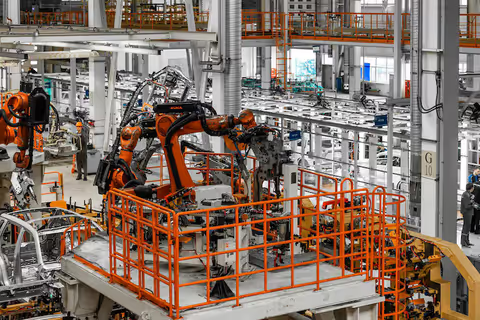
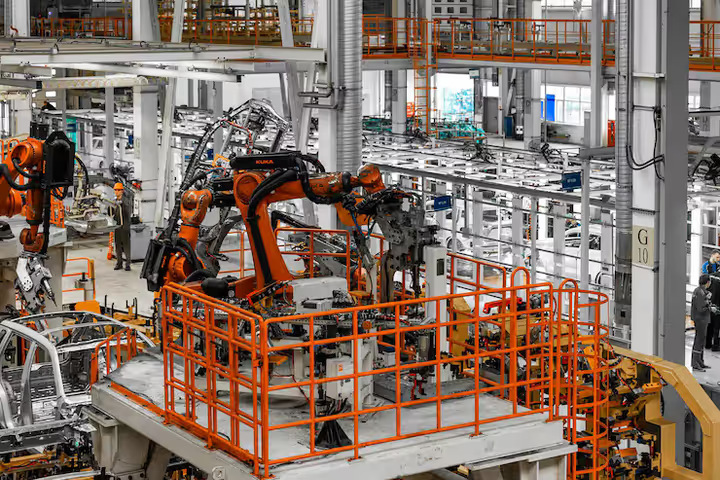
Manufacturers use automation systems to control assembly lines, robotic workstations, inspection systems, and packaging equipment.
Food and Beverage Processing
Automation helps maintain hygiene standards while managing mixing, filling, packaging, and quality inspection operations.
Pharmaceutical Production
Automated systems support precise production processes, environmental monitoring, and regulatory compliance requirements.
Oil and Gas Operations
Industrial control systems monitor pipelines, storage facilities, drilling operations, and refining processes.
Warehousing and Logistics
Automated conveyors, robotic picking systems, and inventory management technologies improve material handling efficiency.
Energy and Utilities
Power generation facilities use automation equipment for monitoring, distribution control, and predictive maintenance activities.
Problems Solved by Industrial Automation Equipment
Industrial facilities face numerous operational challenges that automation technologies help address.
Production Variability
- Reduces inconsistencies
- Standardizes manufacturing procedures
- Improves quality control
Human Error
- Automates repetitive tasks
- Enhances process accuracy
- Supports reliable operations
Equipment Downtime
- Enables predictive maintenance
- Identifies issues early
- Improves asset utilization
Safety Risks
- Limits exposure to hazardous environments
- Supports remote monitoring
- Enhances emergency response capabilities
Data Management Challenges
- Collects operational information automatically
- Provides real-time visibility
- Supports informed decision-making
Smart Manufacturing and Industrial IoT
Industrial Internet of Things (IIoT) technologies have transformed automation systems by connecting equipment, sensors, and software platforms across production environments.
Connected devices continuously exchange information, allowing organizations to monitor equipment performance, optimize production schedules, and identify maintenance needs before failures occur.
Benefits of IIoT-enabled automation include:
- Real-time analytics
- Predictive maintenance
- Remote equipment monitoring
- Improved operational efficiency
- Better energy management
- Enhanced production planning
Smart manufacturing initiatives increasingly combine automation equipment with cloud computing, edge computing, and advanced analytics solutions.
Recent Trends and Developments (2025–2026)
Industrial automation continues evolving rapidly due to advancements in digital technologies and manufacturing innovation.
Artificial Intelligence Integration (2025–2026)
- AI-powered quality inspection systems
- Automated anomaly detection
- Intelligent production optimization
- Advanced maintenance forecasting
Collaborative Robotics Expansion
- Increased use of human-robot collaboration
- Improved workplace flexibility
- Enhanced productivity in mixed environments
Edge Computing Adoption
- Faster data processing
- Reduced latency
- Improved operational responsiveness
Digital Twin Technology Growth
- Virtual equipment simulations
- Process optimization modeling
- Improved system planning
Cybersecurity Enhancements
- Stronger industrial network protection
- Advanced threat monitoring
- Secure remote access capabilities
Sustainability-Focused Automation
- Energy consumption monitoring
- Resource optimization systems
- Emissions tracking technologies
These developments continue shaping next-generation smart factories and connected industrial ecosystems.
Industry Standards, Regulations, and Policies
Industrial automation equipment is often designed and operated according to established international standards.
Important Standards
- IEC 61131 for programmable controllers
- IEC 62443 for industrial cybersecurity
- ISO 10218 for industrial robot safety
- ISO 13849 for machine safety controls
- ISO 9001 quality management requirements
Regulatory Considerations
- Workplace safety compliance
- Equipment safety certification
- Environmental monitoring requirements
- Data protection and cybersecurity practices
- Electrical system standards
Organizations implementing automation technologies typically follow applicable national and international regulations to ensure safe and reliable operations.
Useful Tools, Platforms, and Learning Resources
Automation Platforms
- Siemens TIA Portal
- Rockwell Automation Studio 5000
- Schneider Electric EcoStruxure
- ABB Automation Solutions
- Mitsubishi Electric Automation Platform
Industrial Communication Technologies
- Modbus
- PROFINET
- EtherNet/IP
- OPC UA
- CAN Bus
Learning Resources
- Industrial automation training institutes
- Technical certification programs
- Engineering association publications
- Manufacturing technology journals
- Industrial cybersecurity resources
Simulation and Design Software
- Factory simulation platforms
- Digital twin applications
- Process modeling software
- Industrial CAD tools
Future Outlook
Industrial automation equipment will continue becoming more intelligent, connected, and data-driven. Future systems are expected to integrate artificial intelligence, machine learning, advanced robotics, and cloud-based analytics more deeply into daily operations.
The growing adoption of Industry 4.0 principles is encouraging organizations to create interconnected production environments capable of real-time decision-making and continuous optimization.
As technology advances, automation equipment will remain essential for improving efficiency, safety, quality, and sustainability across industrial sectors.
FAQs
What is industrial automation equipment?
Industrial automation equipment includes machines, sensors, controllers, robotics, and software systems used to automate industrial processes and reduce manual intervention.
What are the main benefits of industrial automation?
Key benefits include improved productivity, higher quality, enhanced safety, reduced downtime, better data visibility, and more efficient resource utilization.
What is the difference between PLC and SCADA?
A PLC controls machinery and processes directly, while a SCADA system supervises operations, collects data, and provides monitoring capabilities across larger systems.
How does Industrial IoT support automation?
Industrial IoT connects equipment and sensors to collect real-time data, enabling predictive maintenance, remote monitoring, and operational optimization.
Which industries use industrial automation equipment?
Manufacturing, pharmaceuticals, food processing, energy, logistics, oil and gas, utilities, and many other sectors use automation technologies to improve efficiency and control.
Conclusion
Industrial automation equipment forms the backbone of modern industrial operations. By combining sensors, controllers, robotics, communication networks, and intelligent software, automation systems help organizations achieve greater efficiency, consistency, and operational visibility. From manufacturing and logistics to pharmaceuticals and energy production, these technologies solve critical challenges related to productivity, safety, and quality.
With ongoing developments in artificial intelligence, Industrial IoT, digital twins, and cybersecurity, industrial automation continues to evolve and play a central role in the future of smart manufacturing and connected industrial environments.