Industrial Cybersecurity Resources for Safer Industrial Network Operations
Industrial cybersecurity is the practice of protecting industrial systems, operational technology (OT), industrial control systems (ICS), supervisory control and data acquisition (SCADA) environments, and connected industrial networks from cyber threats. It focuses on maintaining the confidentiality, integrity, and availability of systems that support manufacturing, energy production, transportation, utilities, and other critical operations.
As industrial organizations adopt digital transformation, Industrial Internet of Things (IIoT), cloud connectivity, and smart automation, cybersecurity has become a critical requirement. Industrial cybersecurity helps maintain operational continuity, protect sensitive data, prevent equipment disruptions, and reduce safety risks caused by cyber incidents.
Understanding Industrial Cybersecurity
Industrial cybersecurity combines information technology (IT) security practices with operational technology protection. Unlike traditional IT environments, industrial systems often control physical processes and machinery.
Industrial environments typically include:
Key Components
- Industrial Control Systems (ICS)
- Supervisory Control and Data Acquisition (SCADA) systems
- Distributed Control Systems (DCS)
- Programmable Logic Controllers (PLCs)
- Human-Machine Interfaces (HMIs)
- Industrial Internet of Things (IIoT) devices
- Industrial communication networks
- Remote monitoring systems
These systems work together to manage industrial operations while ensuring productivity, reliability, and safety.
How Industrial Cybersecurity Works
Industrial cybersecurity uses multiple layers of protection to secure critical systems against unauthorized access, malware, ransomware, and other cyber threats.
Core Security Functions
- Asset identification and inventory management
- Network segmentation and access control
- Threat monitoring and detection
- Vulnerability assessment
- Security patch management
- Incident response planning
- Data encryption
- User authentication and authorization
- Continuous security monitoring
Organizations implement defense-in-depth strategies, where multiple security controls protect industrial environments from different attack vectors.
Importance of Industrial Cybersecurity
Industrial operations increasingly rely on connected technologies. A successful cyberattack can disrupt production, damage equipment, compromise safety, and affect essential public services.
Major Benefits
- Protects critical infrastructure
- Improves operational resilience
- Reduces downtime risks
- Enhances worker safety
- Protects intellectual property
- Supports regulatory compliance
- Improves visibility into industrial assets
- Strengthens business continuity planning
As cyber threats become more sophisticated, industrial cybersecurity helps organizations maintain stable and secure operations.
Common Cyber Threats in Industrial Environments
Industrial systems face numerous cybersecurity risks due to legacy equipment, remote connectivity, and increasing digital integration.
Frequent Threat Categories
- Ransomware attacks
- Phishing campaigns
- Malware infections
- Insider threats
- Supply chain compromises
- Unauthorized remote access
- Zero-day vulnerabilities
- Distributed Denial-of-Service (DDoS) attacks
- Industrial espionage
- Credential theft
Many industrial systems were originally designed for reliability rather than cybersecurity, making modernization efforts increasingly important.
Industrial Cybersecurity Technologies
Organizations use specialized technologies to secure operational technology environments.
| Technology | Primary Purpose | Typical Application |
|---|---|---|
| Firewall Systems | Traffic filtering | Network perimeter security |
| Intrusion Detection Systems (IDS) | Threat monitoring | Network activity analysis |
| Intrusion Prevention Systems (IPS) | Threat blocking | Real-time protection |
| Security Information and Event Management (SIEM) | Security analytics | Incident investigation |
| Endpoint Detection and Response (EDR) | Device protection | Threat detection |
| Network Access Control (NAC) | Access management | User and device verification |
| Industrial Threat Monitoring | OT visibility | Operational monitoring |
| Vulnerability Management Platforms | Risk identification | Security assessment |
| Multi-Factor Authentication (MFA) | Identity protection | Secure access control |
Industrial Cybersecurity Frameworks and Standards
Several internationally recognized frameworks help organizations establish cybersecurity best practices.
Common Standards and Frameworks
- NIST Cybersecurity Framework (CSF)
- IEC 62443 Industrial Security Standards
- ISO/IEC 27001 Information Security Management
- NIST SP 800-82 Guide to Industrial Control Systems Security
- ISA/IEC Industrial Automation Security Standards
- CIS Critical Security Controls
These frameworks provide structured guidance for managing cybersecurity risks across industrial environments.
Real-World Applications
Industrial cybersecurity is essential across numerous sectors that operate critical infrastructure and automated systems.
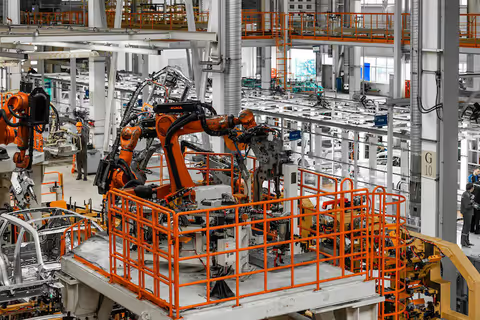
Manufacturing
- Protecting production lines
- Securing robotic automation
- Monitoring industrial networks
- Preventing production disruptions
Energy and Utilities
- Securing power generation facilities
- Protecting smart grid infrastructure
- Safeguarding energy distribution networks
Water and Wastewater
- Protecting treatment facilities
- Monitoring operational processes
- Preventing unauthorized system changes
Transportation
- Securing railway systems
- Protecting logistics infrastructure
- Monitoring connected transportation networks
Oil and Gas
- Protecting pipeline operations
- Securing drilling systems
- Monitoring remote industrial assets
Challenges in Industrial Cybersecurity
Industrial organizations face unique cybersecurity challenges that differ from traditional IT environments.
Common Challenges
- Legacy industrial equipment
- Limited security visibility
- Increasing IIoT connectivity
- Long equipment life cycles
- Complex vendor ecosystems
- Operational downtime concerns
- Shortage of cybersecurity expertise
- Integration of IT and OT environments
Addressing these challenges requires careful planning and collaboration between cybersecurity and operational teams.
Recent Trends and Developments (2025–2026)
Industrial cybersecurity continues to evolve rapidly due to growing cyber threats and digital transformation initiatives.
Key Developments
- Increased adoption of Zero Trust security architectures during 2025
- Expanded use of Artificial Intelligence for threat detection and security analytics
- Greater emphasis on OT-specific cybersecurity platforms
- Enhanced cloud security for industrial environments
- Stronger supply chain security requirements
- Wider deployment of secure remote access technologies
- Growth of industrial threat intelligence sharing initiatives
- Increased regulatory focus on critical infrastructure protection
Emerging Technology Trends
- AI-assisted threat hunting
- Behavioral anomaly detection
- Industrial digital twin security
- Edge computing protection
- Secure industrial IoT deployment
- Automated incident response systems
These developments reflect the growing importance of cyber resilience across critical industries.
Laws, Policies, and Regulatory Considerations
Many countries have introduced cybersecurity regulations to strengthen critical infrastructure protection.
Important Regulatory Areas
- Critical infrastructure protection requirements
- Data protection and privacy regulations
- Cyber incident reporting obligations
- Supply chain security requirements
- Risk assessment and audit requirements
- Industry-specific compliance standards
Organizations should monitor applicable regulations within their jurisdictions and industries to maintain compliance.
Useful Tools, Platforms, and Learning Resources
Various tools and educational resources help organizations strengthen industrial cybersecurity programs.
Security Platforms
- Microsoft Defender for IoT
- Palo Alto Networks Industrial Security Solutions
- Cisco Cyber Vision
- Claroty Platform
- Nozomi Networks
- Tenable OT Security
- Dragos Industrial Security Platform
- Splunk Security Analytics
Learning Resources
- NIST Cybersecurity Framework documentation
- IEC 62443 educational materials
- SANS Industrial Control Systems training
- ISA cybersecurity resources
- CISA industrial security guidance
- Cybersecurity and Infrastructure Security Agency publications
These resources support cybersecurity awareness, technical learning, and operational risk management.
Best Practices for Industrial Cybersecurity
Organizations can improve security posture through proactive measures and continuous monitoring.
Recommended Practices
- Maintain a complete asset inventory
- Implement network segmentation
- Use strong authentication controls
- Conduct regular risk assessments
- Monitor OT network activity continuously
- Update and patch systems when appropriate
- Develop incident response procedures
- Train employees on cybersecurity awareness
- Restrict unnecessary remote access
- Back up critical operational data
Consistent implementation of these practices helps reduce cybersecurity risks and improve resilience.
FAQs
What is industrial cybersecurity?
Industrial cybersecurity is the practice of protecting industrial control systems, operational technology, and critical infrastructure from cyber threats, unauthorized access, and operational disruptions.
How is industrial cybersecurity different from traditional IT security?
Industrial cybersecurity focuses on protecting physical processes, industrial equipment, and operational technology environments, while traditional IT security primarily protects information systems and business networks.
Why is cybersecurity important for manufacturing facilities?
Manufacturing facilities rely on connected equipment and automation systems. Cybersecurity helps prevent production interruptions, equipment damage, and safety incidents.
What are the most common industrial cyber threats?
Common threats include ransomware, phishing attacks, malware infections, insider threats, supply chain attacks, and unauthorized remote access attempts.
Which industries require industrial cybersecurity?
Industries such as manufacturing, energy, utilities, transportation, water treatment, oil and gas, pharmaceuticals, and critical infrastructure depend heavily on industrial cybersecurity practices.
Conclusion
Industrial cybersecurity plays a vital role in protecting modern industrial operations, critical infrastructure, and connected operational technology environments. As industrial systems become increasingly digital and interconnected, organizations face growing cybersecurity risks that can affect safety, productivity, and operational continuity.
Through the implementation of cybersecurity frameworks, network security controls, threat detection technologies, compliance programs, and proactive risk management strategies, organizations can strengthen resilience against evolving threats. Continued investment in industrial cybersecurity knowledge, technologies, and best practices will remain essential as industries adopt advanced automation, Industrial IoT, artificial intelligence, and other emerging technologies.